Let’s Liberate Diversity! News

The Nagoya Protocol and nitrogen-fixing maize

A new paper by Jack Kloppenburg, analysing a case of piracy of nitrogen fixing maize germplasm from Indigenous communities, is available with open access online under the title: The Nagoya Protocol and nitrogen-fixing maize: Close encounters between Indigenous Oaxacans and the men from Mars (Inc.).

Kloppenburg, J., Calderón, C.I., Ané, J.M. (2024) The Nagoya Protocol and nitrogen-fixing maize: Close encounters between Indigenous Oaxacans and the men from Mars (Inc.), Elementa: Science of the Anthropocene 12 (1): 00115, https://doi.org/10.1525/elementa.2023.00115

ECVC logo

Via Campesina stands behind ANSES’ analysis of new GMOs proposal

The Via Campesina stated in a press release “The Parliament and Council cannot adopt a law that goes against scientific opinion and, what’s more, unworkable in practice. They must therefore demand a clarification of this scientific controversy before resuming their work.”

The European Coordination of the movement pointed out that no official European agency was asked to give an opinion on the scientific relevance of the Commission’s proposal on new GMOs. French ANSES was the only agency independently to look into the matter and they questioned its scienfic basis. Therefore, ECVC called on the European Parliament and the European Council to suspend their examination of the GMO-NTG deregulation proposal, also in view of the lack of consensus about patenting in the Council of the EU.

Read the ECVC January 2024 press release.

More on the position of the Via Campesina on the EU Commission proposal on new GMOs:

ECVC December 2023 statement on the absence of a Council of Ministers majority in favour of the Commission proposal.

ECVC November 2023 statement on new GMOs and patents.

ECVC October 2023 call for rejection of the EU Commission proposal on plant reproductive material.

Seeds of Europe

Seeds of Europe: a documentary that tells us a lot

The moment is hot, the reform process is coming into its own, and each side is communicating its needs and views.

The documentary was organised and funded by the office of Tilly Metz, Member of the European Parliament for the Greens who is also a Member of the Committee on the Environment, Public Health and Food Safety and Substitute of the Committee on Agriculture and Rural Development.  

Directed by Lennart Kleinschmidt and Lotta Schwenkert, this short movie gives the floor to artisan seeds producers from Luxembourg, France, Italy, Ireland, Austria and the Czech Republic.

As ECLLD, we are proud to have little helped in the background produce an important and truthful testimony that tells a lot about farmers situation, Let’s Liberate Diversity! members and “seeds realities”.

Enjoy your viewing!

https://www.youtube.com/watch?v=hj-oyEix1Q0u0026t=2s


Film Screening & discussion at the European Parliament

In addition, a preview was shown in Brussel on November 28 followed by a panel discussion on the revision of the EU seed legislation. We point you to this interesting ARC2020 article for further informations:

Cultivating change

Major philanthropies urge massive scale up of agroecology and regenerative approach. An opportunity demanding scrutiny.

25 major philanthropies are calling for a groundbreaking tenfold increase in funding for regenerative and agroecological transitions to tackle urgent global agricultural and environmental challenges. Their joint report, “Cultivating Change: Accelerating and Scaling Agroecology and Regenerative Approaches,” outlines the transformative potential of these sustainable practices.

Key Takeaways:

  • The call to action emphasizes the need to phase out fossil fuel use in agriculture and transition towards agroecology to align with the 1.5ºC goal of the Paris Agreement.
  • The estimated cost for a global transition to agroecology and regenerative approaches is USD 250-430 billion per year, a fraction of the hidden costs of current practices.
  • Current investments fall short, leaving a significant gap of USD 206-386 billion, requiring a tenfold increase to support the necessary transformation.

While the call for increased investment presents an opportunity to transform global food systems, it also demands scrutiny. Can this financial influx truly drive positive change, or might it inadvertently support questionable practices under the guise of agroecology? The need for transparent, accountable, and community-driven initiatives is paramount to avoid the pitfalls of appropriation.
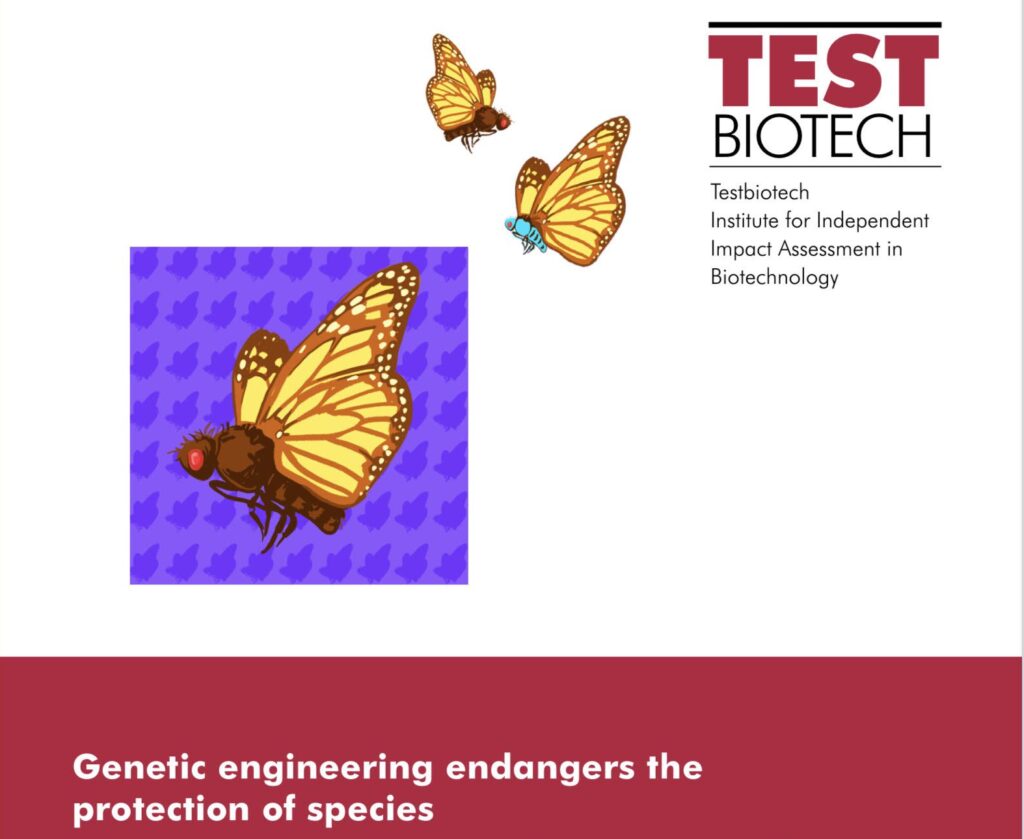
You can find the full report here.

Agrobiodiversity campaign banner image

Le mouvement européen des semences lance un appel : Levons nos fourchettes pour la diversité !

Bruxelles, Florence, Schiltern – Aujourd’hui, plusieurs organisations du mouvement semencier lancent la pétition à l’échelle de l’UE “Levons nos fourchettes pour la diversité !”. Elles exigent des améliorations significatives de la proposition de règlement de l’UE sur les semences présentée par la Commission européenne en juillet 2023. Les membres du Parlement européen et les ministres de l’Agriculture de l’UE sont invités à veiller à ce que les lois sur les semences soutiennent la diversité dans les champs et dans les jardins, et posent les bases de systèmes semenciers et alimentaires durables, résilients et diversifiés en Europe. “La réforme du règlement de l’UE sur les semences est une décision clé pour l’avenir de notre alimentation et de notre agriculture. Nous devons lever nos Fourchettes pour la diversité dans nos champs et nos assiettes et contre les lois qui ne servent que l’agro-industrie”, demandent les organisations. “Chaque voix pour la diversité, chaque signature compte maintenant !

WSU and GAIA

Principale revendication de la pétition : la diversité doit être la priorité absolue du règlement de l’UE sur les semences.

La proposition actuelle menace au contraire la conservation et la circulation de la diversité des cultures et ne respecte pas les droits des agriculteurs en matière de semences. Les lois controversées qui sont en cours de renégociation concernent le “règlement de l’UE sur les semences”, c’est-à-dire les règles du marché des semences de l’UE. Les règles actuelles ont été introduites dans les années 1960 et fixent des normes qui ont été développées pour l’agriculture industrielle. Les semences et variétés diversifiées ont été largement proscrites ou confinées à des niches, confrontées à une charge bureaucratique excessive, en fonction de l’État membre de l’UE. Les acteurs de l’agro-industrie ont fait pression pour que les nouvelles règles aillent encore plus loin dans la direction d’un modèle agricole uniforme.

“Avec cette proposition de loi sur les semences, nous courons le risque de voir les multinationales prendre le contrôle de notre alimentation. Elle alourdit excessivement le travail important des conservateurs de semences et ne tient pas compte des droits des agriculteurs à faire circuler leurs semences contre rémunération. De nombreux acteurs de la diversité devraient abandonner leur travail et la diversité des cultures serait irrémédiablement perdue. De telles règles ne sont absolument pas adaptées à notre avenir, en particulier en période de crise climatique et de crise de la diversité. La proposition est inacceptable”, déclare Magdalena Prieler, responsable de la politique des semences pour ARCHE NOAH à Bruxelles. ARCHE NOAH est une organisation de conservation des semences ayant des bureaux en Autriche et à Bruxelles, qui conserve, sélectionne et fait circuler des variétés et des espèces rares.

“Les Ministres de l’Agriculture et le Parlement européen doivent agir maintenant pour promouvoir la diversification de nos systèmes semenciers, en autorisant des dérogations spécifiques dans la nouvelle loi sur les semences ! La proposition doit soutenir la conservation à la ferme et l’utilisation durable de l’agrobiodiversité, y compris les nouvelles variétés développées pour les conditions locales grâce à des programmes de sélection participatifs et décentralisés. La diversité des semences est la clé d’une alimentation saine, variée et savoureuse. Il est temps d’agir pour améliorer enfin la diversité dans les champs des agriculteurs et dans les jardins, en soutenant les variétés locales et en respectant les droits des agriculteurs. Chaque citoyen peut maintenant lever sa fourchette et faire entendre sa voix pour la diversité avec nous”, déclare Riccardo Bocci, Directeur exécutif de Rete Semi Rurali en Italie, le réseau semencier italien regroupant 40 organisations.”

La pétition exige que :

– La conservation et l’utilisation durable de la diversité des cultures adaptées aux conditions locales soient la priorité absolue du règlement de l’UE sur les semences

– Le droit des agriculteurs et des jardiniers à récolter, utiliser, échanger et vendre leurs propres semences soit pleinement mis en œuvre.

– La commercialisation de variétés diverses et adaptées aux conditions locales par les producteurs de semences régionaux soit facilitée.

– Les nouvelles variétés approuvées ne soient pas dépendantes de pesticides ou d’engrais synthétiques.Signez la pétition ici :  www.raiseourforks.org

Agrobiodiversity campaign banner image

Let’s raise our forks for diversity!

An international petition to support biodiversity in the fields for fairer and more sustainable food systems needs your support: please sign and share!

The current EU regulations for the marketing of seeds was created in the 60s with a focus on agroindustrial principles, which has led to the centralisation and privatisation of seed production, out of the hand of the farmers and into those of agrochemical companies.

Small, diverse and local farms and food producers, those better suited to address the challenges linked to the changing climate, fail to compete in a landscape of industrialised seed production aimed at monocultures.

That is where this petition comes in. Small, diverse and local farms and food producers need seed that is suited to their smaller scale, local and seasonal context, not seeds that are bred to produce uniform crops that grow best in the artificially uniform conditions created in agroindustrial fields with the use of synthetic fertilisers and pesticides.

Despite revisions over the years, the EU regulations have failed substantially to protect agrobiodiversity and support the rights of farmers to select and produce seeds that is right for their local conditions (known as farmers’ seeds, or even evolving seed populations) and to share it in small quantities and on a local scale.

In the last few years the EU has embarked on a more thorough reform of its seed regulations. As was to be expected, the agroindustrial complex is pushing for stricter rules than those that already underpin their power, which would further their control on seed, and by extension on farming.

In July 2023 the European Commission has published a proposal that threatens the conservation and circulation of crop diversity.

This is the time to act for genuine change. We need seed laws that secure our right to healthy, diverse and tasty food, rules that truly enhance diversity in farmers’ fields and in gardens, supporting local varieties, and respecting the rights of farmer to choose diversity rather than uniformity.

In a changing world, we need as much diversity as possible to adapt and thrive. The new rules, instead would make it unaffordable for those that conserve, breed, share and sell biodiverse seed to keep operating, at a time when we need more, not fewer of these enterprises.

Read more on the campaign’s website and join our numbers!
Public pressure is crucial at this point in the political process, to make sure the responsible politicians hear the voices for diversity loudly and clearly.

liveseeding_logo-300x89

Organic seed and breeding sector: stakeholder survey

The EU project Liveseeding is researching which obstacles are in the way of the horizontal proliferation (scale-out) and scale-up of organic seed and cultivar testing in the EU. The objective of this exercise is to develop business models and plans for SMEs to boost the horizontal proliferation, scaling-up and profitability of the organic seed and breeding sector.

In order to obtain the best possible understanding of the realities in the field, the project is looking for input from:

  • organic seed producers and traders: farmers and small, medium and large-scale companies that produce/trade seeds
  • conventional seed producers and traders that plan to produce/trade organic seeds in the future: farmers and small, medium and large-scale companies that produce/trade seeds

The main aims of the survey are to find out which technical, economic and regulatory challenges organic seed producers face and to analyse any market opportunities that new organic trends may be offering for the next few years.

The survey consists of 50 questions, takes approximately 15 minutes to complete and is available in English plus a number of national languages:

Deadline: 31st May 2023

Diversity of Finnish grains

Bringing diversity to Fields with Heritage Grains

The Diversity to Fields project (2021-2023) at Häme University of Applied Sciences and the Natural Resources Institute Finland is funded by the Finnish Ministry of Agriculture and Forestry. The project seeks solutions for the diversification of grains grown in Finland through the use of heritage grains and old commercial seed varieties.

In this article we get some insights from the project directly from researchers:

More information about the project can be obtained by registering for the project’s English newsletter.

Bringing more seed varieties into cultivation

By using materials from NordGen, the Nordic Genetic Resource Centre, Finland has the opportunity to change the trend that leads to one-sided cultivation. The network for propagation of heritage grains aims to propagate and test varieties that have been preserved for decades in the gene bank. Propagation takes place from a few grams of seed and is propagated so that as many varieties as possible are brought back into cultivation.

The project develops and strengthens the business model for the propagation network that was established in 2017 and has 66 growers (2022) and cultivates a total of 156 landraces or old commercial varieties of arable crops. Of these, 110 are landrace grains, the rest are buckwheat, broad beans, peas and grass plants. In addition, there are landraces and old commercial varieties that have always been preserved in cultivation on farms in Finland.

The combined inputs of propagation growers and field trials

Information about grain propagation is collected annually from members of the network. The project develops guidelines for, among other things, germination, sowing, threshing, drying and sorting. In addition, instructions are given for species-specific protection distances, protection against animals and storage of seed lots.

The project conducts cultivation experiments under ecological cultivation conditions at Häme University of Applied Sciences Mustiala educational and research farm. Ten-variety comparisons are made annually and observations are made during the growing season. Quantitative and qualitative analyses of the crops are also carried out.

The landrace "Rusutjärvi"
The landrace “Rusutjärvi” on HAMK Mustiala’s experimental field in 2021.
This landrace was found among other grains cultivated on field. Photo: Annika Michelson, HAMK

Towards more sustainable food production

Risotto made from Malmgård's einkorn small pearls
Photo: Annika Michelson, HAMK

Traditionally, grain porridge and rye bread have been part of the Finnish dining table. Later, wheat became the dominant cereal in the diet.

There are many opportunities in grain product development. Just as hundreds of different forms of pasta have been developed from wheat in Italy, we can develop a variety of new products from heritage grains. The picture shows a risotto made from Malmgård’s einkorn small pearls, which was awarded the Finnish Ecological Association’s award Organic Product of the Year 2021.

The project develops steps to increase the diversity of Finnish plant production. Increasing the cultivation of heritage grains and old commercial varieties requires an assessment of their usefulness from the point of view of production and further processing. In addition to harvest and quality criteria, usability is related to harvest resilience in different climatic conditions and the nutrient content of the crop.

Landraces can have economic value as special raw materials as food and feed and as part of the companies’ specialization. While genetic diversity and cultural-historical values ​​have so far been particularly emphasized in the cultivation of heritage grains, their continued profitability requires economic viability.

The value chain for heritage grains, from farmers to consumers, is short and there are still challenges to solve, e.g. in the packaging of small seed lots and in the lack of small mills. In addition to branding heritage grains and a general information campaign on their potential, new recipes and product development are needed. The success of heritage grains ultimately lies in the hands of consumers.

Fibl_Visiting-Friends-of-Agrobiodiversity-Across-Europe

FiBL: Visiting Friends of Agrobiodiversity Across Europe

This new publication from FiBL takes readers on a journey to 15 organic plant and animal breeding initiatives in Europe. Every initiative is presented by a person involved in the initiative. For each initiative, the aims and challenges are described. The selected examples give a good insight into the great diversity of initiatives to maintain and promote biodiversity in organic crops and animal species.

FiBL_Image_Visiting-Friends-of-Agrobiodiversity-Across-Europe
Map of the 15 organic plant and animal breeding initiatives in Europe.
source: FiBL_Visiting-Friends-of-Agrobiodiversity-Across-Europe publication
May 2026
No event found!
Load More

Video