Let’s Liberate Diversity! News

Fibl_Visiting-Friends-of-Agrobiodiversity-Across-Europe

FiBL: Visiting Friends of Agrobiodiversity Across Europe

This new publication from FiBL takes readers on a journey to 15 organic plant and animal breeding initiatives in Europe. Every initiative is presented by a person involved in the initiative. For each initiative, the aims and challenges are described. The selected examples give a good insight into the great diversity of initiatives to maintain and promote biodiversity in organic crops and animal species.

FiBL_Image_Visiting-Friends-of-Agrobiodiversity-Across-Europe
Map of the 15 organic plant and animal breeding initiatives in Europe.
source: FiBL_Visiting-Friends-of-Agrobiodiversity-Across-Europe publication
16th ECPGR meeting

Representing LLD at the 16th ECPGR meeting in Malmö, Sweden: a report from Sesam

The 7-9th of June I was honoured with the opportunity to participate in the 16th ECPGR meeting as an observer on behalf of the Let’s Liberate Diversity! network. ECPGR stands for European Cooperative Programme for Plant Genetic Resrources and aims at conserving ex situ and in situ plant genetic resources, providing access and increasing their sustainable use. The meeting was held at a conference centre in Malmö and the facilities of NordGen in Alnarp, Sweden. Participants were national representatives, often working in the respective national gene banks, agricultural research institutes, or ministries of agriculture.

How ECPGR works and the content of the 16th meeting

ECPGR divides its development into phases that are initiated by deciding certain goals and ambitions and then dedicating the phase to fulfilling them. This meeting was discussing the ongoing phase X (2019-2023), and how to move into phase XI. Hence, presentations and workshops were mainly focusing on achievements and conclusions from the ongoing phase and setting ambitions for the next one. ECPGR also operates through working groups addressing the interests of different crop categories and other thematic categories such as in situ conservation of crop wild relatives, cryopreservation, and on farm conservation. ECPGR is publicly funded and further in-depth information on their activities is easily accessible on their website (www.ecpgr.cgiar.org), including a report from this meeting

ECPGR group
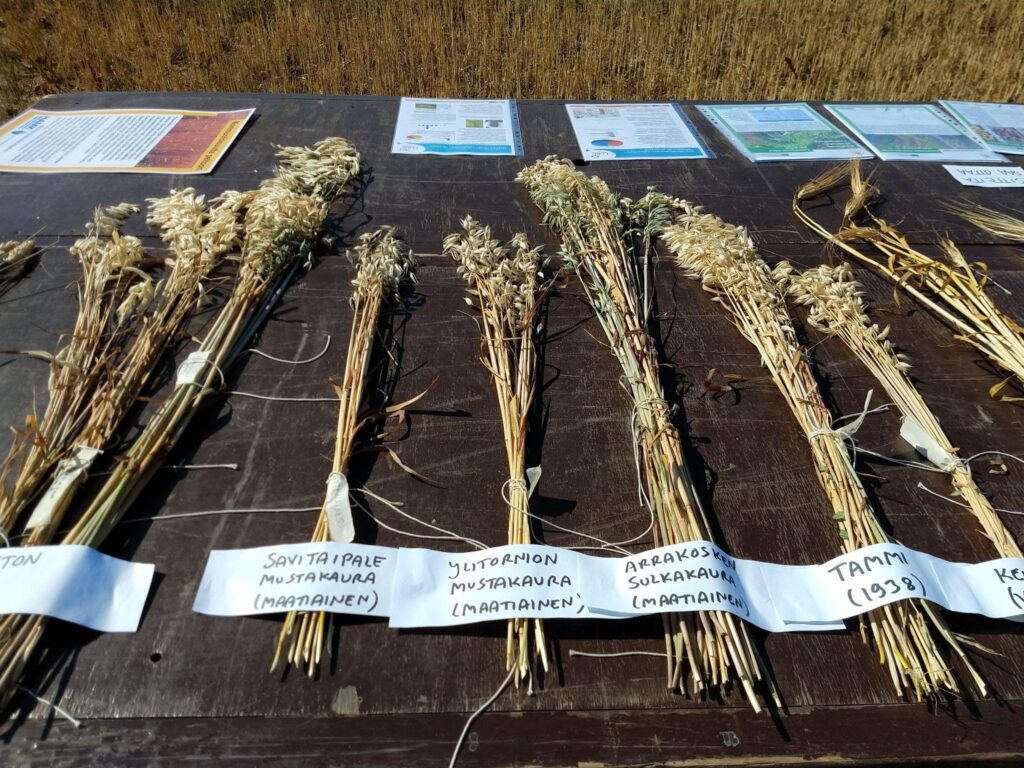
Visiting NordGens oat collection – photo: Dylan Wallman 

What are AEGIS, EVA and EURISCO?

Some of the results of the ECPGR collaboration are the establishment of AEGIS, EVA, and EURISCO. These are databases that intend to facilitate conservation strategies, accessibility, and utilization of the plant genetic resources. AEGIS (A European Genebank Integrated System) aims at listing accessions from each gene bank that are unique to their collection and local area. This way a European collection can be established with a defined common standard for conservation and accessibility, as well as cost sharing as the utilization could be of interest within all of Europe. EVA (European Evaluation Network) aims at increasing the use of crop genetic diversity and the diversity of stakeholders in plant breeding. Through public-private collaborations evaluation data is collected and published. The EVA is working through crop specific networks currently active for carrots, lettuce, maize, wheat and barley, and peppers. EURISCO (European Search Catalogue for Plant Genetic Resources) collects ex situ conservation data on more than 2 million accessions from 400 institutes within 43 member countries. The database is intended to make information easily accessible, but actual seed requests should still be done to the institutions that maintains the accessions. Being on the EURISCO list does not guarantee that the seeds are accessible to order.

The need to link ECPGR goals with civil society and NGOs

As an activist for dynamic managment and use of agrobiodiversity, it was of great value to get insight in the contemporary situation of how conservation of plant genetic resources is being governed on national and European level.  Since many years, me and several others has claimed that only conserving plant genetic resources in gene banks is like putting “all the eggs in the same basket”. It’s unfortunate that several recent global events (also addressed in this meeting) only confirms the urgency of reviving both access and utilization of crop diversity to the people. War is one of the biggest threats to centralized ex situ conservation. The destruction of the gene banks in Syria and Iraq (the cradle of many of our most important agricultural crops) should have been enough to learn this, now parts of the Ukrainian gene bank is also added to the list of unfortunate examples. While the impact of wars and bombings are clear and evident, political, and financial threats are less apparent. National conservation strategies rely heavily on state funding and political decisions. Looking at the political fluctuations within Europe, and the differences in financial capacities between countries, one could easily see that there are serious pitfalls for this type of conservation strategies in the long run.

Wheat diversity from gene bank material
Wheat diversity from gene bank material – photo: Dylan Wallman

Bring back diversity in the fields!

Facilitating efforts of getting diversity back into farmer fields is a way of spreading the risk. As part of the strategy is to also promote the consumption of these varieties, it is a cost-efficient way as the growers would be financially self-sustaining. Getting the diversity back into farmers fields is also a good strategy to increase our capacity for climate change adaptation. As we don’t know how the climate will change, we need diversity to be able to face all the potential scenarios.

My understanding from the ECPGR meeting is that it is difficult for many of the involved organisations to extend too far into the promotion and distribution of old varieties as it conflicts with the interests of the conventional seed industry and the current seed legislation. This emphasizes the importance of independent but collaborative seed saver networks and other efforts to promote the utilization and revival of crop diversity into farmer fields. 

Here you can find ECPGR bulletin number 25 with all the details of the meeting, active projects and available funding. https://mailchi.mp/ee51209da1ec/ecpgr-bulletin-issue-no-25-july-2022


Dylan Wallman is representing the Swedish seed saver organization ‘Föreningen Sesam’ in the Let’s Liberate Diversity network. He is a horticultural scientist specialized in organic plant breeding and agrobiodiversity facilitation. He is currently pursuing a PhD at the Swedish Agricultural University, where he is intercropping peas and faba beans, utilizing crop diversity and old varieties to increase productivity and sustainability in organic farming.

Dylan Wallman
Katharina Kleiner from the Federal Ministry of Agriculture in Austria, Lise-Lykke Staffensen, director of NordGen, and Dylan Wallman from Let’s Liberate Diversity!. 
Sprouts from Brussels

Seeds & Crop Biodiversity in European Policy

Impact Assessment of Seeds Marketing Reform & EP Conference

With the finalization of the upstream work for the Commission’s Impact Assessment, the drafting of the proposal will begin.

Several stakeholder consultation activities have been rolled out by the European Commission DG SANTE, with the help of the ICF Consultancy in the past months. Along with a targeted survey, different focus groups, a case study on the approach to farmer seed exchange in France, and several interviews, the results of the Open Public Consultation (OPC) are now collated in the impact assessment of the EU seeds marketing reform.

Sprouts from Brussels

The Open Public Consultation (OPC) on the future reform of the EU seed marketing rules ran from 21st December 2021 until 27th March 2022, and had gathered 2500 valid responses. The European Commission has made available several documents related to the OPC, including a summary report, the contributions to the consultation and documents annexed to them, which can all be downloaded here. The factual summary states that over three quarters (79%) of citizen respondents, and half (50%) of company/business organisation respondents were from Sweden, attributed to national press articles rather than an automated campaign tool. The only small-scale campaign identified came from Germany with 32 identical responses to the questionnaire. The report clearly reflects the polarization of positions regarding the success and efficiency of current rules, on the future scope of the legislation or the number of regulated species. There seems to be some agreement on the need to maintain separate policy instruments with aligned structures and definitions, removing ambiguity and complexity. It is also interesting to note that 80 % of respondents (and a majority of respondents from each stakeholder group) agreed that the marketing conditions for conservation and so-called amateur varieties should be lighter. The need for the legislation to contain general sustainability criteria to be applied by Member States also seems to be generally supported by respondents. 

The Impact Assessment report will also include the results of the very short “SME survey” that was distributed through the “Enterprise Europe Network”, and that closes on 12th July. Although the impact assessment consultations initially included a “validation survey” for the results of the activities, this exercise has been abandoned due to the very conflicting views gathered in the consultation process. Without clear conclusions as to the pathway to be taken in the road to reforming seed marketing rules, the European Commission estimate that there were no clear results to validate or invalidate. The impact assessment report will nonetheless be communicated to other EU Commission services and needs to pass the internal test of the Regulatory Scrutiny Board, in charge of checking the quality of the work. The results of these different consultation tools will also be used by the Commission services when drafting the legislative proposal (either in the form of numerous or single Directives or Regulations), which is still expected by December 2022.

Magdalena Prieler during the conference
Magdalena Prieler from Arche Noah during the EP conference
Riccardo Bocci's presentation
Riccardo Bocci from Rete Semi Rurali during the EP conference

In the meantime, a large-scale conference was organized on the seed marketing reform in the European Parliament on 22nd June 2022, with cross-party support. Looking into “which seeds for organic, agroecology, low-input and peasant seed systems?”, the conference explored pathways for the inclusive implementation of the EU Farm to Fork and Biodiversity Strategies into the EU seeds marketing reform. Organised by Arche Noah, the Geneva Academy of International Humanitarian Law and Human Rights, IFOAM Organics Europe and the Biodynamic Federation Demeter International, it was hosted by several Members of the European Parliament: Martin Hausling (DE) from the Greens/EFA, Eric Andrieu (FR) from the Socialists and Democrats, Dacian Ciolos (RO) from Renew Europe, Norbert Lins (DE) from the EPP, and Anja Hazekamp (NL) from the Left. 

Moderated by Hannes Lorenzen (ARC2020 and Seeds4all), the intense event covered not only the scope of the legislation, and the different pathways allowing the formal marketing of seeds, it also included contributions from the European Commission’s DG SANTE (in charge of the seeds file) and DG AGRI (in charge of the Organic Regulation), but also all MEP’s. 

Francois Meienberg
Francois Meienberg from ProSpecieRara during the EP conference

Open Public Consultation on New Genomic Techniques

The European Commission is looking to adopt a new legislative framework for certain new genomic techniques, namely targeted mutagenesis and cisgenesis. Although the policy options on the table are not yet completely clear, the European Commission has launched an open public consultation to gather stakeholders’ opinion on this initiative.

Following the publication in April 2021 of the different documents that constitute the European Commission study on “new genomic techniques” (NGT), the institution has now kicked off the legislative process to “adapt [the GMO legislation] to scientific and technological progress for some NGTs and their products”. The European Commission published an inception impact assessment in September 2021 proposing to explore a policy initiative only for targeted mutagenesis and cisgenesis (which includes the infamous Crispr Cas9 technology) in plants (not animals and micro-organisms), which “can be used to produce alterations of the genetic material that can also be obtained by natural mutations or conventional breeding techniques” according to the Commission. 

The formal open public consultation linked to the initiative was launched on 29th April 2022, and will run until 22nd July 2022. The questionnaire can be answered by any citizen or legal entity in the EU or in the world, with a valid EU login (which can be obtained free of charge with a valid email address). It has already gathered close to 1200 responses, mostly from EU citizen (76 %), followed by academic/research institutions (11%), companies (4%), and NGO’s 1,3%). Germany and Italy are the countries most represented currently, accounting for 60% of the responses, followed by France at 11%. These numbers are nonetheless subject to substantial changes since most of the responses from associations and businesses tend to be submitted close to the closing deadline of any consultation. 

Open Public Consultation on New Genomic Techniques

The questionnaire itself is divided into 3 categories: assessment of the current situation, looking into the future, and “other aspects”. The first section aims to gather evidence and opinions on the “baseline scenario”, if no changes were to be made to the current laws. The goal here is to see whether action is required, and what the costs/benefits of inaction or action would be. The second section explores views on what a future new legislative framework for cisgenesis and targeted mutagenesis could look like. Respondents are invited to give their opinion on the kind of risk assessment these techniques should be subject to, but also whether products developed by these techniques should be subject to (mostly environmental and economic) sustainability requirements. It also looks into potential information and/or labelling requirements that could accompany the new law. The last section of the questionnaire, coined “other aspects”, explores the main features that should accompany a new legislative framework, looking into possible mitigation and/or support measures. It also allows the submission of additional arguments or evidence in around 300 words.

The format of the consultation and its content have been criticized by certain organisations, who have announced that they will not participate in the exercise, such as the European Coordination La Via Campesina. Other organisations will participate, and have outlined some core demands, such as IFOAM Organics Europe, or ENGA (the European non-GMO Industry Association).

Additional consultation activities will likely be launched in the coming months, traditionally including surveys, interviews and workshops. In parallel, the large-scale petition launched by a coalition of more than 35 organisations in 15 different countries across the EU, “to keep new GM food strictly regulated and labelled” is still running, and has gathered over 100.000 signatures.


Open Public Consultation on EU Framework for Sustainable Food Systems

Consultations on the flagship initiative of the EU Farm to Fork Strategy, the Framework on EU Sustainable Food Systems (FSFS) have sped up with the launch of the Open Public Consultation by the European Commission.

Foreseen to be adopted by the end of 2023, the proposal for a legislative framework for sustainable food systems (FSFS) is one of the flagship initiatives of the Farm to Fork Strategy. This complex legislative framework aims to accelerate the transition towards sustainable food systems, and contains several elements: from sustainability principles and objectives, requirements for food products and operations, sustainability labelling, public procurement provisions, to those related to the food environment, governance and monitoring of the initiative. 

The inception Impact Assessment of the FSFS was published for public feedback from 28th September until 26th October 2021, gathering 230 contributions. It has now been followed by a more general Open Public Consultation (OPC), published on 28th April 2022, and which will run until 21st July. 

The questionnaire contains 25 general questions that attempt to gather feedback from more general contextual elements, such as the existence of the problem, its importance and drivers, along with the role of different actors of the food systems (from business operators across the system, public authorities at different governance levels, knowledge providers or consumers). The OPC also seeks input on the different concrete policy measures envisaged by the initiative, and its future governance. 


June – July 2022
Issue 19

This newsletter is produced by Fulya Batur and ARCHE NOAH for the European Coordination Let’s Liberate Diversity and the crop diversity movement

Fundus Agri-Cultura Alpina for “montagna”

By Angela Deppeler et Agnès Bourqui,  Commission suisse pour la conservation des plantes cultivées (cpc-skek) 

Rediscovering traditional Alpine knowledge.. knowledge for the future!

Older breeds and varieties cannot simply be cultivated or bred from a gene bank without specific knowledge. However, there is a risk that traditional knowledge about the cultivation, breeding, selection, use and production techniques of traditional crops and breeds in Alpine regions will be lost. This would also mean the loss of a unique reservoir for new innovations. New value chains are often based on old know-how, as in the case of Valais rye bread. Take also the case of the Evolensian cow, which almost disappeared before being rediscovered as a dual-purpose breed, highly adapted to steep slopes. Fortunately, the relevance of a few farmers saved what can be called an export success well beyond the Valais today. Another example is illustrated by the various mountain potatoes, which are nowadays appreciated by chefs in the gastronomic kitchen, as they allow a distinct sensory experience thanks to their diversity of colours, shapes and aromas.

The “Fundus Agri-Cultura Alpina

In order to preserve this knowledge, the project “Fundus Agri-Cultura Alpina” was developed by the SAVE Foundation. The current platform brings together more than 700 entries in the categories “animals”, “plants”, “cultural techniques” and “customs” in a single online collection and is attracting a great deal of interest (up to 10,000 visits per month). The basic project focused on the German-speaking Alps. Following the principle of Wikipedia, the platform is largely maintained by volunteer editors working with particular races and varieties. Historical literature is an additional source.
Traditional animal breeds and crop varieties are primarily part of the classified biodiversity. With climate change, there is an additional argument for the conservation of varieties and breeds that are well adapted to their region. Finally, old varieties and breeds enrich the Alpine region, and tourism, culture and local markets benefit from the amazing diversity.

SAVE foundation logo

New project phase

According to the Fundus’ ambition, the platform is now to be extended to the French-speaking Alpine region (before evaluating the Italian-speaking option as well). Besides technical adjustments, this means above all generating French-speaking contributions. Just as there are agricultural practices, species and varieties that transcend the language barriers of the Alpine region, there are specialities that are adapted to regional needs that will have to be reflected.

The next phase of the project, implemented by the Swiss Commission for the Conservation of Cultivated Plants, therefore aims to find editors in the French-speaking Alpine and sub-Alpine region. We would like to integrate the knowledge of the members of the Swiss Association for Mountain Regions (SAB). These editors will be trained to make entries in the “Fundus”. Interested parties should contact the CPC (info@cpc-skek.ch).
Funding from the FOAG, two foundations and one canton is secured, but does not yet cover the entire budget. Once the necessary funds have been raised, the project can enter its new phase at the beginning of 2021 for a period of three years. Even if only part of the existing knowledge can be collected and made public via the Fundus platform, it is still a starting point for a new appreciation of local products.


Website: https://fundus-agricultura.wiki/

Contact: info@cpc-skek.ch

Seed Policy Dialogue Brochure

SPD#3: Future EU Seed Marketing Reform

In May 2021, the SPD focused on the main points of the European Commission study on seed law reform. It inquired on the thoughts of seed savers and seed networks on the study and reflected on how it could affect agrobiodiversity for tomorrow’s agriculture. Aside from a detailed presentation of the Commission study by Fulya BATUR, ECLLD members Arche Noah also presented their approach to the reform. You can watch the entire Dialogue here (only in English).

The EU Seed Marketing Reform

No Results Found

The posts you requested could not be found. Try changing your module settings or create some new posts.

May 2026
No event found!
Load More

Video