Let’s Liberate Diversity! News

pesticide atlas

Pesticide Atlas 2022

Pesticides are toxic and have multiple and complex impacts on the environment and our lives: these are analysed in some detail in the Pesticide Atlas 2022, a joint publication by Heinrich-Böll-Stiftung, Friends of the Earth Europe, Bund für Umwelt und Naturschutz, and PAN Europe.

Read the publication in English
Read the publication in German

The word pesticides covers all those chemicals used in agriculture to deal with unwanted plants (herbicides, the most used group of active substances, according to the research) as well as fungi (fungicides) and insects (insecticides).

It would appear from such definition that such chemicals have specific and limited effects. However, the report points out, the impacts of pesticides are felt on a far wider group of organisms than those that are their targets (both unwanted and beneficial to agriculture) and well beyond farmers’ fields (i.e. the sea).
For example, “glyphosate – the most widely used herbicide in the world […] can harm soil bacteria and mycorrhizal symbiosis with the roots of grapes” (p.20-21) and “fungicides can increase the toxicity of pyrethroid insecticides for bees” (p.24). Not only do chemicals impact non-target organisms on site, they spread far wider than the fields where they are applied. “They can seep into the soil and groundwater, become airborne, or blown away – some can be found over 1,000 kilometers away” (p.8). They can accumulate and persist even for a long time (p. 9).
With that in mind, it is important to point out that the effects of pesticides on the whole ecosystems are unfortunately not taken into account when pesticides are approved, even where strict authorisation criteria are required, as is the case in the EU.

Human health is also affected by pesticides. Not only does pesticide poisoning occur with some frequency among farmers (about 385 million cases per year), pesticide drift can affect rural communities and adjacent residential areas in ways that are “still largely unknown” (p.31) as the long term effects of inhaling pesticides, and the impact of so-called pesticide cocktails – that is the combination of different chemicals as opposed to one single active ingredient at a time – are not well researched. Residues of pesticides are also present in food, and imported food can even contain residues of pesticides that are banned for their toxicity in the country where the produce is sold to consumers (p.23).

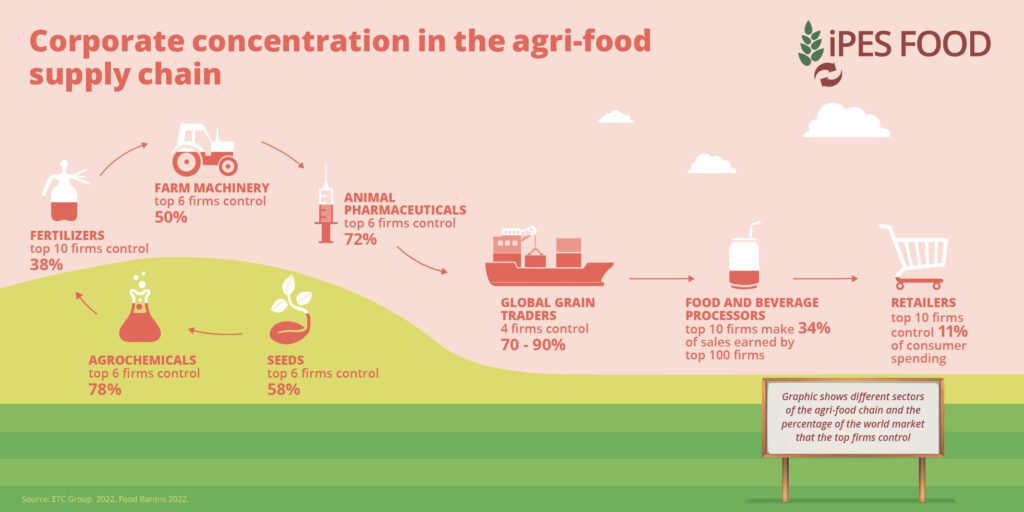
Pesticides are also a matter of human rights, social justice, equality. Pesticides are big business and the EU is one of the world’s biggest markets. Even if authorisation criteria are stricter than elsewhere, it has been difficult to enact policies to reduce their use (p. 14, 52). The few corporations that produce pesticides, often in bundle with genetically modified crops, are constantly expanding their business, for example through the digitalisation of agriculture (p.50). Increasingly, they are widening their reach to the Global South where regulation is less strict. It is there that the worst of poisoning happens, and women are often at the forefront of exposure (p. 18, 34, 36, 44).

It is not a rosy picture, but the report concludes on a positive note, by highlighting that change is possible with agroecology and providing examples from pesticide-free regions.

liveseeding_logo-300x89

Organic seed and breeding sector: stakeholder survey

The EU project Liveseeding is researching which obstacles are in the way of the horizontal proliferation (scale-out) and scale-up of organic seed and cultivar testing in the EU. The objective of this exercise is to develop business models and plans for SMEs to boost the horizontal proliferation, scaling-up and profitability of the organic seed and breeding sector.

In order to obtain the best possible understanding of the realities in the field, the project is looking for input from:

  • organic seed producers and traders: farmers and small, medium and large-scale companies that produce/trade seeds
  • conventional seed producers and traders that plan to produce/trade organic seeds in the future: farmers and small, medium and large-scale companies that produce/trade seeds

The main aims of the survey are to find out which technical, economic and regulatory challenges organic seed producers face and to analyse any market opportunities that new organic trends may be offering for the next few years.

The survey consists of 50 questions, takes approximately 15 minutes to complete and is available in English plus a number of national languages:

Deadline: 31st May 2023

SC report right to seed

Report “The Right to Seeds in Africa” published

The Geneva Academy, together with policy research think thank The South Center, Swissaid and CROPS4HD, released a new report on UPOV and UNDROP by the title:

The Right To Seeds In Africa
The United Nations Declaration On The Rights Of Peasants And Other People Working In Rural Areas And The Right To Seeds In Africa

The promotion of commercial seed systems and the strengthening of intellectual property (IP) over plant varieties and plant biotechnology in the last 30 years have seriously undermined the customary practices of seed saving, selecting and exchanging by peasants and, consequently their right to seed, as well as impacting agrobiodiversity.

In response to that, the United Nations adopted in 2018 the Declaration on the Rights of Peasants and Other People Working in Rural Areas (UNDROP) to enshrine peasants’ right to seeds in international human rights law.

The report assesses the member states’ obligations under the UNDROP and makes the recommendation that AU and African states recognize the intrinsic value of peasant seed systems and their central role in agrobiodiversity preservation, food sovereignty and climate change adaptation, when considering seeds laws and policies. It further suggests that the right to participation, including of paesant women, is fully taken into account.

Catalogue of varieties: the sowing season is open!

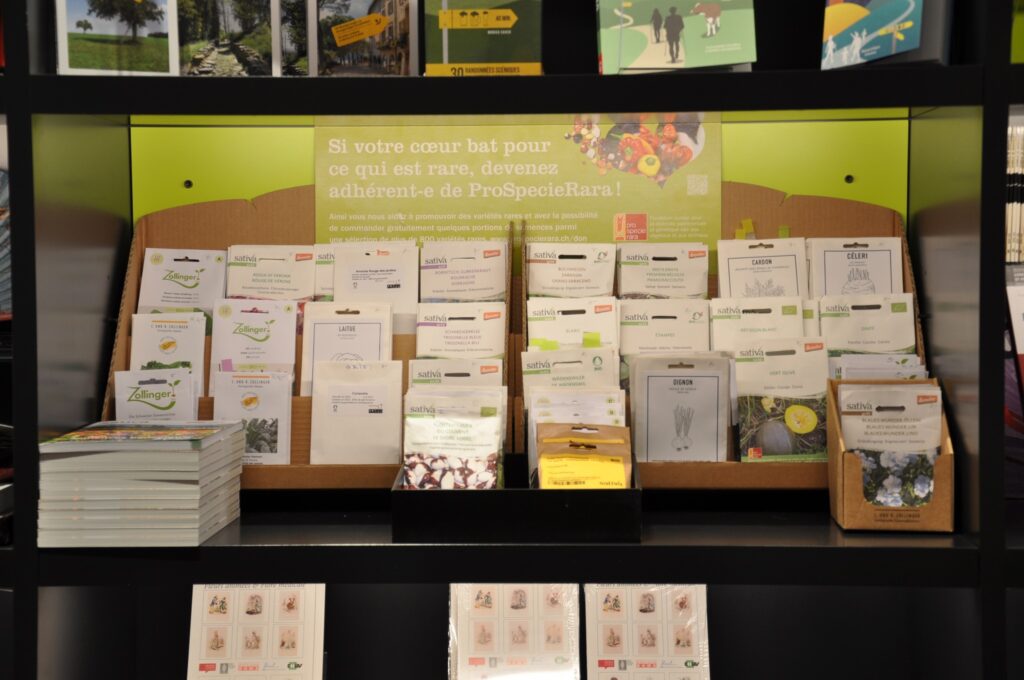
Spring is here and with the magnolia flowers it’s time to get your tomato seedlings in and the first lettuce clippings and spinach in the garden. You can find ProSpecieRara seeds in all sorts of places in Switzerland, but none more beautiful than in our displays at the Jardin Botanique Lausanne and Jardin Botanique Geneve and the Château de Prangins! In these three beautiful and unusual places you will find, in addition to a splendid view and an exciting visit, a selection of varieties from three Swiss organic seed companies from our assortment. It’s the perfect opportunity for an enchanting walk through extraordinary gardens…
On the display of the Geneva Botanical Garden, you will be surprised to discover exclusive seeds from our own production, on the occasion of ProSpecieRara’s 40th anniversary, a unique opportunity to get your hands on rare treasures of cultivable biodiversity.

Here the catalogue of varieties in French, Italian and German!

Rara

Legal kit RSP homepage

Understanding the existing framework: what openings to cultivate biodiversity?

The dynamic management approach to crop biodiversity practiced with farmer seeds is holistic. The stages of conservation, selection and use of the seed are carried out jointly on farms and gardens by farmers, gardeners and seed artisans working in a network.

The various current regulatory frameworks (marketing, property rights, health standards, biosafety, etc.) were designed for the development of an industrial sector after the Second World War. They are not adapted to this dynamic and decentralised approach in farms and gardens.

It has been observed that the various rules in place do not encourage the diversity of practices necessary for the sustainable maintenance of cultivated biodiversity. However, it is important to understand that there are still spaces for the use of farmers’ seeds!

The mobilisation and daily practices of biodiversity stakeholders (farmers, gardeners, seed artisans, citizens) are necessary to overcome the regulatory constraints that still hinder the development of farmers’ seeds. These daily practices support the demand for a regulatory framework that fully recognises the work and rights of farmers and rights of farmers and gardeners over their seeds.

The elements shared in this kit allow you to understand the possibilities that exist today:

  • to collectively build Farmers’ Seed Houses (Community Seed Banks) and to share seeds and know-how
  • to sell “non-standardised” seeds and plants free of property rights

Biodiversity can be cultivated!

ECLLD participation in the 2nd International Congress on Agrobiodiversity

The 2nd International Congress on Agrobiodiversity

Building more sustainable, equitable, and resilient food systems go together with stimulating nature’s positive production. It is about developing agricultural systems that benefit planet Earth and ensure access to safe and nutritious food for all. 

While there is growing recognition of the urgency to transform food systems, we are still far from achieving this goal. Biodiversity loss, climate change, soil degradation, malnutrition, poverty, and food insecurity threaten our planet and humanity’s long-term sustainability and well-being. It is time to rethink how we eat, grow, and store our food. 

The 1st International Congress on Agrobiodiversity, held in New Delhi in 2016, drew scientific evidence about agrobiodiversity’s rational and practical use as an asset for restructuring food systems. Fast-forward five years, the world of 2021 presents a very different scenario. With the 2030 Agenda for Sustainable Development deadline fast approaching, we are now at a crossroads. 

That is why the 2nd International Congress on Agrobiodiversity builds on the commitments of the Delhi Declaration to present an engaging, inclusive, and pioneering event. It convenes worldwide scientists, Indigenous Peoples, practitioners, entrepreneurs, and policymakers around the virtual roundtable to foster dialogue and collaboration on restoring the balance of land, sea, and air. 

LLD abstract and work done in the framework of #DYNAVERSITY

Let’s Liberate Diversity! presented an abstract entitled “Dynamics and impacts of the on-farm network European Coordination Let’s Liberate Diversity!” with the intent to highlight the importance of social actors and LLD events in the conservation and use of agrobiodiversity. With great pleasure, the work has been accepted and presented during the session of November 18, 2021 “Scientific Symposium: Integrated Conservation and Use of Agrobiodiversity“.

The session, mainly attended by the scientific community, questioned how to act to safeguard agrobiodiversity and diversify food systems. Below are the purpose and research questions submitted to the Congress by Mathieu Thomas and Selim Louafi (CIRAD), Riccardo Bocci (Rete Semi Rurali), and Matthias Lorimer (ECLLD).

The abstract presented shows the impact and outcomes that the LCD and LLD events had in engaging local stakeholders. The red arrow in figure 1 shows how the organization of an event involves many local actors, and the main EU historical organizations present at the center, are the “network” that organizes and facilitates this process.

This demonstrates the need to involve all stakeholders, including civil society and on-farm networks, within policies and strategies in the difficult challenge we face in the coming years!

Give a look at the abstract!

No Results Found

The posts you requested could not be found. Try changing your module settings or create some new posts.

May 2026
No event found!
Load More

Video