Let’s Liberate Diversity! News

Signatories call for urgent and important changes

Call for urgent and important changes to the EU seed regulation proposal

Early next week (9-10 December 2024) the Agriculture and Fisheries Council of the EU will discuss the new EU Regulation on the Production and Marketing of Plant Reproductive Material (PRM) that was proposed by the Commission in July 2023. This proposal is particularly detrimental as it threatens the conservation and circulation of the diversity of cultivated plants in favour of industrial seed production, disregarding farmers’ right to harvest, use, exchange and sell their own seeds,
as enshrined in international law.

For over a year now, organisations all over Europe have joined forces and garnered public support through the Raise your fork for diversity! campaign, which has reached nearly 170,000 signatures. The latest step in the advocacy  to oppose the proposal has been a joint Call for Urgent and Important Changes, sent by 139 organisations to the 27 EU Agriculture Ministers and the new EU Health Commissioner, Olivér Várhelyi, in advance of the Council meeting next week,.

In their press release, the organisations explain:

The current legislative proposal poses a massive threat to the diversity of our cultivated plants and to the right of our farmers to use their own seeds

Based on the proposal, activities aimed at saving rare varieties—such as the transfer of cuttings from endangered apple trees or sharing of endangered bean varieties— would be regulated as “marketing” for the first time.

Four demands are put forward with regards to the new EU seed legislation:

  • The conservation and sustainable use of locally adaptable crop diversity is the over-riding priority.
  • The human right of farmers and gardeners to harvest, use, exchange and sell their own seeds must be implemented fully.
  • The marketing of diverse and locally adaptable varieties by regional seed producers must be facilitated.
  • Newly approved varieties must not be dependent on pesticides or synthetic fertilisers.

Read the full press release: 139 Organisations and 160000 citizens appeal to EU Agriculture Ministers 

Read the joint letter

Learn more about the public campaign and give your support by signing the petition.

EU plant breeders up against patents by the multinationals

Small European breeders, the keepers of agrobiodiversity with its potential to help farmers withstand the effects of climate change, are having to face up to an increasing number of patents requested by multinationals to the European Patent Office (EPO), a huge obstacle to the freedom of research and therefore innovation that benefits all but the agrochemical giants.

How does this work?

Patents can be requested to protect technological innovation, offering the innovator a competitive advantage on the market. With regards to seeds, patents can only be asked on plant characteristics that were defined through technological means, that is genetic modification and its latest equivalent: new GMOs, aka New Breeding Techniques (NBTs) or New Genomic Techniques (NGTs).

Previously falling under European GMO laws, the latter techniques are up for deregulation. Thanks to heavy lobbying by the multinationals in fact, the European Parliament voted earlier this year to deregulate NGTs, some of which might be even considered the equivalent of conventional breeding techniques.

Legal loopholes from such developments would enable multinationals to privatise, through patenting, more and more of the genetic material for plant breeding that has so far been available to researchers, material – we should point out – with traits that have been developed through generations of conventional breeding efforts. There are precedents already of EPO granting patents on plants from conventional breeding.

An article on euronews.com summarises the issue, quoting insigts from ECO-PB member and Dutch breeder Frans Carree, as well as from No Patent on Seeds.

For German speakers, an article is available on republik.ch too.

ECI Forum for the Right to Food

European Citizens’ Initiative Forum for the Right to Food: what’s boiling in the pot?

In April 2023, the inaugural Democratic Forum in Geneva brought together global leaders, activists, and organizations to tackle the critical issues surrounding the right to food and food sovereignty. This landmark event culminated in the creation of the Geneva Right to Food Manifesto, garnering significant support from influential bodies such as the FAO, IFAD, and WHO, as well as endorsements from the UN Special Rapporteurs on the Right to Food and the Chairperson of the Committee for World Food Security. Let’s Liberate Diversity! was invited to present on the current state of agrobiodiversity, the active social movements on seeds, and the latest developments in EU seed reform.

Building on the success of the first Forum, the second Forum was be held in May 2024 with a focused mission: uniting stakeholders to craft a European Citizens’ Initiative (ECI) aimed at establishing a comprehensive right to food law. This initiative empowers European citizens to participate directly in the legislative process, proposing new laws to enshrine the right to food across Europe.

good food for all

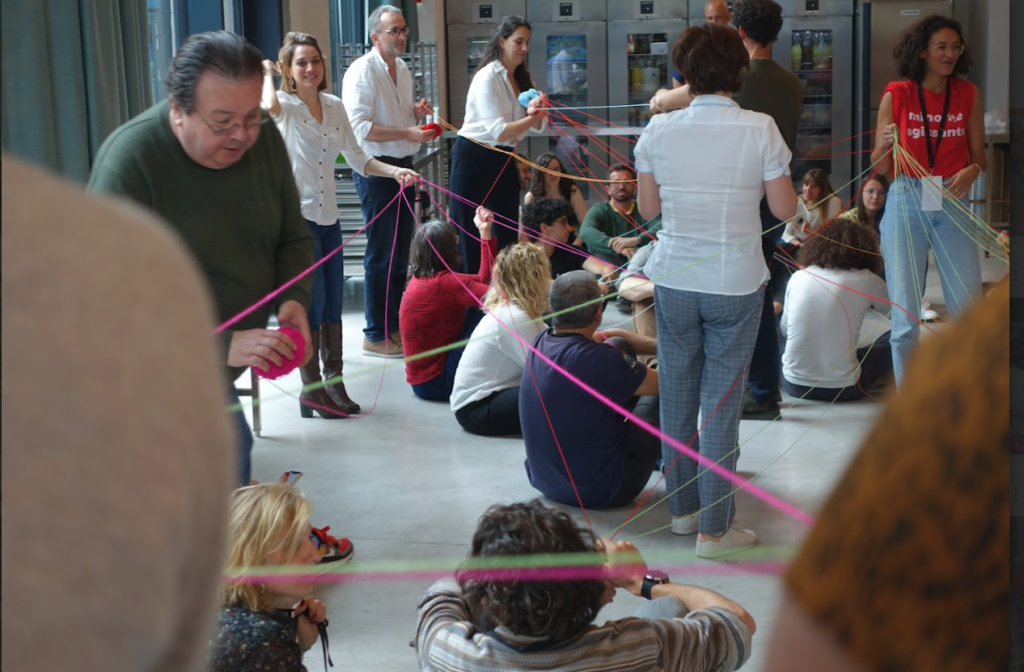
Day 1 of ECI Forum for the Right to Food – Géneve, Switzerland

The 2024 Forum, supported by international organizations and esteemed individuals, served as a platform for dialogue, collaboration, and decisive action. By bringing together voices from across Europe, the Forum aimed to forge a collective path towards legislative change, aiming to make the right to food a reality for all.

Drawing inspiration from the first European Citizens’ Initiative on the right to water in 2013, the three-day Forum in May 2024 was organized by Mater Fondazione, the Geneva Academy of International Humanitarian Law and Human Rights, and other key partners. It elaborated on the documents submitted for the right to food, building upon the Geneva Right to Food Manifesto adopted in March 2023 and the collective work of European right to food experts.

The Forum benefited from the experience of The ECI Campaign and insights from initiators of other ECIs, including the right to water. Participants engaged in working groups addressing legal, advocacy, marketing, fundraising, operational, and ecosystem aspects to ensure the successful registration of the ECI and the launch of a dynamic campaign.

Soon, the finalized texts from the forum will be uploaded and prepared to kickstart the collection process aimed at gathering 1,000,000 signatures.

Give a check to the website of the ECI petition: https://www.goodfoodforall.eu/

Give a check to the program of the forum 

Day 2 at the ECI Forum for the Right to Food

Day 2 at the ECI Forum for the Right to Food


PGR management in farmers seed network in Europe and China

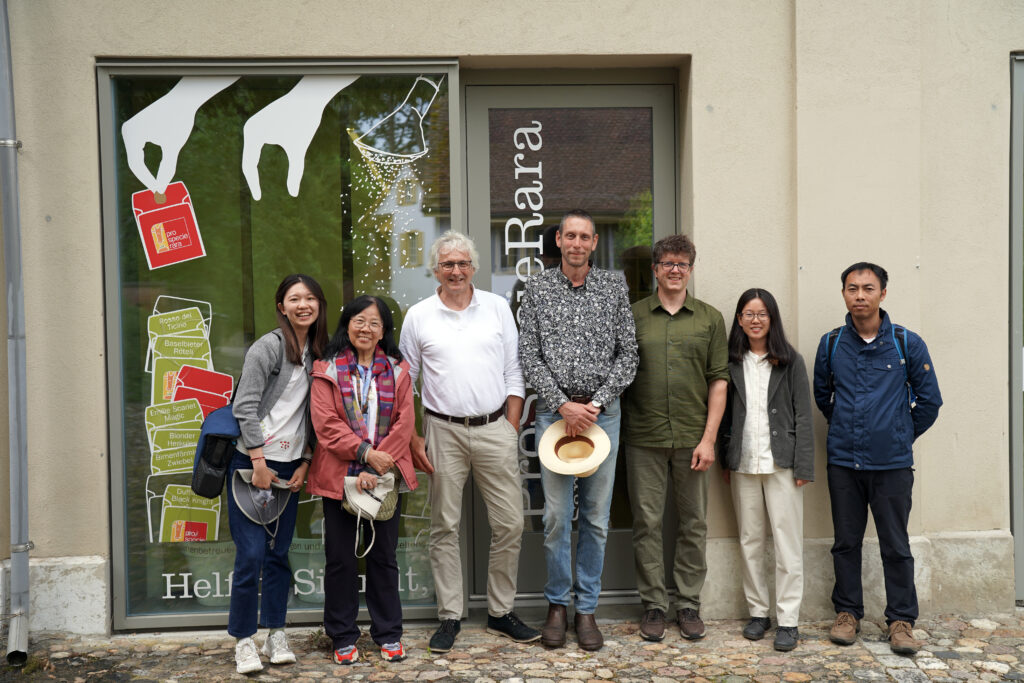
EC-LLD recently participated in an online event hosted by Pro Specie Rara, one of our members, to welcome a Chinese delegation at their headquarters in Switzerland. Our members Arche Noah and Reseau Semences Paysannes also attended the event This was a significant step in our ongoing efforts to strengthen international collaboration and exchange knowledge on biodiversity and sustainable agriculture.
About the Delegation

The delegation comprised representatives from prominent Chinese organizations dedicated to agricultural sustainability and biodiversity including:

Farmers’ Seed Network (FSN), founded in 2013, focuses on participatory research on agrobiodiversity and natural resource management. FSN operates in over 40 rural communities across 14 provinces, promoting seed conservation, sustainable utilization, and community-based biodiversity management. Their initiatives include community seed banks, participatory crop improvement, and ecological plant breeding programs. They also facilitate collaborations between farmers and scientists to enhance seed systems and improve livelihoods. Recently, FSN has established three multi-stakeholder platforms to promote in-situ conservation of agrobiodiversity and launched projects in partnership with UNEP to co-promote ecosystem-based adaptation strategies. Find out more on their website.

Foodthink, established in 2017, is an advocacy organization addressing industrialization and environmental/social issues in agriculture. Foodthink offers insights into transformations in food production and consumption and runs initiatives such as Agroecology Internship Programs, Small-Grant Programs, and Stakeholder Forums. Their work includes documenting food systems changemakers and policy advocacy. Recently, Foodthink has blocked national regulations unfavorable to small-scale farmers and continues to support sustainable grassroots food and agricultural initiatives. Find out more on their website.

Chinese Farmers’ Seed Network

During the event, Dr. Yiching Song presented the extensive work of FSN. She highlighted their implementation of community-based biodiversity conservation and sustainable agricultural practices since 2000. Dr. Song detailed how FSN has established about 120 community seed banks in 11 provinces, promoting the conservation and sustainable use of local seed diversity.

Here is a video on their work with English subtitles:

The FSN China is planning to attend the 13th Let’s Liberate Diversity Forum! at the International Gathering “Sow Your Resistance” in Antibes from the 1st to the 5th of October. This will represent another important opportunity to strengthen the engagement of our community with other realities working across the globe and foster exchanges. If you haven’t registered yet for the LLD Forum and the International gathering, do it as soon as possible to secure your place: Register here.

FAO IYM2023 logo

FAO resources on millets

2023 was International Year of Millets (IYM2023) and all the resources collected and created during last year’s events are now available online.

These include a series of webinars detailing the social, economic and environmental benefits of millets, plants with a vast heritage and enormous potential.

Recipe booklets are also available to enable use of these resilient plants.

EU agrobiodiversity conservation at risk

The administrative burden that would kill small producers of biodiverse seed

The Umbrella Organisation for Cultivated Plant and Livestock Breed Diversity in German
Speaking Countries (Dachverband Kulturpflanzen- und Nutztiervielfalt e. V.) issued a press release calling for Member States’ representatives to advocate against those resolutions of the EU Parliament which, if approved, would have a huge impact on producers of biodiverse seed.

Under current legislation, the sale of biodiverse seed varieties for non-commercial use is expressly permitted in limited quantities in some Member States, while in most other countries it is not considered an ofference and therefore allowed. However, under pressure from the seed industry, the reformed legislation would require standardisation, imposing the same administrative burdens on those selling even the smallest quantities of seed as the large and multinational companies.

While the EU Parliament speaks highly of agrobiodiversity conservation, their resolutions would in practice destroy the structures that are in place to support it most effectively. In fact, biodiverse seed is often sold by professionals who produce the seed themselves, concentrating on a limited number of species and varieties, grown , harvested, cleaned, stored, packaged and labelled with artisanal methods. Seeds are then sold direct on their websites or at events and seed festivals, which builds professional networks and favours the exchange of experiences, both integral parts of preserving diversity.

Beside failing to protect cultivated plant diversity in the fields and gardens of the EU, the EU Parliament’s decision would not fulfil the requirements of the FAO International Treaty on Plant Genetic Resources for Food and Agriculture (ITPGRFA) which the EU is a party of, or those of Article 19 (‘Right to Seed’) of the UN Declaration on the Rights of Peasants and Other People Working in Rural Areas (UNDROP).

The opportunity is still there to stop such detrimental legislation from coming into force, by calling for the exemption of agrobiodiversity conservation as a whole, including specialised micro-enterprises, from the new EU seed regulation. This must be done during the trialogue negotiations between the Commission, Parliament and Council of Ministers.

Read the press release in English and in German.

NOW ONLINE: Liveseeding Practical Guide Seed Drying & Storage

The Practical Guide for drying and storing vegetable seeds in organic small-scale and on-farm seed production is now available online in French and English.

We’re thrilled to announce the launch of LiveSeeding latest publication on seed quality: The Practical Guide for Drying and Storing Vegetable Seeds in Organic Small-Scale and On-Farm Seed Production, now available online in both French and English!

Developed within the context of the LiveSeeding project, this guide is a comprehensive resource for anyone involved in seed production.

Liveseeding

Seed quality is paramount for successful crop emergence and establishment. The germination rate and vigor of seeds directly impact their ability to withstand environmental stresses and ultimately determine the crop’s performance. However, during storage, seeds naturally age and their quality diminishes due to oxidation. This deterioration process is influenced by factors such as moisture level, oxygen presence, and temperature.

This guide addresses these crucial aspects, offering practical solutions for on-farm drying and storage that save both time and resources. It provides insights on efficient drying methods, maintaining seed dryness during storage, and safeguarding against oxygen exposure.

While it’s well-known that seeds should be properly dried and stored in optimal conditions, practical challenges often hinder these precautions. Whether due to time constraints, resource limitations, or organizational difficulties, many seed producers struggle to implement best practices.

Through real-life examples, case studies, and actionable guidance tailored to specific context and objectives, the practical guide aims to alleviate these challenges empowering small-scale seed enterprises and on-farm producers to overcome obstacles and optimize their seed drying and storage processes.

FAO Agroecology Knowledge Hub Digest

The FAO Agroecology Knowledge Hub is a point of reference for all involved in agroecology. The website offers agroecology tools such as a database of knowledge and a reference database of legal frameworks and policies concerning agrecology. In addition, email groups under the banner Family Farming & Agroecology Community of Practice facilitate knowledge sharing and discussion.

All this precious insights into the agroecological world you can now receive conveniently packed in a monthly Digest fto your mailbox. Below, you can scroll through, or download, the April 2024 issue of the Digest as a taster. It includes Germinate! a new exclusive column sharing the perspectives, insights and innovations of leading agroecology and food systems researchers and practitioners. If you want to suscribe, contact the Knowledge Hub.

Table of content

  • InFocus: Farmers’ Protest Around Europe
  • Germinate!
  • Innovation
  • Voices from the Ground
  • From the Research World
  • Multimedia
  • Policy Briefs & Studies
  • Upcoming Events
  • Behind the Scenes
No event found!

Video