
15th Let’s Liberate Diversity!
REGISTRATION ARE OPEN UNTIL 30 APRIL
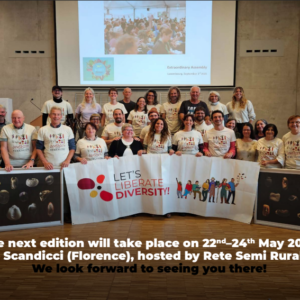
The 15th edition of the LLD Forum will be held in Scandicci from May 23 to 25, 2026, in conjunction with the 5th edition of the 72 Hours of Biodiversity organized by Rete Semi Rurali, Italy.
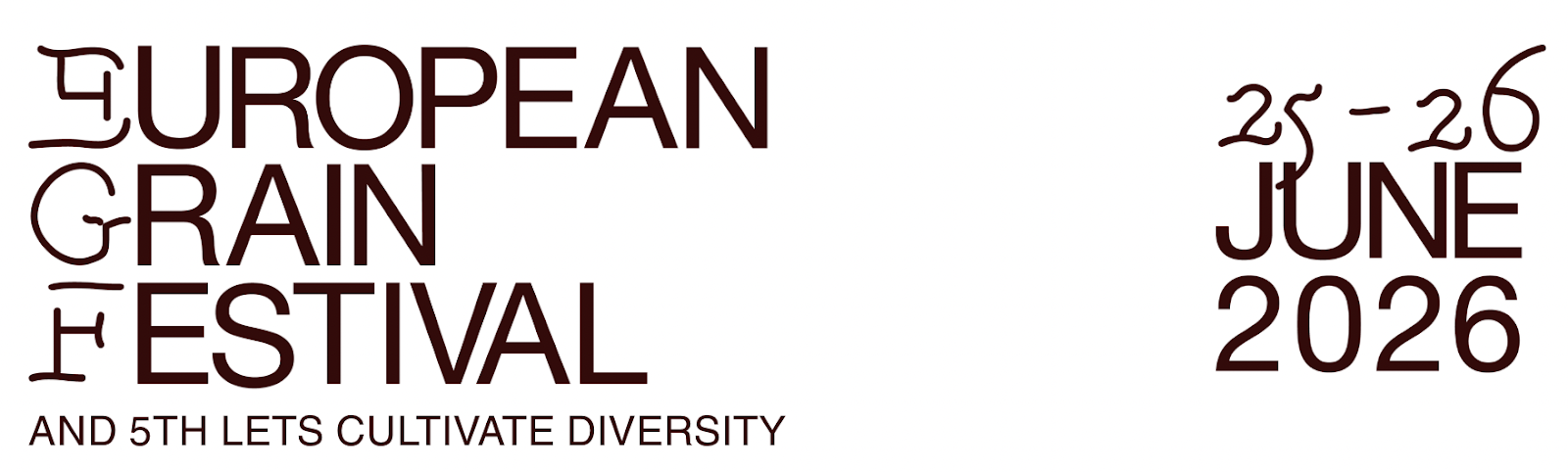
5 th Let’s Cultivate Diversity!
REGISTRATION ARE ALSO OPEN!
The European Grain Festival 2026 in Denmark combines parallel sessions of baking workshops, cooking demos, tastings, field demonstrations, poster sessions and lectures. You will meet and network with experienced bakers, farmers, chefs, processors, breeders and researchers from all over Europe.
—If you aim to produce quality cereal and cereal based food, this is the place to be.
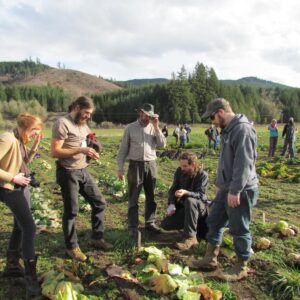
At the heart of the festival you will find a demonstration field displaying hundreds of diverse grain varieties from all over Europe.
USE IT or LOSE IT
The European Coordination Let’s Liberate Diversity! (ECLLD) is an international nonprofit organization dedicated to the dynamic management of plant genetic resources for food and agriculture.
Our core belief is that the diversification of our food systems can be achieved through the collaborative efforts of various stakeholders involved in cultivated biodiversity.
The Coordination boasts a robust network of 22 members with a network of 170 national organizations operating across 21 European countries with a membership base exceeding 35,000.
In collaboration with approximately 15,000 farmers, we actively engage in the conservation and management of around 40,000 plant varieties.

Where we are
We want to bring diversity back in our food system!
Countries across all the Europan Region
Staff and volunteers
Organisations part of the network
Varietes maintend and managed by the network
Individual Members
Farmers and gardeners involved in dynamic management of cultivated biodiversity
What we do
As an influential platform, EC-LLD! serves as a unique space for facilitating the exchange of practices and information among farmers, seed savers, NGO members, and emerging small enterprises, fostering local actions on agrobiodiversity and promoting participatory dialogues.
Our proven expertise extends to our participation in projects funded by Horizon Europe, Erasmus+ and Horizon 2020. Furthermore, we have established successful collaborations with a diverse range of foundations and academic institutions.
Our work span across the 3 following areas

policy
Capacity building and knowledge sharing regarding agrobiodiversity, seed policies and legislastion.
policy
Capacity building and knowledge sharing regarding agrobiodiversity, seed policies and legislastion.
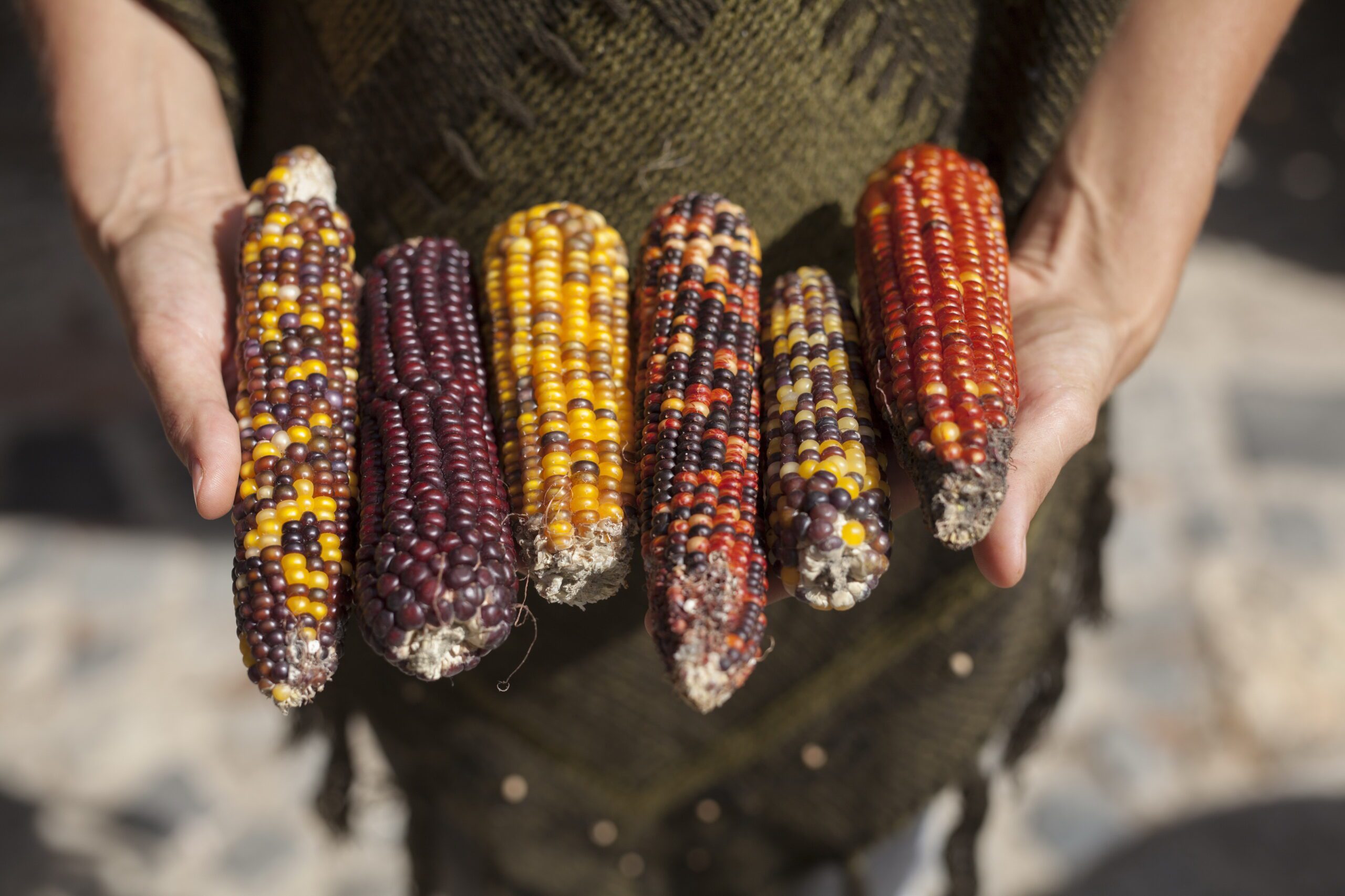

Communities seed banks
Training, support and management across Europe.
Communities seed banks
Training, support and management across Europe.

Communities
Facilitating peer to peer exchange of practices and information between different actors.
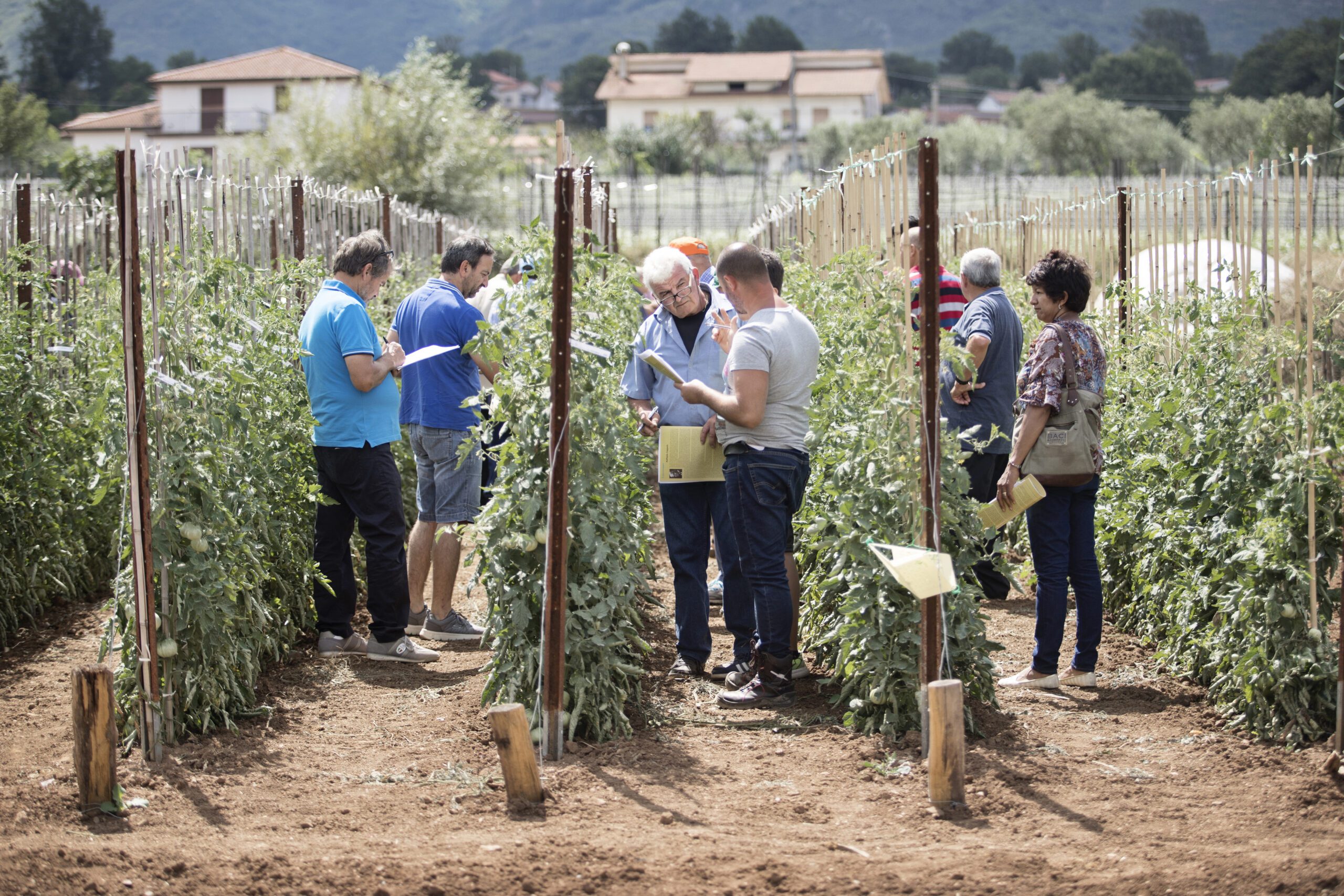
Communities
Facilitating peer to peer exchange of practices and information between different actors.
NEWS

Major philanthropies urge massive scale up of agroecology and regenerative approach. An opportunity demanding scrutiny.
25 major philanthropies are calling for a groundbreaking tenfold increase in funding for regenerative and agroecological transitions to tackle urgent global agricultural and environmental challenges. Their joint report, “Cultivating Change: Accelerating and Scaling Agroecology and Regenerative Approaches,” outlines the transformative potential of these sustainable practices.
Key Takeaways:
- The call to action emphasizes the need to phase out fossil fuel use in agriculture and transition towards agroecology to align with the 1.5ºC goal of the Paris Agreement.
- The estimated cost for a global transition to agroecology and regenerative approaches is USD 250-430 billion per year, a fraction of the hidden costs of current practices.
- Current investments fall short, leaving a significant gap of USD 206-386 billion, requiring a tenfold increase to support the necessary transformation.
While the call for increased investment presents an opportunity to transform global food systems, it also demands scrutiny. Can this financial influx truly drive positive change, or might it inadvertently support questionable practices under the guise of agroecology? The need for transparent, accountable, and community-driven initiatives is paramount to avoid the pitfalls of appropriation.
You can find the full report here.
Policymakers should respect the organic movement’s choice on NGTs
At the end of November, IFOAM Organics Europe issued a press release appealing to the Members of the European Parliament (MEPs) and Member States to respect organic farmers and operators’ choice to not use Novel Genomic Techniques (NGTs) and maintain the ban on the use of NGTs in organic production as laid out in the Commission’s proposal.
Removing the ban of NGTs would be against the position and wishes of the organic sector. Besides, exempting certain NGTs from risk assessment and traceability would not only have important consequences for the organic market, but for the whole food production sector in Europe.
IFOAM statement comes on the back of the resolution, taken at the institution’s general assembly in the summer, to favour a systemic approach to innovation and against the legitimisation of patents on plant and animals (read more), which reiterated the organic sector position paper on breeding techniques published in 2017.
Alongside the appeal, IFOAM released a briefing by the title Sustainability in organic breeding: Improving the entire system or adjusting some genes?
You can read more on the takeaways from the press release on the hidden dangers of NGTs for the EU on the website of the organisation.
FAO State of Food and Agriculture 2023
The FAO report focusses this year on True Cost Accounting (TCA) as a tool for transformation of the agrifood systems, and attempts for the first time to perform a national-level assessment of such costs for 154 countries, opening the way for targeted national action.
Calculations with available data reveal that the global quantified hidden costs of agrifood systems amount to a minimum of 10 trillion dollars at 2020 purchasing power parity (PPP). Decision making must take these costs into account.
The report is available online in a variety of formats.
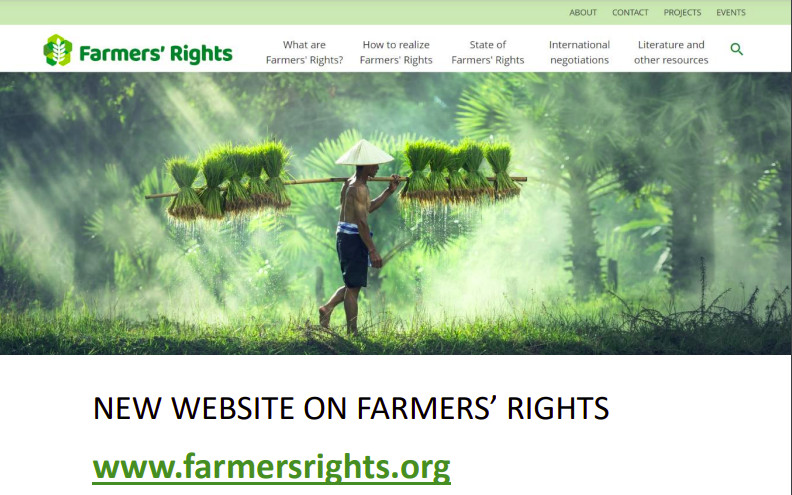
Farmers’ Rights: a new online resource
Research foundation the Fridtjof Nansen Institute has recently expandeda tool for decision makers, practitioners and others involved in the realization of Farmers’ Rights as addressed in the International Treaty on Plant Genetic Resources for Food and Agriculture (ITPGRFA), which was made available online.
The website gathers together content about the history of ITPGRFA, accounts of the negotiotions of the Treaty, as well as relevant literature and resources. It also offers information on options and steps that can be taken at the national level to implement Farmers’ Rights, and a calendar of events.
Have a look at https://www.farmersrights.org/

Let’s raise our forks for diversity!
An international petition to support biodiversity in the fields for fairer and more sustainable food systems needs your support: please sign and share!
The current EU regulations for the marketing of seeds was created in the 60s with a focus on agroindustrial principles, which has led to the centralisation and privatisation of seed production, out of the hand of the farmers and into those of agrochemical companies.
Small, diverse and local farms and food producers, those better suited to address the challenges linked to the changing climate, fail to compete in a landscape of industrialised seed production aimed at monocultures.
That is where this petition comes in. Small, diverse and local farms and food producers need seed that is suited to their smaller scale, local and seasonal context, not seeds that are bred to produce uniform crops that grow best in the artificially uniform conditions created in agroindustrial fields with the use of synthetic fertilisers and pesticides.
Despite revisions over the years, the EU regulations have failed substantially to protect agrobiodiversity and support the rights of farmers to select and produce seeds that is right for their local conditions (known as farmers’ seeds, or even evolving seed populations) and to share it in small quantities and on a local scale.
In the last few years the EU has embarked on a more thorough reform of its seed regulations. As was to be expected, the agroindustrial complex is pushing for stricter rules than those that already underpin their power, which would further their control on seed, and by extension on farming.
In July 2023 the European Commission has published a proposal that threatens the conservation and circulation of crop diversity.
This is the time to act for genuine change. We need seed laws that secure our right to healthy, diverse and tasty food, rules that truly enhance diversity in farmers’ fields and in gardens, supporting local varieties, and respecting the rights of farmer to choose diversity rather than uniformity.
In a changing world, we need as much diversity as possible to adapt and thrive. The new rules, instead would make it unaffordable for those that conserve, breed, share and sell biodiverse seed to keep operating, at a time when we need more, not fewer of these enterprises.
Read more on the campaign’s website and join our numbers!
Public pressure is crucial at this point in the political process, to make sure the responsible politicians hear the voices for diversity loudly and clearly.
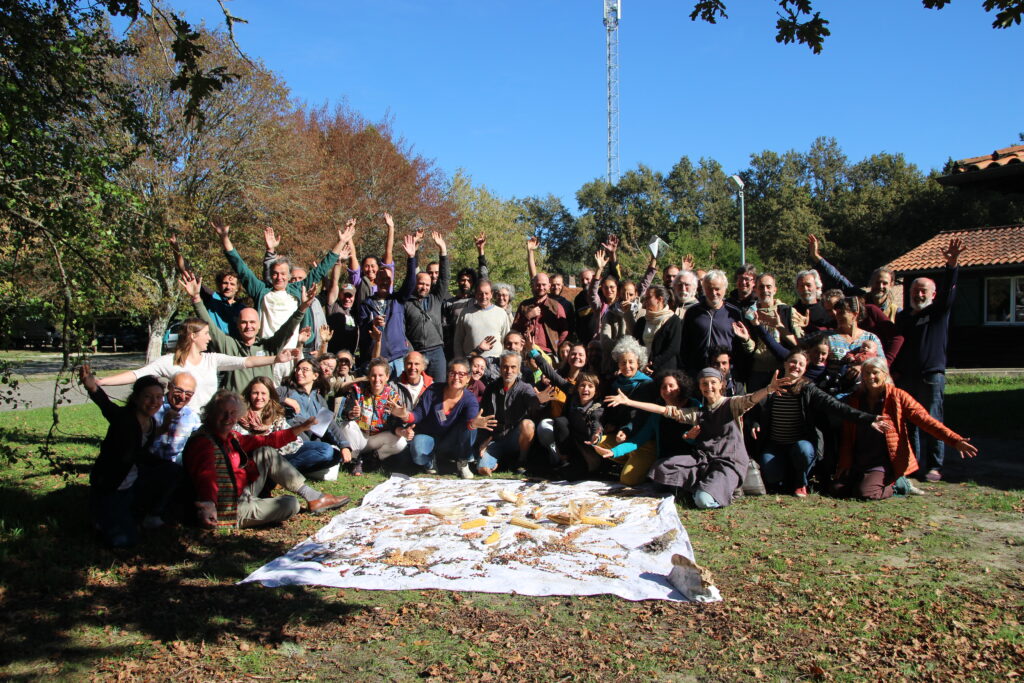
Réseau Semences Paysannes: 20th anniversary celebrations
Members of the Réseau Semences Paysannes gathered to celebrate two decades of defense and dissemination of farmer seeds, on September 22, 23 and 24 at Sauméjan in South West France.
The festivities began with an exchange between the different species’ groups and a historical round table where everyone was able to tell their memories of moments spent at the Network. The “elders” were able to meet the next generation of the RSP.
Members focused on several subjects on Saturday morning: upcoming legislative reforms, climate change, food autonomy, rules of use of the commons, shared governance, etc. The trad ball on Friday evening and the Sans Interdit concert on Saturday had us dancing in a festive atmosphere.
Activities such as the Seeds and Biodiversity fresk and the workshop to learn how to clean and preserve your seeds were able to attract an audience interested in “practical” questions surrounding seeds. Young and old children were able to listen to the tales of Claire from Biaugerme.
The weekend concluded with a “Memories of the Future” workshop where participants placed themselves in 2033 to tell their “memories” of the Network. Many ideas emerged for the future of the Network. Members want new meetings, particularly international ones, but also to extend training and education around seeds and to expand the number of members of the Network.
Maud Dumont
Chargée de mission 20 ans

New paper on the possible deregulation of GMO in EU
The European Commission (EC) is set to propose the deregulation of certain genetically
modified (GM) plants that have been produced using gene editing, a set of techniques
within genetic engineering. This report looks at the possible implications and
consequences of such a deregulation for the European Union (EU), considering the Union’s
efforts to achieve wider policy objectives with respect to sustainable food and farming
systems, consumer choice, innovation, competitiveness, and other strategic goals.
In sum, deregulation of certain GM crops and foods could have wide and long-term
implications, not only for the use of specific crop biotechnologies in farming and food
production in Europe, but for the broader sustainable and equitable development of
European agri-food systems. The report argues that these potential implications should
be weighed carefully in a broad and democratic debate, which should prioritise the desired
sustainable directions for European agriculture and food systems, rather than placing a naïve
faith in the supposed power of a singular technological pathway that locks farmers, input
suppliers, food companies and consumers into an input-dependent technology treadmill.
The new report produced by Adrian Ely, Patrick van Zwanenberg, Elise Wach and Dominic Glover for the Greens/EFA group in the European Parliament is available here
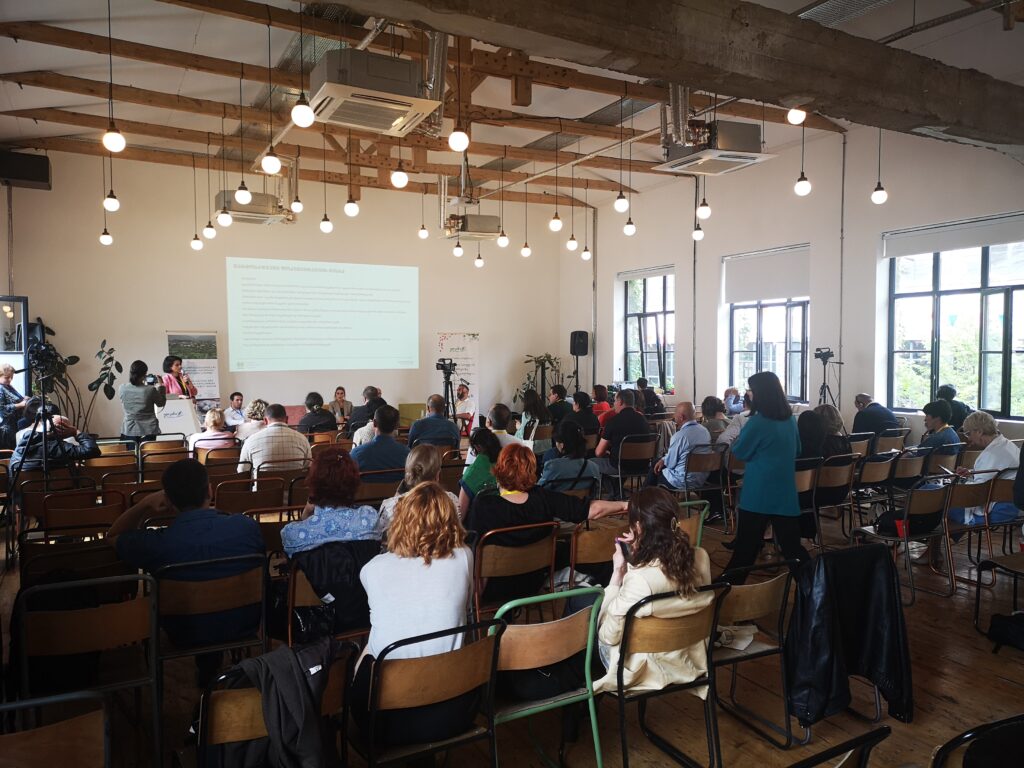
ELKANA organised the Organic Farming and Agroecology conference in Georgia
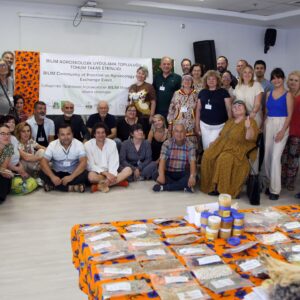
The International conference Organic Farming and Agroecology was organized by the Biological Farming Association Elkana on June 23, 2023, in the Fabrika conference hall. The conference was opened by Elkana Director Mariam Jorjadze and Deputy Minister of Environment Protection and Agriculture Solomon Pavliashvili. Raimund Jehle, the Deputy Regional Representative of the Food and Agriculture Organization (FAO), sent a video appeal specially for the Conference. Beka Urushadze – HEKS-EPER regional director for the South Caucasus, Giorgi Tchumburidze – Economic Advisor of the Danish Embassy, Kim Noelle Kwibuka – Brot fűr die Welt representative (Germany) and Ketevan Khutsishvili – Rural Development Program Manager of the European Union Delegation to Georgia, also welcomed the conference.
The international conference Organic Farming and Agroecology
At the international conference the role of organic and agro-ecological agriculture in improving the agri-food sector and transforming it into equitable and economically, socially and ecologically sustainable system was discussed. The Conference covered the following issues from global, regional and Georgian perspectives:
- Session #1 – Organic Farming Development Tendencies
- Session #2 – Organic and other Quality Marks in Hazelnut Sector
- Session #3 – Agroecology and Farmers’ Rights
- Session #4 – Market access: Practical Examples Benefiting Organic and Agroecological Producers

Local and international experts, as well as farmer organizations from Georgia, the region and beyond from 12 countries presented their findings and experience at the Conference.The conference was attended by about 150 participants – representatives of governmental, international, civil society organizations and scientific institutions; organic and agroecological farmers, companies involved in organic production, and other stakeholders.
In parallel with the Conference, Farmers Fair of local, organic and eco-friendly products was held. After the conference, one- and two-day tours to Elkana conservation farms in Kakheti and Samtskhe-Javakheti were organized for the participants.
Supporters
The Conference was held with financial support from the Danish Development Agency (DANIDA), HEKS-EPER (Switzerland), Brot für die Welt (Germany), Austrian Development Agency (ADA) and Agroecology Fund. And the conference was supported by organizations – European Coordination – Let’s Liberate Diversity, European Coordination Via Campesina (ECVC) and Schola Campesina.
Conference materials (presentations and video recordings of the speeches) are available on the Conference website – www.conference.elkana.org.ge

ELKANA
The Biological Farming Association Elkana, a Georgian non-governmental organization, was founded in 1994. The association membership is open to any citizen of Georgia interested in the development of organic farming in the country, as well as the protection of the environment.
The Association facilitates the improvement of the socio-economic condition of the rural population of Georgia and environmental protection through fostering the development of organic farming, the introduction of agro-ecological practices, diversification of economic activity and increasing self-reliance of the population in rural areas.

Elkana is an active contributor to policy development related to agricultural biodiversity in Georgia – Elkana experts were involved in the elaboration of the agricultural biodiversity part of the first and second National Biodiversity Strategy and Action Plans of Georgia in 2003-2005 and 2011-2013. At the same time Elkana is an active participant of international networks working on agricultural biodiversity conservation, like SAVE Foundation (save-foundation.net), European Coordination La via Campesina, GENET, Bioversity International, Nyeleni – European Food Sovereignty Network, and Slow Food

EU Seed reform under scrutiny: Unpacking criticisms and concerns from ECLLD members
On 5 July 2023, the European Commission proposed a comprehensive Seed Law Reform with the aim of updating the legislation on the production and marketing of plant reproductive material (PRM). While this proposal seeks to enhance the regulatory framework and support sustainable agriculture, it has sparked debates and concerns among stakeholders regarding its potential impacts on agrobiodiversity management.
The key point of the reform have been summarised by Réseau Semences Paysannes (RSP) and is available here (in French)
Concerns on the EU Seed reform
Arche Noah, a prominent advocate for crop diversity, recently published a briefing outlining how the proposed EU seed regulation might pose challenges to preserving and exchanging diverse seeds.
The proposed legislation would make it impossible to build a “seed infrastructure” for sustainable agriculture, as it restricts the conservation and further development of diversity, and pushes back local innovation.
Arche Noah Briefing
Below are the key points raised by Arche Noah in their briefing:
- Restriction on Transfer of Cultivated Plant Diversity: The proposed regulation restricts the free transfer of plant genetic resources for conservation, introducing bureaucratic hurdles that hinder farmers and seed organizations from preserving and selling endangered diversity.
- Failure to Implement Farmers’ Right to Seed: The proposal introduces arbitrary restrictions on farmers, limiting their ability to exchange and sell their own seeds, contradicting their internationally recognized right to save, use, and exchange seeds.
- Inadequate Measures for Widening Access to Diverse Varieties: While the proposal removes restrictions on marketing diverse varieties, it introduces impractical requirements that may hinder small producers from making these seeds available.
- Lack of Focus on Sustainable Agriculture: The proposal’s approach to seed testing falls short in ensuring sustainability, as it does not mandate testing under organic or low-input conditions.
- Positive Impact on Hobby Gardeners: The proposal includes exemptions for hobby gardeners, allowing private seed exchange and sale without mandatory variety certification, recognizing their unique needs and interests.
The full briefing is available here
Furthermore, the Umbrella Association for Crop and Livestock Diversity in German-speaking countries (Dachverband Kulturpflanzen- und Nutztiervielfalt e.V.) has also expressed in a press release significant concerns about the proposal’s shortcomings and potential negative impacts on biodiversity preservation.
The EU Commission’s aim to conserve agricultural plant diversity with the new seed legislation is
welcome – however, the EU Commission’s proposal contains such significant shortcomings that it is
likely to even lead to the contrary, to a loss of biodiversitySusanne Gura – Dachverband Kulturpflanzen- und Nutztiervielfalt e.V.
Susanne Gura, representing Dachverband Kulturpflanzen- und Nutztiervielfalt e.V., highlights the following concerns:
- Limited Exemptions for Diversity Conservation: Exemptions for diversity conservation apply only to formal networks and organizations, overlooking the role of individuals like gardeners and farmers in on-farm conservation.
- Challenges with Unregistered Varieties and Seed Saving: Requirements for registering as operators may discourage seed-saving practices, impacting conservation efforts in home gardens and small farms.
- Restriction on Farmers’ Rights to Sell Farm-Saved Seeds: The proposal restricts farmers from selling seeds of diversity varieties, potentially affecting biodiversity conservation.
- Misalignment with International Objectives: The proposed regulation may not fully align with international objectives for plant genetic resources and peasants’ rights.
- Call for Adequate Legislation to Encourage Conservation Work: The association urges governments to ensure adequate legislation that encourages farmers and gardeners to continue on-farm conservation work, preserving cultural heritage and supporting agriculture in the face of global warming.
For the full text from Dachverband Kulturpflanzen- und Nutztiervielfalt e.V. have a look here
The European Coordination Let’s Liberate Diversity! (ECLLD) continues to facilitate discussions and exchanges on the new EU seed reform. Stay tuned for ongoing updates.
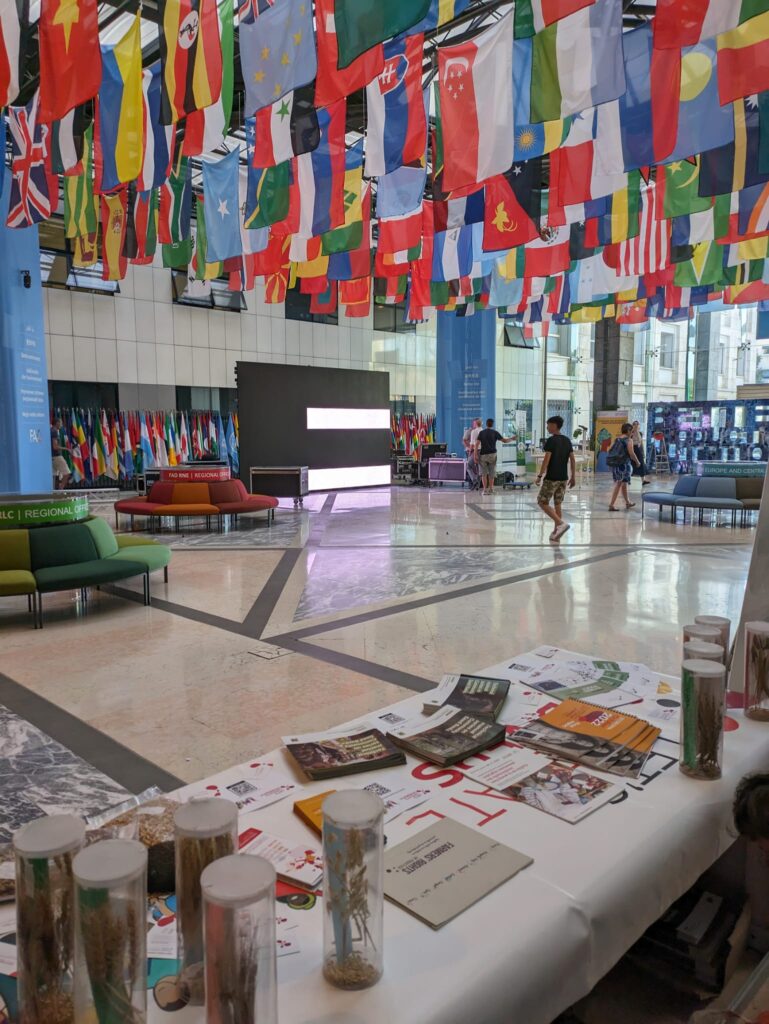
Let’s Liberate Diversity (ECLLD) at the 19th Regular Session of the Commission of Genetic Resources for Food and Agriculture (CGRFA) at FAO
ECLLD participated as an observer in the proceedings of the 19th Regular Session of the CGRFA in Rome.
The Commission on Genetic Resources for Food and Agriculture (CGRFA) at FAO
The CGRFA is an international forum and intergovernmental body established by the Food and Agriculture Organization (FAO) of the United Nations. The Commission facilitates cooperation and collaboration among member countries to address issues related to the conservation, utilization, and management of genetic resources for food and agriculture, including plants, animals, forests, and microorganisms.

The 19th regular session of the CGRFA at FAO in Rome featured a very dense agenda, encompassing various important topics. These included a session dedicated to farmers’ rights and seed systems, discussions on the third report on the state of the world’s plant genetic resources, a review of the implementation of the Global Action Plan for Plant Genetic Resources, and the establishment of terms of reference for a study on the impact of policies and regulations on farmers’ access to varieties.
The European Coordination at the CGRFA
ECLLD is a collaborative platform that unites more than 20 organizations from 19 European countries, all dedicated to conserving and managing agrobiodiversity through seeds. Our collective mission is to reintroduce diversity into our food system. To achieve this goal, it is crucial to ensure that the perspectives and concerns of farmers, seed savers, NGOs, grassroots organizations, and emerging small enterprises actively engaged in cultivating biodiversity are represented at institutional discussions and decision-making tables. Together, we strive to create a sustainable and resilient food system that values and preserves our diversity.
Matthias Lorimer – ECLLD Secretariat
During the FAO’s main hall event, ECLLD proudly hosted a stand, offering a valuable platform to interact with member states’ representatives and a diverse array of stakeholders attending the CGRFA session throughout the week. This opportunity allowed us to showcase the significant work that ECLLD is undertaking in the field of cultivated biodiversity. We engaged in fruitful discussions, sharing our vision for a more diverse and sustainable food system while emphasizing the importance of preserving and promoting cultivated biodiversity.

ECLLD and the Global Plan of Action for Genetic Resources for Food and Agriculture
One of the key topics discussed during the 19th Regular Session was the Global Plan of Action for Genetic Resources for Food and Agriculture (GPA). This essential document provides essential guidance and strategic direction to countries and organizations for the conservation, sustainable use, and equitable sharing of genetic resources in agriculture.
In this session, the CGRFA reviewed the Second GPA and engaged in discussions regarding the development of the third version of the document, which is set to take place in the coming year.
ECLLD emphasized to the commission the significance of involving Civil Society Organizations (CSOs) in the consultation process to contribute to the new plan. It was underscored that CSOs, including local farmers’ organizations, seed networks, Community Seed Banks (CSBs), small and local seed enterprises, and organizations committed to agroecology (both in production and consumption), play a pivotal role. Their valuable contributions are vital in shaping such an important instrument. Ensuring their active participation will lead to a more inclusive and effective plan, reflecting the perspectives of those who are directly involved in the conservation and management of genetic resources for food and agriculture.
The Study on impact
Another significant topic discussed during the 19th Regular Session was the CGRFA’s commissioning of a vital study to assess the impact of seed policies, laws, and regulations on farmers’ access to diverse, locally adapted seed varieties. This research holds added significance as it coincides with the European Commission’s recent proposal for new seed marketing and New Genomic Techniques laws. The insights gained from this study will play a crucial role in shaping seed policies and regulations, not only within Europe but also globally. By understanding the implications of these policies on farmers’ access to diverse seeds, we can work towards more inclusive and sustainable agricultural practices worldwide.
The challenge we face is to develop laws able to strengthen fair and local seed and food systems committed to agroecology for the next 30 years.
To ensure a comprehensive investigation, ECLLD proposed to the CGRFA that the research must extend beyond desk work, incorporating in-person interviews with farmers, local organizations, seed networks, and other stakeholders involved in agroecology. The aim is to gather opinions and proposals in a language accessible to farmers, capturing their perspectives on complex issues.
ECLLD also suggested to the CGRFA that the study should explore specific questions related to farmers’ access to seed exchange, Community Seed Banks (CSBs), non-registered traditional and local varieties, Participatory Plant Breeding, farmers’ rights, and the impact of laws on small, local seed enterprises specializing in traditional varieties. Additionally, it will examine the influence of Intellectual Property Rights (IPR) laws, misappropriation of traditional varieties, and New Genomic Techniques regulations on farmers’ access to genetic resources for food and agriculture.
Finally, the European Coordination Let’s Liberate Diversity highlighted that, without adequate funding, the study may not fully address the challenges and visions of stakeholders on the ground. A well-funded study, on the other hand, can pave the way for fair and local seed and food systems, fostering sustainable agroecology for the next three decades. By investing in this research, we can better understand the needs of farmers and work towards policies that promote agricultural diversity, resilience, and long-term sustainability.
Seed legislation, seed marketing, advocacy, seed systems, scientific publication, school and seminar, patents
Agrobiodiversity, seed savers, seed networks
Plant breeding, LLD Forum, news from members, news from other organizations
– SEEDS STORIES –
DO YOU WANT TO STAY UPDATED??

The ECLLD - News! informs about events, ongoing projects and insights regarding cultivated biodiversity at European level.
We are very pleased with your interest in our challenges, our diversity is our strength!
-COMMON CALENDAR –
 On Schedule
EC-LLD! General Assembly (for EC-LLD! members only)Field Visits
- On Schedule
Official opening of the ForumField Visits
- On Schedule
WS1: Seeds, Biodiversity and the Right to Food: The Role of Municipal Food Policies
- On Schedule
WS 2: Seeds in Common: Genebanks, Breeding Innovation, and the Future of Democratic Seed Systems Sold Out
- On Schedule
WS 3: On-farm agrobiodiversity in the Balkan region: from preservation to plant population development
Submit an Event
Legal Watch
The legal watch is realised by the French Farmers’ seeds network, Réseau Semences Paysannes. Informations are related to seeds marketing, intellectual property rights, genetic ressources.
It is presented in French.
on EU topics
- Plateforme ACLP, Communiqué du 27 février 2025 - L’ACLP participe à la table ronde sur la propriété intellectuelle et les semences au Salon international de l’agriculture de Paris 2025
- Convention sur la diversité biologique, Communiqué du 24 février 2025, Le Fonds de Cali est lancé en marge de la reprise de la session de la COP16
- OMPI, Communiqué du 5 décembre 2024 - Le Malawi est le premier pays à ratifier le Traité de l’OMPI sur la propriété intellectuelle, les ressources génétiques et les savoirs traditionnels associés
- Confédération suisse, Avis du Conseil fédéral sur le rapport de la CSEC-N relatif à la prolongation du moratoire sur le génie génétique, 29 janvier 2025
- ACLP, Communiqué du 5 février 2025 - L’ACLP organise une session d’information pour les décideurs politiques de l’UE