Let’s Liberate Diversity! News

European Parliament

Results of the European Parliament vote on Plant Reproductive Materials

Vote on EU seed law: Industry attack on diversity largely defeated EU Parliament votes in favour of farmers’ right to seeds – but fails to strengthen the preservation of local and traditional varieties

text adopted available:
https://www.europarl.europa.eu/doceo/document/TA-9-2024-0341_EN.html

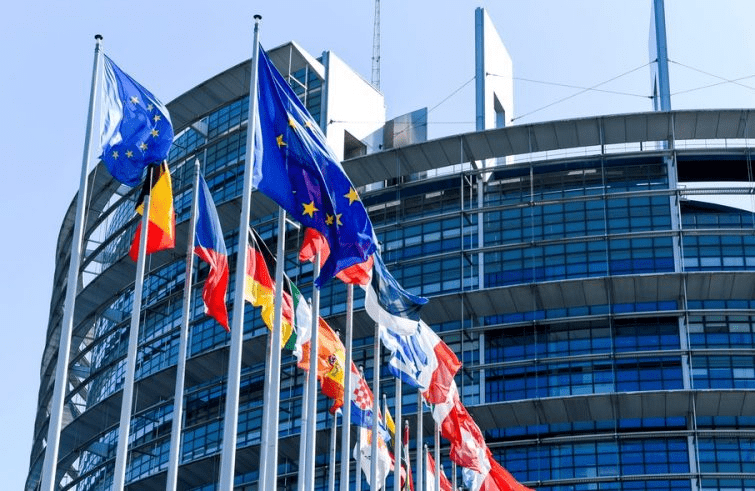
Schiltern, Vienna, Strasbourg – 24 April 2024, the plenary of the EU Parliament in Strasbourg voted on the new EU seed law. ARCHE NOAH takes a mixed view of the decision on new rules for the production and marketing of seeds and other plant propagating material. Despite aggressive lobbying by the seed industry and its lobby group Euroseeds in recent days, a majority of MEPs supported the constructive proposal of the Agriculture Committee in almost all points.

“With today’s decision, the European Parliament has recognised that seed diversity is vital for our farmers,”

Magdalena Prieler, seed expert at ARCHE NOAH

The European Parliament’s decision safeguards the age-old tradition and the right of farmers to exchange small quantities of their own propagating material with each other for free or for monetary compensation – a practice that has been practised for generations and strengthens resilience and independence in agriculture. The resolution also grants farmers continued access to traditional varieties such as the old tomato variety Rotes Herz, the Steinfelder Tellerlinse, Laaer Zwiebel and Laufener Landweizen. It also frees them, as well as conservation initiatives, from new bureaucratic regulations. All these points in the report by Herbert Dorfmann, the rapporteur in the responsible Committee on Agriculture, were strongly opposed by the seed industry. Nevertheless, they were ultimately supported by the Social Democrats, the Greens and the Left, as well as parts of the European People’s Party and the liberal Renew Group.

However, the industry lobby has prevailed on one point that is essential for saving traditional and local varieties. The transfer of endangered varieties for the purpose of their conservation should have been exempted from the scope of seed law. This possibility has now been severely restricted. Only established conservation organisations are now allowed to make use of this exception.

“Many actors in Europe contribute to saving the diversity of varieties, including local seed producers, individual farmers, but also public initiatives such as seed libraries. Today’s decision failed to create a clear legal framework for this work which is so important to society as whole. This is disappointing and unacceptable.”

Magdalena Prieler, seed expert at ARCHE NOAH

The industry claimed this exemption would lead to “uncontrolled parallel markets”. In reality, it was about the transfer of very small quantities, for example 500 grams of vegetable seed per year. “The industry used scaremongering and false arguments to persuade MEPs to reject the recommendation of the specialist committee. Diversification and variety on the field are the most effective tools we have to mitigate the negative effects of the climate crisis in agriculture, such as extreme weather conditions or new diseases and pests.”

European EU Seed Reform
Seeding Europe Erasmus+ project supported EC-LLD members and participants to follow the seed law reform process

ARCHE NOAH and other seed initiatives from all over Europe have contacted MEPs in recent days to inform them about the threat to diversity and to demand farmers’ right to seeds. “We would like to thank our supporters who have made this campaign possible and all those who have sent seed packets to the EU Parliament or called MEPs themselves in the last few days and weeks,” says Prieler.

This work will continue after today’s vote. The decision now forms the basis for the European Parliament’s negotiations in the trialogue with the EU Commission and the Council of Agriculture Ministers on the final legislative text. Negotiations are not expected to begin until the end of 2024. A progress report by the Belgian Council Presidency and a discussion by the EU Agriculture Ministers is planned for the last Council meeting before the summer break, on 24 and 25 June 2024. “We call on the Council of EU Agriculture Ministers to resist the pressure from the seed industry. We need a secure basis for a sustainable, resilient and diverse food system,” says Magdalena Prieler from ARCHE NOAH. “Agriculture Ministers must actively ensure that local varieties, regional cuisine and farmers’ right to seeds are not jeopardised by global corporations.”

To know more about seed policy processes in the European Union, have a look at the Seed Policy Guide developed by EC-LLD in collaboration with Arche Noah and Kybele through the Seeding Europe Erasmus+project

Seeding Europe Guide Seed Policy
Seeding Europe – Guide to EU Seed Policy

GAFF - framework cover

Resilient Seed Systems: Shared Action Framework

The Global Alliance for the Future of Food summarised the output of a stakeholders workshop in Mexico and subsequent inputs into a framework for shared action on resilient seed systems.

The framework attempts a definition of resilient seed systems around the following principles:

  • Diverse
  • Complex and dynamic
  • Equitable and right-based
  • Renewable
  • Healthy
  • Interdependent
  • Intergenerational

and provides a brainstorming tool for strategic action at the local, national and global levels along the following dimensions:

  • Policy and advocacy
  • Research and education
  • Platform and alliances
  • Communcation
  • Financing

Read the Shared Action Framework.

Opinion: patents and GMOs in organic production

In their December 2023 newsletter, Agrologica (Danish organic cereal breeder) published an opinion piece on the topic of patents and GMOs in organic production.

The article is interesting with reference to the current EU regulation debates, as it goes in some details about the difference between plant variety protection and patents and how suchdifferent regulations have shaped different markets, as well as describing a range of genetic breeding techniques, including those that are grouped under the name CRISPR-CAS and, how they may or may not fit in with organic breeding.

Read the newsletter.

Screenshot OHM video

Organic Heterogeneous Material: new operators’ tutorial

A new tool has become available on the Organic Farm Knowledge portal produced by Seed4all and Artemisia, which explains the new Organic Heterogeneous Material (OHM) regulations, and indicates how new operators can enter this new and important market to support agrobiodiversity.

OHM is a new category of seeds which can be used in organic farming in the EU, but also for home gardening and of course adopted in conventional farming if desired.

Because OHM is not a variety, or a mix of varieties, Plants Breeders’ Rights (PBR) do not apply to OHM. The new regime for OHM also derogates from the existing EU legislation on the marketing of seeds; therefore, operators do not need to be registered to sell seeds and they can sell OHM belonging to any of the categories covered in the 11 sectoral directives on seed marketing,

Watch the video for all the details:

Arche Noah timeline for action

Taking action together for a better EU Seed Law

Arche Noah has released the recordings of the workshop Taking action together for a better Seed Law from last November, together with the presentation slides, which contain a useful timeline for action (see post picture). Arche Noah’s advocacy package also contains a position paper on the regulation proposal, highlighting the following issues which impact agrobiodiversity and farmers’ rights:

  • The proposal endangers the remaining diversity of cultivated plants
  • It creates problems for the conservation of fruit diversity
  • It fails in its attempt to make diverse varieties more widely available by creating new regulatory costs
  • It bans imports of seeds from gene banks and of conservation and amateur varieties
  • It fails to prevent the misappropriation of PRM circulated in conservation networks or farmer seed systems
  • It undermines the recently adopted EU Organic Regulation
  • Besides, it fails to implement farmers‘ right to seed
  • It allows firms to make false sustainability claims
  • It also fails to provide sufficient transparency for farmers and gardeners on the seeds they buy

Read more details in the position paper.

Read more on the EU Seed Law on Arche Noah’s website.

Cover Test Biotech Report

Genetic engeneering endangers the protection of species

In view of the upcoming EU proposal of updated rules on plants produced with New Genomic Techniques (NGTs, NBTs), Test Biotech released in 2020 report: “Genetic engeneering endangers the protection of species“.

After briefly introducing the concept of New Genomic Techniques, the document proceeds to situate Genetic Engineering in the context of evolution concluding that:

The biosphere we all inhabit is based on a multidimensional network of interactions. Genetic information is not the only decisive element for the physiological characteristics of organisms, it is also decisive for signalling pathways, behaviour, instincts, their symbioses and the emergence of complex structures within populations, e.g. superorganisms building communities.

There is absolutely no plausibility in the assumption that human intelligence can, with the help of genetic engineering, intervene in the complex foundations of life in a safe and predictable way.

Christoph Then, 2022, p.23

In particular, the authors argue that the precautionary principle should be applied to the introduction of lab- produced organisms in the environment, as risk assessment is unlikely to take into consideration the following aspects of ecosystem evolution:

  • genetic stability in following generations,
  • interactions with the genetic background, and
  • interactions with the environment that effect the genome

(see table below for details).

Test Biotech NGTs risk assessment failures (Then, 2020, p.22)
ARC2020 Rural resilience. Photo credit: Adèle Violette

Rural resilience: a collective adventure

ARC2020 (Agricultural and Rural Actors Working Together for Good Food, Good Farming and Better Rural Policies in the EU) released a report with the findings of their project in France:

Nos Campagnes en Résilience:

Collective Reflections within Socio-Ecological Transition, 2020-2022

With the “Nos Campagnes en Résilience” project, we wanted to understand the relationships between new projects and initiatives within socio-ecological transition. How do they share experiences? How have agroecological farmers and rural inhabitants organised and mobilised to prepare for new challenges? How do they broach, collectively, concepts of well-being, solidarity, and changes of practices?

DOWNLOAD THE REPORT (EN)

DOWNLOAD THE REPORT (FR)

ARC2020 report cover

The report discusses the eight factors that were observed to make socio-ecological transitions successful:

  • A Collective Adventure
  • Cultivating the Human Spirit, Cultivating Nature
  • Earnings, Yes – But What About Wellbeing?
  • The Local as Testing Ground
  • Opening Up Farming
  • Getting Political
  • Big Visions
  • The Struggle is Peaceful, Collective & Intergenerational!

which boil down to the overarching message: no one can do it alone!

It’s a long road to building a new way of imagining life in the countryside. […]

Socio-ecological transition requires collective reflection, collective work, collective building and collective wellbeing. […]

The collective is a strength: a source of ideas and creativity that allows space for the individual. 

ARC2020, https://www.arc2020.eu/rural-resilience-a-collective-adventure/

Radicchio. Illustration Alexandra Bowman Credit Whetstone

Radicchio: a success story of culinary breeding

The Culinary Breeding Network, founded by professor Lane Selman, aims to build communities of plant breeders, seed growers and other stakeholders to improve quality in vegetables, fruits and grains that are relevant and desirable for organic farmers and their customers.

The Network organizes culinary explorations and other activities to inspire connection and collaboration throughout the food system. Among these was a trip to Italy, visiting the places where radicchio – the most famous form of plant Chicorium intybus – originates from.

Radicchio is an excellent example of selective breeding for culinary purposes, as described in the article written to document the experience:

[…] radicchio di Treviso has been bred for, among other things, this ability to be stored for a very long time. It has been selected, not by deity or chance, but by the cumulative decision-making of thousands of farmers.

Individually, most selection events are unremarkable. A farmer pauses briefly while considering which plants to allow to produce seed, eventually choosing one with a leaf shape that speaks to them, one with a particularly attractive color. Or a field floods and most plants die, leaving only a few hardy survivors to pass their genes to the next generation.

The result of these millions of moments of selection – some coordinated, some idiosyncratic, some entirely random – has been this: A crunchy, bitter, ovoid vegetable so closely linked to this specific Italian region that it is protected by the same laws governing Champagne and Stilton.

[…]

Through selective breeding, we impose our values on domestic plants. Crops like radicchio have evolved, and continue to evolve, in response to human desires: A redder leaf, a more uniform shape, adherence to market standards, the ability to silently grow a crisp, tender heart while buried in a dark, manure-filled corner of a barn through the cold months of winter.

M. Waterbury, Whetstone

Read the whole article below.

May 2026
No event found!
Load More

Video