Let’s Liberate Diversity! News
FAO Agroecology Knowledge Hub Digest
The FAO Agroecology Knowledge Hub is a point of reference for all involved in agroecology. The website offers agroecology tools such as a database of knowledge and a reference database of legal frameworks and policies concerning agrecology. In addition, email groups under the banner Family Farming & Agroecology Community of Practice facilitate knowledge sharing and discussion.
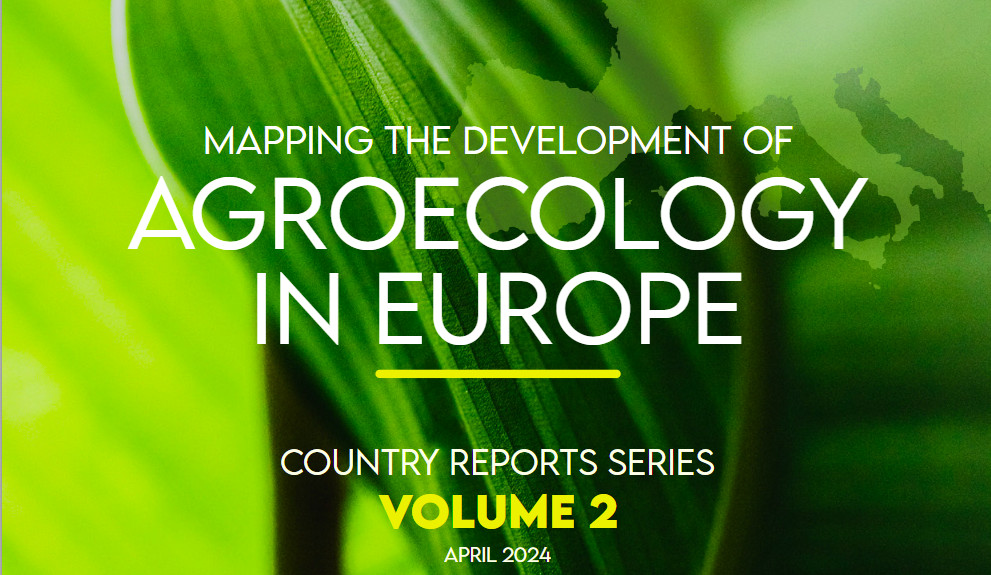
All this precious insights into the agroecological world you can now receive conveniently packed in a monthly Digest fto your mailbox. Below, you can scroll through, or download, the April 2024 issue of the Digest as a taster. It includes Germinate! a new exclusive column sharing the perspectives, insights and innovations of leading agroecology and food systems researchers and practitioners. If you want to suscribe, contact the Knowledge Hub.
Table of content
- InFocus: Farmers’ Protest Around Europe
- Germinate!
- Innovation
- Voices from the Ground
- From the Research World
- Multimedia
- Policy Briefs & Studies
- Upcoming Events
- Behind the Scenes
APBREBES Newsletter #62
The April issue of the newsletter of the Association for Plant Breeding for the Benefit of Society (APBREBES) reports on the UPOV negotiations concerning smallholders and the interpretation of the exception of private and non-commercial use of plant propagation material. It also covers patents on plants and regulation for the New Genomic Techniques (NGTs) in Europe.
Here is the detail of the content table:
- UPOV Turns a Deaf Ear to the Concerns of Smallholder Farmers
- New Genomic Techniques and Intellectual Property Law: Challenges and Solutions for the Plant Breeding Sector
- African Perspectives on Agroecology – Why Farmer-led Seed and Knowledge Systems Matter
- Advancing Agrobiodiversity – Why Organisations of Smallholders and Indigenous Peoples are Vital
- African Free Trade Agreements and Intellectual Property
Read the newsletter on APBREBES website.
You can subscribe to receive the monthly newsletter direct in your mailbox.
New genomic techniques passed EU parliament! Press releases from ECVC and FoE
The European Parliament confirmed its support for the deregulation of patented GMOs/NGTs, and opened the door to their dissemination without any traceability through the regulation on seeds marketing
On 24 April 2024, all MEPs voted on two files that are absolutely essential for peasants’ rights on seeds and the future of European agriculture, in particular the GMO-free agricultural sector and peasant agroecology.
In a recent press release, the European Coordination Via Campesina (ECVC) strongly condemned the European Parliament’s vote in favor of deregulating genetically modified organisms (GMOs) obtained through new genomic techniques (NGTs). Despite unresolved issues such as the extension of patents, violation of the precautionary principle, and lack of essential information from European agencies, the Parliament proceeded with the vote, disregarding concerns raised by peasant organizations and the GMO-free agricultural sector.
The ECVC press release is available here: https://liberatediversity.org/wp-content/uploads/2024/04/25-04-2024-PR-NGT-and-PRM-Votes-EP-Plenary-EN.pdf
Friends of the Earth Europe (FoE) also criticized the decision, highlighting its detrimental effects on food and environmental safety. The approved legislative proposal exempts new GMOs from safety checks and reduces the liability of corporations selling them, undermining the precautionary principle in EU policymaking and leaving a significant gap in regulatory coverage.
The press release from FoE is available here: https://friendsoftheearth.eu/press-release/eu-parliament-vote-on-new-gmos-a-blow-to-food-environmental-safety/
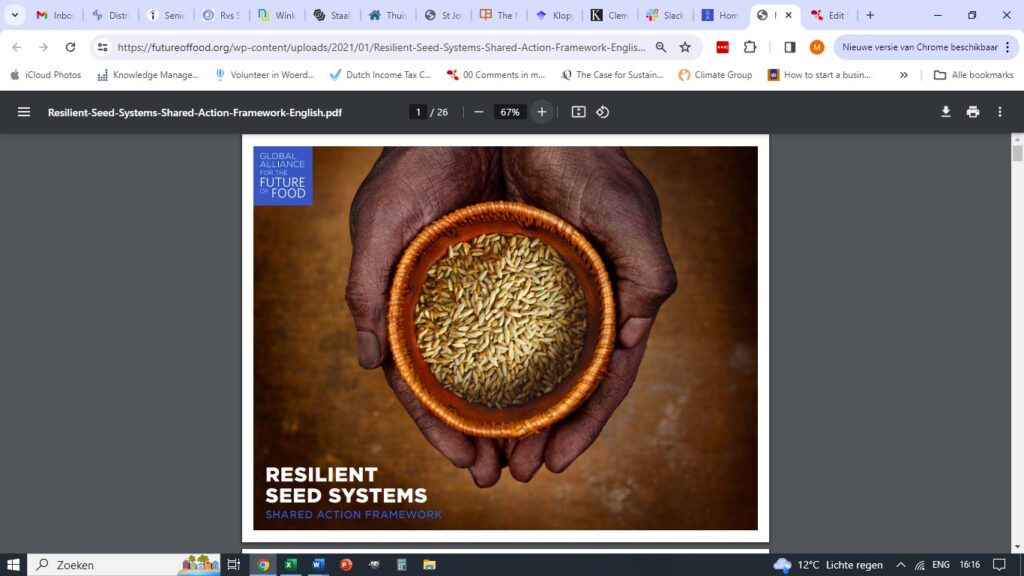
Resilient Seed Systems: Shared Action Framework
The Global Alliance for the Future of Food summarised the output of a stakeholders workshop in Mexico and subsequent inputs into a framework for shared action on resilient seed systems.
The framework attempts a definition of resilient seed systems around the following principles:
- Diverse
- Complex and dynamic
- Equitable and right-based
- Renewable
- Healthy
- Interdependent
- Intergenerational
and provides a brainstorming tool for strategic action at the local, national and global levels along the following dimensions:
- Policy and advocacy
- Research and education
- Platform and alliances
- Communcation
- Financing
The Nagoya Protocol and nitrogen-fixing maize
A new paper by Jack Kloppenburg, analysing a case of piracy of nitrogen fixing maize germplasm from Indigenous communities, is available with open access online under the title: The Nagoya Protocol and nitrogen-fixing maize: Close encounters between Indigenous Oaxacans and the men from Mars (Inc.).
Kloppenburg, J., Calderón, C.I., Ané, J.M. (2024) The Nagoya Protocol and nitrogen-fixing maize: Close encounters between Indigenous Oaxacans and the men from Mars (Inc.), Elementa: Science of the Anthropocene 12 (1): 00115, https://doi.org/10.1525/elementa.2023.00115
Via Campesina stands behind ANSES’ analysis of new GMOs proposal
The Via Campesina stated in a press release “The Parliament and Council cannot adopt a law that goes against scientific opinion and, what’s more, unworkable in practice. They must therefore demand a clarification of this scientific controversy before resuming their work.”
The European Coordination of the movement pointed out that no official European agency was asked to give an opinion on the scientific relevance of the Commission’s proposal on new GMOs. French ANSES was the only agency independently to look into the matter and they questioned its scienfic basis. Therefore, ECVC called on the European Parliament and the European Council to suspend their examination of the GMO-NTG deregulation proposal, also in view of the lack of consensus about patenting in the Council of the EU.
Read the ECVC January 2024 press release.
More on the position of the Via Campesina on the EU Commission proposal on new GMOs:
ECVC November 2023 statement on new GMOs and patents.
ECVC October 2023 call for rejection of the EU Commission proposal on plant reproductive material.
ELKANA organised the Organic Farming and Agroecology conference in Georgia
The International conference Organic Farming and Agroecology was organized by the Biological Farming Association Elkana on June 23, 2023, in the Fabrika conference hall. The conference was opened by Elkana Director Mariam Jorjadze and Deputy Minister of Environment Protection and Agriculture Solomon Pavliashvili. Raimund Jehle, the Deputy Regional Representative of the Food and Agriculture Organization (FAO), sent a video appeal specially for the Conference. Beka Urushadze – HEKS-EPER regional director for the South Caucasus, Giorgi Tchumburidze – Economic Advisor of the Danish Embassy, Kim Noelle Kwibuka – Brot fűr die Welt representative (Germany) and Ketevan Khutsishvili – Rural Development Program Manager of the European Union Delegation to Georgia, also welcomed the conference.
The international conference Organic Farming and Agroecology
At the international conference the role of organic and agro-ecological agriculture in improving the agri-food sector and transforming it into equitable and economically, socially and ecologically sustainable system was discussed. The Conference covered the following issues from global, regional and Georgian perspectives:
- Session #1 – Organic Farming Development Tendencies
- Session #2 – Organic and other Quality Marks in Hazelnut Sector
- Session #3 – Agroecology and Farmers’ Rights
- Session #4 – Market access: Practical Examples Benefiting Organic and Agroecological Producers

Local and international experts, as well as farmer organizations from Georgia, the region and beyond from 12 countries presented their findings and experience at the Conference.The conference was attended by about 150 participants – representatives of governmental, international, civil society organizations and scientific institutions; organic and agroecological farmers, companies involved in organic production, and other stakeholders.
In parallel with the Conference, Farmers Fair of local, organic and eco-friendly products was held. After the conference, one- and two-day tours to Elkana conservation farms in Kakheti and Samtskhe-Javakheti were organized for the participants.
Supporters
The Conference was held with financial support from the Danish Development Agency (DANIDA), HEKS-EPER (Switzerland), Brot für die Welt (Germany), Austrian Development Agency (ADA) and Agroecology Fund. And the conference was supported by organizations – European Coordination – Let’s Liberate Diversity, European Coordination Via Campesina (ECVC) and Schola Campesina.
Conference materials (presentations and video recordings of the speeches) are available on the Conference website – www.conference.elkana.org.ge
ELKANA
The Biological Farming Association Elkana, a Georgian non-governmental organization, was founded in 1994. The association membership is open to any citizen of Georgia interested in the development of organic farming in the country, as well as the protection of the environment.
The Association facilitates the improvement of the socio-economic condition of the rural population of Georgia and environmental protection through fostering the development of organic farming, the introduction of agro-ecological practices, diversification of economic activity and increasing self-reliance of the population in rural areas.

Elkana is an active contributor to policy development related to agricultural biodiversity in Georgia – Elkana experts were involved in the elaboration of the agricultural biodiversity part of the first and second National Biodiversity Strategy and Action Plans of Georgia in 2003-2005 and 2011-2013. At the same time Elkana is an active participant of international networks working on agricultural biodiversity conservation, like SAVE Foundation (save-foundation.net), European Coordination La via Campesina, GENET, Bioversity International, Nyeleni – European Food Sovereignty Network, and Slow Food
EU Seed reform under scrutiny: Unpacking criticisms and concerns from ECLLD members
On 5 July 2023, the European Commission proposed a comprehensive Seed Law Reform with the aim of updating the legislation on the production and marketing of plant reproductive material (PRM). While this proposal seeks to enhance the regulatory framework and support sustainable agriculture, it has sparked debates and concerns among stakeholders regarding its potential impacts on agrobiodiversity management.
The key point of the reform have been summarised by Réseau Semences Paysannes (RSP) and is available here (in French)
Concerns on the EU Seed reform
Arche Noah, a prominent advocate for crop diversity, recently published a briefing outlining how the proposed EU seed regulation might pose challenges to preserving and exchanging diverse seeds.
The proposed legislation would make it impossible to build a “seed infrastructure” for sustainable agriculture, as it restricts the conservation and further development of diversity, and pushes back local innovation.
Arche Noah Briefing
Below are the key points raised by Arche Noah in their briefing:
- Restriction on Transfer of Cultivated Plant Diversity: The proposed regulation restricts the free transfer of plant genetic resources for conservation, introducing bureaucratic hurdles that hinder farmers and seed organizations from preserving and selling endangered diversity.
- Failure to Implement Farmers’ Right to Seed: The proposal introduces arbitrary restrictions on farmers, limiting their ability to exchange and sell their own seeds, contradicting their internationally recognized right to save, use, and exchange seeds.
- Inadequate Measures for Widening Access to Diverse Varieties: While the proposal removes restrictions on marketing diverse varieties, it introduces impractical requirements that may hinder small producers from making these seeds available.
- Lack of Focus on Sustainable Agriculture: The proposal’s approach to seed testing falls short in ensuring sustainability, as it does not mandate testing under organic or low-input conditions.
- Positive Impact on Hobby Gardeners: The proposal includes exemptions for hobby gardeners, allowing private seed exchange and sale without mandatory variety certification, recognizing their unique needs and interests.
The full briefing is available here
Furthermore, the Umbrella Association for Crop and Livestock Diversity in German-speaking countries (Dachverband Kulturpflanzen- und Nutztiervielfalt e.V.) has also expressed in a press release significant concerns about the proposal’s shortcomings and potential negative impacts on biodiversity preservation.
The EU Commission’s aim to conserve agricultural plant diversity with the new seed legislation is
welcome – however, the EU Commission’s proposal contains such significant shortcomings that it is
likely to even lead to the contrary, to a loss of biodiversitySusanne Gura – Dachverband Kulturpflanzen- und Nutztiervielfalt e.V.
Susanne Gura, representing Dachverband Kulturpflanzen- und Nutztiervielfalt e.V., highlights the following concerns:
- Limited Exemptions for Diversity Conservation: Exemptions for diversity conservation apply only to formal networks and organizations, overlooking the role of individuals like gardeners and farmers in on-farm conservation.
- Challenges with Unregistered Varieties and Seed Saving: Requirements for registering as operators may discourage seed-saving practices, impacting conservation efforts in home gardens and small farms.
- Restriction on Farmers’ Rights to Sell Farm-Saved Seeds: The proposal restricts farmers from selling seeds of diversity varieties, potentially affecting biodiversity conservation.
- Misalignment with International Objectives: The proposed regulation may not fully align with international objectives for plant genetic resources and peasants’ rights.
- Call for Adequate Legislation to Encourage Conservation Work: The association urges governments to ensure adequate legislation that encourages farmers and gardeners to continue on-farm conservation work, preserving cultural heritage and supporting agriculture in the face of global warming.
For the full text from Dachverband Kulturpflanzen- und Nutztiervielfalt e.V. have a look here
The European Coordination Let’s Liberate Diversity! (ECLLD) continues to facilitate discussions and exchanges on the new EU seed reform. Stay tuned for ongoing updates.
Joint Letter to the European Commission on the EU Seed Marketing Legislation
Ahead of the upcoming reform of the seed marketing legislation, a number of diverse actors in the conservation, dynamic management, development, production and use of cultivated plant diversity from across Europe sent a letter to the European Commission to make sure their proposal genuinely advances the transition to a sustainable food system, remaining true to the goals set out in the Farm to Fork Strategy, the EU Biodiversity Strategy 2030, and the EU’s climate commitments.
In particular, given that seeds are the foundation of our food systems, and that the new legislation will have impacts beyond the EU itself, the signatories highlighted the need for:
- The facilitation of the transition to more sustainable and resilient food systems;
- An enabling environment for the conservation and development of cultivated plant diversity;
- Facilitated access to the market for cultivated plant diversity;
- Clear information for consumers.