Let’s Liberate Diversity! News
Blacked-Out Ingredients campaign: defend transparency in food labelling
A Europe-wide campaign is calling on citizens and organisations to defend transparency in food labelling. The Blacked-Out Ingredients campaign warns that EU labels may soon no longer indicate whether food contains altered DNA, and invites people across Europe to take action, contact MEPs, and share the campaign materials widely.
Ahead of the European Parliament vote expected on 18 May, the campaign raises concern that, if the proposed law passes, food labels would no longer inform consumers whether food contains genetically modified organisms. Its core message is straightforward: consumers should continue to have access to clear information about what is in their food.
The campaign was initiated by organisations from the organic and environmental sector, including Demeter, Friends of the Earth Europe, and Bioland, and is open to all organisations and individuals who consider this issue important for consumers. Its aims are to encourage the European Parliament to maintain consumer labelling also for new GMOs, and to inform as many people as possible about the proposed changes and their implications.
The campaign website offers practical ways to get involved. It is available in multiple languages and includes WhatsApp and Telegram channels, and a downloads section with visuals and videos for sharing.
Find out more at the campaign website and help disseminate it across your networks https://www.blacked-out-ingredients.eu/
How can municipalities help defend seed diversity in Europe?
A recent initiative from the Red de Municipios por la Agroecología (RMAe) offers a strong example!
In the context of the ongoing trilogue on the future EU Regulation on Plant Reproductive Material, the Spanish municipal network has sent a letter to the European institutions arguing that cultivated biodiversity and local seed systems are not abstract concerns: they are already part of concrete local food policies, and the new regulation should create conditions that support this work.
In its letter, RMAe stresses that municipalities are key actors in this debate and connects the seed policy debate with the role of municipalities in building sustainable, healthy and resilient local food systems, reinforcing the concept that seed diversity is not limited to the agricultural or breeding sphere alone, but is also linked to governance, territorial food strategies, public action and community-based initiatives.
RMAe’s proposal is grounded in the broader work developed around the 1st European Symposium “Fostering Cultivated Biodiversity through Local Food Policies”, held in Granollers on 29–30 April 2025, and in the resulting Granollers Manifesto. That process advanced a shared vision for European municipalities:
By 2050 all European municipalities will have a food policy that prioritises city-region based agri-food systems that delivers healthy and tasty food relying on cultivated biodiversity and locally adapted seeds using natural resources within the planetary boundaries while ensuring economically viable livelihoods to its communities and people.
The Granollers Manifesto positions cultivated biodiversity as a key lever for sustainable and healthy local food systems, and calls for action at municipal, regional, national and European levels. It includes 32 strategic actions for municipalities and a set of broader legislative, policy and financial demands to create long-term enabling conditions.
The letter also draws on evidence and examples compiled through the Horizon Europe LiveSeeding project, including the Manual on the Integration of Cultivated Biodiversity in Local Organic and Agroecology-oriented Food Policies. This paper documents how municipalities across Europe are already taking action to support cultivated biodiversity in practice. The examples highlighted in the letter range from community seed banks and support to local seed entrepreneurship, to participatory breeding, farmers’ markets, food processing initiatives and public food procurement linked to local and diverse varieties.
On this basis, RMAe calls on the trilogue negotiators to ensure that the future PRM Regulation provides a framework that protects and enables local seed systems, dynamic conservation, farmer-managed seed practices and community-based initiatives.
For EC-LLD, this is an important example of how cultivated biodiversity can be advanced through alliances between municipalities, civil society, researchers and local food system actors. It also shows the value of connecting European seed policy debates with territorial practice and local public policy.
European Patent Office tries to knock out European patent law
New rule was intended to prevent patents on traditional plant breeding 19 February 2026 / The European Patent Office has granted patent EP3720272 claiming traditionally-bred tomatoes with resistance to a plant virus (TBRFV) to the Dutch company Rijk Zwaan. The gene...
Granollers Manifesto now available in 9 languages
What is the Granollers Manifesto?
The Granollers Manifesto “Fostering Cultivated Biodiversity in European Municipalities” is the result of a participatory process developed around the 1st European Symposium “Fostering Cultivated Biodiversity through Local Food Policies” held in Granollers on April 29 and 30, 2025. It embodies a shared vision:
“By 2050 all European municipalities will have a food policy that prioritises city region based agri-food systems that delivers healthy and tasty food relying on cultivated biodiversity and locally adapted seeds using natural resources within the planetary boundaries while ensuring economically viable livelihoods to its communities and people.”
To achieve this vision, the document promotes mainstreaming organic agriculture and agroecology-oriented production as the most evidence-based pathways to build sustainable and healthy food systems, to mitigate and adapt to global emergencies, and to secure food and seed sovereignty.
The Manifesto issues a call to action to European municipalities and all levels of governance, positioning cultivated biodiversity as a key lever for building sustainable, healthy local food systems across Europe.
In this sense, it includes 32 concrete strategic actions for the municipal level, organised according to the Milan Urban Food Policy Pact categories: governance, sustainable diets and nutrition, social and economic equity, food production, food supply and distribution, and food waste.
Furthermore, it proposes that regional, national, and European levels adopt specific legislative, policy, and financial measures across the various dimensions of the food system to create favourable conditions for long-term municipal action.
The proposal of the Manifesto is detailed in the Manual on the Integration of Cultivated Biodiversity in Local Organic and Agroecology-oriented Food Policies, published by LiveSeeding. This manual is designed for municipal officers, planners, project managers, policymakers, and elected officials in Europe dedicated to fostering sustainable, healthy, and equitable local food systems.
The Granollers Manifesto is now available in 9 languages
You can access the manifesto through this link: https://orgprints.org/id/eprint/56440/
Thanks to our colleague María Carrascosa from Red de Municipios por la Agroecología for sharing this with us!
“Raise our Forks” Update
“Raise our Forks!” Petition
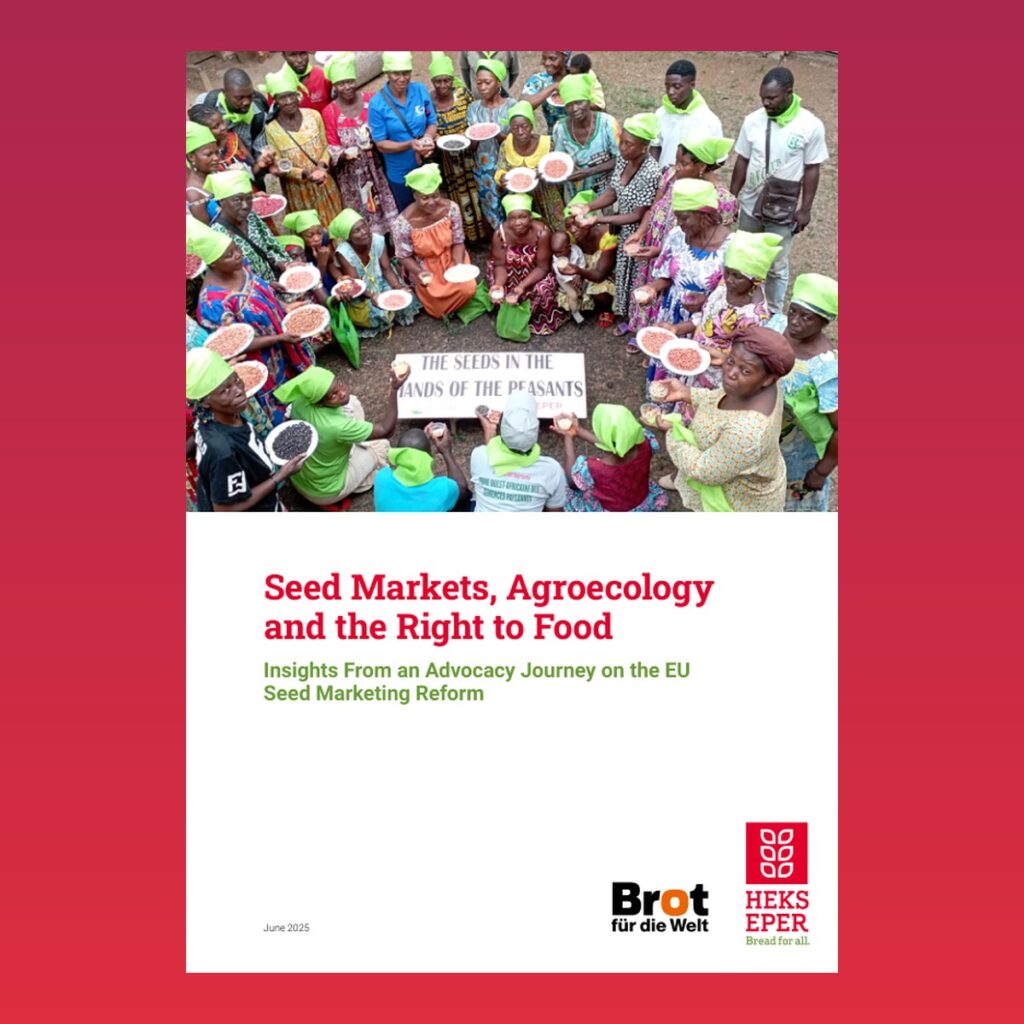
The proposed new EU regulation on the production and marketing of plant reproductive material, presented by the European Commission in July 2023, and the current state of negotiations in the Council, threaten the conservation and circulation of crop diversity. It disregards the right of farmers and gardeners to harvest, use, exchange, and sell their own seeds, a right enshrined in international law. This is unacceptable.
The petition calls on the European Parliament and the Council to adopt legislation that enables the free circulation of diverse seeds, enhances biodiversity, respects farmers’ rights, and lays the foundation for a sustainable, resilient, and diverse food system.
Update on the petition
What to do next
Study on Open Source Seed models
Our colleagues at Rete Semi Rurali (RSR) have shared with us a research article for which Riccardo Bocci of RSR is one of the authors.
The authors analyse the strategies of different Open Source Seed models – that is, initiatives that apply open source and copyleft principles to seed systems – to face the current legal and financial paradigms.
The findings show that Open Source Seed models operate in three dimensions:
- Geographical dimension, by connecting local and international efforts to enhance cultivated diversity and seed rights.
- Temporal dimension, by acting now, within the current legal context, while contributing to the long term transformation of seed governance.
- Virtual dimension, through its capacity to be applied in both physical and digital realms.
You can find the reading attached to this post. Enjoy!!
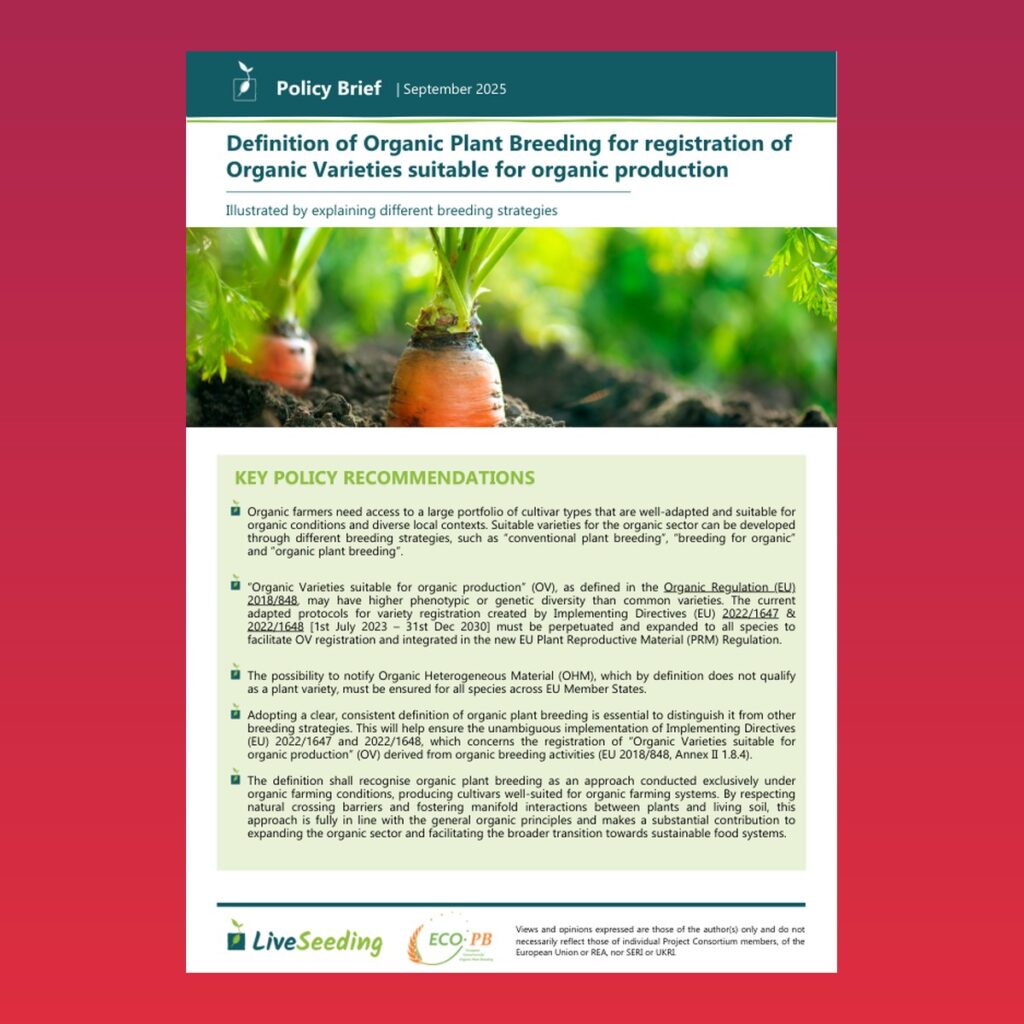
Governance and Financing Models for Organic Plant Breeding in Europe
A two-part webinar on the topic of Governance and Financing Models for Organic Plant Breeding in Europe will be held within the Liveseeding project in March. When? 10 March 2026 | 9h30–13h00 CET 11 March 2026 | 9h30–12h30 CET What to expect? • Governance and...
Organic breeding of white lupin for regionally produced, plant-based protein foods in Switzerland
XVI International Lupin Conference 2023, Rostock — Session 4: Genetic Improvement
This conference talk presents FiBL’s organic pre-breeding programme for white lupin (Lupinus albus L.) in Switzerland, started in 2014 and carried out in collaboration with the organic breeding organisation gzpk. The programme’s primary aim is to develop anthracnose-resistant breeding material suitable for organic, regional production. Key breeding goals include integrating diverse sources of anthracnose resistance, increasing earliness (reduced daylength sensitivity) to avoid late-season threats, and producing lines with stable low quinolizidine alkaloid content for safe human consumption. Methods described include the evaluation of global genetic resources using field and controlled screening protocols, pedigree selection, and development of composite cross populations under certified organic conditions. The initiative is embedded in a broader ‘seed to plate’ strategy to rebuild a domestic grain legume value chain in Switzerland. The research is funded by DIVINFOOD (EU), LiveSeeding (EU, SERI, UKRI) and LUPINNO SUISSE (FOAG).
Key topics: white lupin, organic breeding, anthracnose resistance, low alkaloid, pedigree selection, composite cross population, regional protein crops
Granollers Manifesto now available in 9 languages
What is the Granollers Manifesto?
The Granollers Manifesto “Fostering Cultivated Biodiversity in European Municipalities” is the result of a participatory process developed around the 1st European Symposium “Fostering Cultivated Biodiversity through Local Food Policies” held in Granollers on April 29 and 30, 2025. It embodies a shared vision:
“By 2050 all European municipalities will have a food policy that prioritises city region based agri-food systems that delivers healthy and tasty food relying on cultivated biodiversity and locally adapted seeds using natural resources within the planetary boundaries while ensuring economically viable livelihoods to its communities and people.”
To achieve this vision, the document promotes mainstreaming organic agriculture and agroecology-oriented production as the most evidence-based pathways to build sustainable and healthy food systems, to mitigate and adapt to global emergencies, and to secure food and seed sovereignty.
The Manifesto issues a call to action to European municipalities and all levels of governance, positioning cultivated biodiversity as a key lever for building sustainable, healthy local food systems across Europe.
In this sense, it includes 32 concrete strategic actions for the municipal level, organised according to the Milan Urban Food Policy Pact categories: governance, sustainable diets and nutrition, social and economic equity, food production, food supply and distribution, and food waste.
Furthermore, it proposes that regional, national, and European levels adopt specific legislative, policy, and financial measures across the various dimensions of the food system to create favourable conditions for long-term municipal action.
The proposal of the Manifesto is detailed in the Manual on the Integration of Cultivated Biodiversity in Local Organic and Agroecology-oriented Food Policies, published by LiveSeeding. This manual is designed for municipal officers, planners, project managers, policymakers, and elected officials in Europe dedicated to fostering sustainable, healthy, and equitable local food systems.
The Granollers Manifesto is now available in 9 languages
You can access the manifesto through this link: https://orgprints.org/id/eprint/56440/
Thanks to our colleague María Carrascosa from Red de Municipios por la Agroecología for sharing this with us!