Let’s Liberate Diversity! News

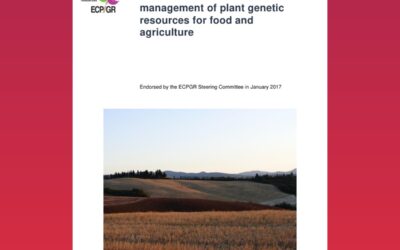
Genetic Resources Strategy for Europe

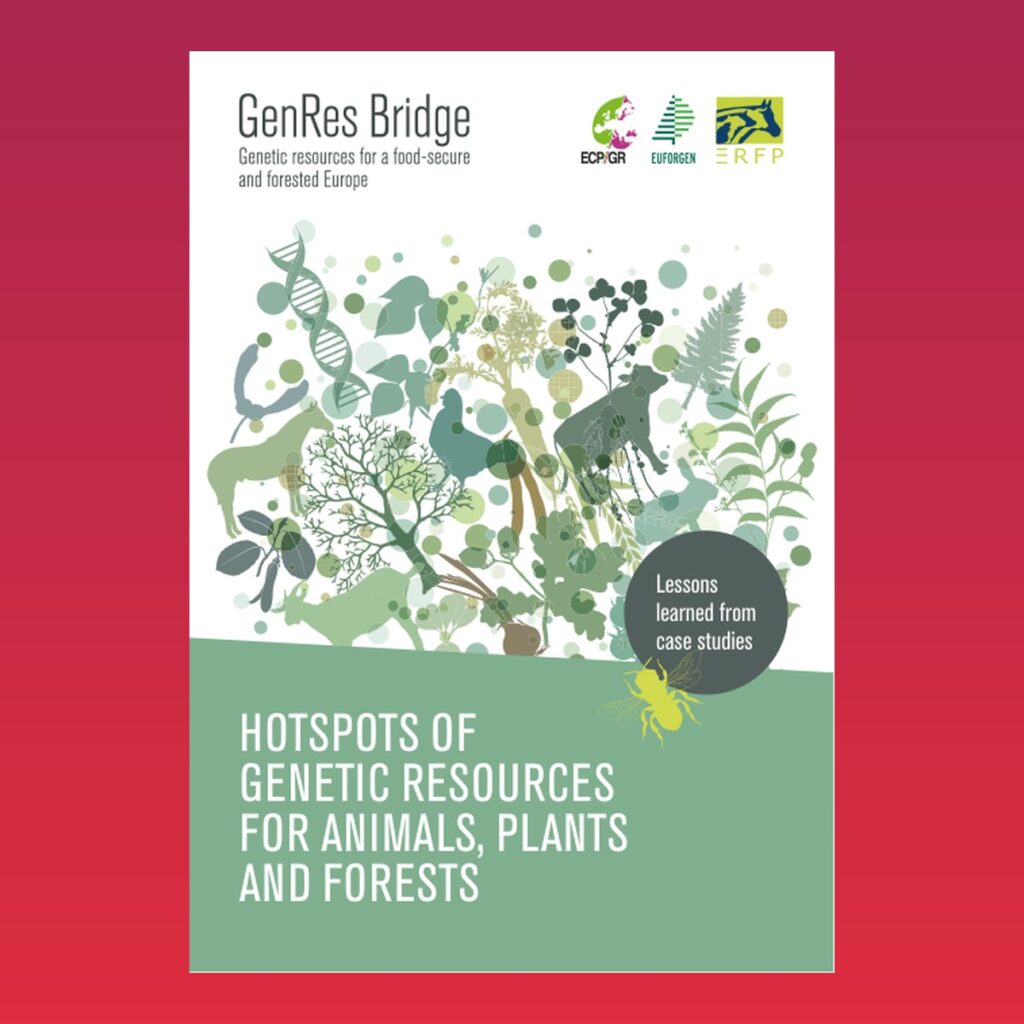
GenRes Bridge project (Horizon 2020, Grant No. 817580); published by European Forest Institute

This strategy, produced by the GenRes Bridge project and validated by the three European genetic resources networks (ECPGR, ERFP and EUFORGEN), sets out an integrated framework to conserve and sustainably use plant, animal and forest genetic resources across Europe. It argues that genetic diversity is critically threatened, underprioritised in policy, and essential for resilient agriculture, forestry and the bioeconomy. The document presents analysis and concrete recommendations across five focal areas: (1) sustain and expand in situ and ex situ conservation, including European collections and quality management; (2) increase and diversify use of genetic resources, facilitating access and linking conservation with innovation and rural livelihoods; (3) intensify characterization, evaluation and monitoring using genomic, phenotypic and socio-ecological data; (4) advance information management through national inventories and the European systems EURISCO, EFABIS and EUFGIS in line with FAIR principles; and (5) enable transformative change by establishing a coherent policy and legal framework, creating a European coordination and information centre for agricultural genetic resources, strengthening institutional and human capacity, raising awareness, mobilising long-term funding, and reinforcing international cooperation. An annexed action plan provides prioritized actions, indicators, timescales and suggested national and European responsibilities to guide implementation.

Key topics: genetic resources, seed_policy, conservation, in situ conservation, ex situ conservation, information systems, agrobiodiversity, EU policy

Credit: Organic Seed Growers Conference

Inputs to UN Working Group Report on Right to Seeds

The UN Working Group on Peasants is planning to write a report on the Right to Seeds as granted in UNDROP and calls for submitting inputs on the topic.
Deadline: 25. February 2026
ARCHE NOAH plan to write an input focused on the new seed marketing legislation. Please consider if you want to send inputs as well – guidance and questions can be found at the link above.

Joint InnOBreed and Liveseeding survey

What are the LiveSeeding and InnOBreed projects? The LIVESEEDING project aims to foster the growth of the organic sector and transition towards more sustainable local food systems by delivering high quality organic seed of diverse cultivars adjusted to organic...

LLD speaks to SeedWorld about preserving seed diversity

LLD Board Member and and technical director of Rete Semi Rurali, Riccardo Bocci, recently spoke to SeedWorld about efforts to preserve seed genetic diversity in Europe.

Riccardo spoke about LLD’s work representing 22 seed banks across Europe, and the organisation’s efforts to promote the inclusion of these community seed banks in the UN’s ‘Plant Genetic Resources for Food and Agriculture’ framework. Across Europe, there is a growing interest among farmers and the public to conserve traditional seed varieties. This growing interest is the result of dedicated training and education efforts from organisations such as LLD, and through EU-funded research projects.

The article also covers similar efforts to preserve seed diversity in the USA, Africa and internationally through initiatives led by the Germany-based Crop Trust.

There is an urgent need to preserve genetic diversity in the face of the threat posed by the ongoing consolidation of the global seed sector.

Read the article here: https://www.seedworld.com/europe/2025/04/11/preserving-seed-diversity-in-europe/

Réseau Semences Paysannes write to MEPs to oppose New Genomic Techniques

Earlier this month, the Board of Directors of the Réseau Semences Paysannes (French Famers’ Seeds Network) wrote a letter to Members of the European Parliament in response to recent move by the EU Council to distinguish and deregulate certain plants derived from new genomic techniques (NGT).

Logo_Réseau Semences Paysannes

This proposal incompatible with the agro-ecological transition needed to make agriculture resilient to climate change, and is in contradiction with the other initiatives supported by the EU.

The problem with New Genomic Techniques

The use of NGT plants in commercial agriculture is a risk to the environmental health and safety, as there is a high risk of contamination. The possibility of contamination also poses a threat to organic agriculture, because organic certification frameworks, such as IFOAM, prohibit the use of any plant material resulting from NGT methods such as directed mutagenesis.

Furthermore, the proposal is also a risk for farmers and consumers. If an NGT patented genomic sequence accidentally appears in an agricultural crop, farmers will no longer be able to reproduce this variety and will owe royalties to the company owning the NGT genetic material. This poses a direct threat to artisanal seed industries in France and the rest of the EU. At the same time, the lack of labeling regulations for NGT products also means consumers would not be adequately informed about what they are consuming.

Requests to the EU Members of Parliament

Réseau Semences Paysannes wrote to Members of the European Parliament to remind them that that the EU Council’s proposal from March 14th 2025 is in opposition with the EU Parliament’s 2024 decision to ban patenting plants derived from NGT. In the letter, they also make three requests:

  1. Require a robust and independent environmental and health risk assessment procedure for all plants from NTGs as well as an assessment of risks and effects on ecosystems.
  2. Make mandatory the publication of methods for detecting and identifying GMOs obtained by NTGs. This should be an essential mechanism to make monitoring sectors more reliable and to enabling effective traceability in the market.
  3. Make traceability mandatory. Without enforced traceability the ban on plants from NTG in organic farming is impossible. Traceability is needed to preserve the right of consumers to choose whether or not they want to consume products from NTG. Traceability also serves to protect non-GMO and organic operators from possible contamination through strict measures by making practitioners using NTG accountable in order to guarantee an alternative for consumers.
Read the letter here (in French): https://reseau-semences-paysannes.frama.space/s/xiJ5YSDk24R4dHf

New Agroecology Digest September 2025

Focus on Pastoralism

This month’s InFocus theme is Rethinking Pastoralism: Tradition and Transformation. Too often overlooked, livestock and pastoral knowledge are vital for resilient food systems and agroecological transitions. From Maasai communities in Kenya organizing for justice, to farmer–pastoralist synergies in Tanzania and Burkina Faso, and Mediterranean innovations linking crops, trees, and livestock—discover how pastoralism is shaping sustainable futures.

In the Germinate! guest column, they feature Colin Anderson from the UVM Institute for Agroecology, who reflects on Reimagining resilience: Building just and equitable food systems. Originally published in Rooted Magazine (Issue 3), the article draws on his contribution to the HLPE report “Building Resilient Food Systems” (2025) for the Committee on World Food Security.

Highlights from this month’s Digest include:

🌱Voices from the Ground: Youth-led market gardening in Benin; women restoring land in Senegal; and Kenya’s consumer and policy challenges for agroecology…

📰In the News: Brazil revives pro-farmer policies; Zambia pioneers agroecology radio; Sri Lanka scales natural farming; new debates on AGRA in Africa; and a proposed agroecology bill in the DRC…

🔬From the Research World: Insights on ancestral Mexica farming; urban agroecology in Mozambique; agroecology indicators for East Africa; women farmers’ potential in sub-Saharan Africa; and socio-ecological approaches to restoration…

📑Policy Briefs & Reports: Key findings on Africa–EU research collaboration; farmer-managed seed systems; biofertilisers; agroforestry for resilience; and national agroecology strategies…

🎥Multimedia & Learning: Inspiring stories—from Sicilian farmers reclaiming land from the Mafia to Kenyan seed savers—plus resources on regenerative farming across Europe…

📅 Upcoming Events: The Agroecology Europe Forum 2025 (Malmö, Sweden), the International Forum on Agroecosystem Living Labs, and the launch of the FO-RI Capitalization Report

New Feature

In this issue the FAO also introduce a new feature—Partner’s Corner—which shines a spotlight on organizations making a difference. This month, they highlight Access Agriculture, with new videos on alley cropping, pest management, microgreens, and community knowledge centres.

Farmer-Managed Seed Systems in Tanzania: Workshop report

Tanzania Alliance for Biodiversity and SWISSAID deliver workshop

From the 28th to the 30th of August 2025, Tanzania Alliance for Biodiversity organised the workshop “Creating Space for Farmers’ Seeds in Seed Regulations – Capitalizing International Learnings and Identifying Options for Tanzania”. The workshop was attended by 55 participants including Tanzanian Ministry of Agriculture, Members of
Tanzanian Parliament, regional and continental experts, civil society organizations, researchers, and farmer
representatives from 10 African and European countries.

The workshop was very successful, enabling participants to propose a number of options for Farmer-Managed Seed Systems within the legal framework in Tanzania and beyond. It was also an opportunity to unpack the EAC Seed and Plant Variety Bill and to call upon EALA to consider farmers’ rights in the Bill. In addition, participants contributed to the AU Farmer-Managed Seed Systems Bill, making the discussions a true eye-opener on many key issues related to Farmer-Managed Seed Systems.

Key findings

  • Farmer-Managed Seed Systems (FMSS) are the backbone of Tanzanian agriculture, providing over 80% of seeds used by farmers and playing a vital role in food security, resilience, and agrobiodiversity, yet remain legally unrecognized and unsupported in the Seed Act of 2003.
  • Tanzania’s seed laws lack clear provisions on farmer-managed seeds, creating uncertainty around farmers’ rights to save, exchange, and sell seed. This hinders alignment with international commitments like ITPGRFA and UNDROP.
  • Legal recognition of FMSS within the Seed Act and other relevant laws is essential to protect farmers’ rights, enable diversity in seed systems, and promote innovation. Experiences from Ethiopia and India offer proven policy models.
  • Inclusive registration systems and alternative quality assurance mechanisms like Participatory Guarantee Systems (PGS) can reduce barriers for farmers and legitimize diverse seed practices while maintaining quality standards tailored to local realities.
  • Institutional reforms, including reviving the PGRFA Bill and supporting community seed banks, are critical for long-term, systemic integration of FMSS into national agriculture policy and seed laws hence ensuring Tanzania builds a pluralistic, resilient, and sovereign seed system.

Workshop report and policy brief now available

The revised version of the workshop report is now available here: Creating space for FMSS Workshop Report 2025

A policy brief has also been produced and is available here: POLICY BRIEF CREATING SPACE FOR FMSS 2025

Happy reading!

Réseau Semence Paysannes press release: Seeds targeted by war

Our colleagues at Réseau Semence Paysannes published a press communication in response to the Israeli government’s destruction of the seeds bank in Hébron, Palestine. You can access the document on this post, or read the translate version below:

Réseau Semence Paysannes, made up of more than eighty organisations, all involved in initiatives to promote and defend cultivated biodiversity and associated know-how, wishes to reiterate the importance of preserving, multiplying and circulating peasant seeds. Seeds are a response to current environmental and social challenges.

It is in this context that it strongly condemns the destruction on 31 July 2025 of the Palestinian seed farm in Hebron in the West Bank by the Israeli army. On 31 July 2025, the Israeli army bulldozed the infrastructure of a seed production farm belonging to the Union of Agricultural Work Committees (UAWC), one of the largest agricultural development institutions in Palestine, in Hebron in the West Bank. This production unit was responsible for multiplying part of the collection of farmers’ seeds managed by the UAWC seed bank.

Destroying seeds, the basis of all food, is tantamount to subjugating a people and a country and compromising any possibility of building a viable state. It also represents an irreversible loss of cultivated biodiversity for global agriculture as a whole.

This act of war reveals the Israeli government’s determination to condemn the Palestinian population to a life in refugee camps and deny them food sovereignty. This deliberate violence against civil society as a whole aims to make any form of lasting peace impossible, at a time when several states have decided to recognise the Palestinian state.

In line with its international commitments, Réseau Semence Paysannes condemns this act of war and calls on all its members and supporters to support a movement of solidarity with Palestinian peasant farmers so that they have access to peasant seeds that enable them to feed their populations in accordance with their agricultural culture, which has co-evolved with climate change. We are awaiting feedback from the UAWC in order to adapt the Network’s factual response to this unacceptable situation.

The Board of Réseau Semence Paysannes

RSP Press release (French version)


You can also read more about the destruction of the seed bank here: https://viacampesina.org/en/2025/08/destruction-of-the-hebron-seed-bank-peasant-organizations-across-regions-express-outrage/ 


No event found!

Video