Let’s Liberate Diversity! News
Sowing social innovations for transformative change
Research paper Native seed collector networks in Brazil: Sowing social innovations for transformative change is available as Open Access early view online. ABSTRACT To investigate whether and how Social Innovation (SI) can contribute to transformative change, we...
Moving toward 100% organic seed use in German organic agriculture
A new academic paper was published in journal Organic Farming and is available as Open Access online: Trends in use of crop cultivars from organic and conventional seed multiplication: Moving toward 100% organic seed use in German organic agriculture. ABSTRACT In...
Strategic Dialogue on the future of EU agriculture
This month marked the end of the Strategic Dialogue on the future of EU agriculture, an initiative first announced by President of the EU Commission Von der Leyen at her State of the Union address last year and that saw stakeholders in Europe engaged in discussions...
EU agrobiodiversity conservation at risk
The administrative burden that would kill small producers of biodiverse seed
The Umbrella Organisation for Cultivated Plant and Livestock Breed Diversity in German
Speaking Countries (Dachverband Kulturpflanzen- und Nutztiervielfalt e. V.) issued a press release calling for Member States’ representatives to advocate against those resolutions of the EU Parliament which, if approved, would have a huge impact on producers of biodiverse seed.
Under current legislation, the sale of biodiverse seed varieties for non-commercial use is expressly permitted in limited quantities in some Member States, while in most other countries it is not considered an ofference and therefore allowed. However, under pressure from the seed industry, the reformed legislation would require standardisation, imposing the same administrative burdens on those selling even the smallest quantities of seed as the large and multinational companies.
While the EU Parliament speaks highly of agrobiodiversity conservation, their resolutions would in practice destroy the structures that are in place to support it most effectively. In fact, biodiverse seed is often sold by professionals who produce the seed themselves, concentrating on a limited number of species and varieties, grown , harvested, cleaned, stored, packaged and labelled with artisanal methods. Seeds are then sold direct on their websites or at events and seed festivals, which builds professional networks and favours the exchange of experiences, both integral parts of preserving diversity.
Beside failing to protect cultivated plant diversity in the fields and gardens of the EU, the EU Parliament’s decision would not fulfil the requirements of the FAO International Treaty on Plant Genetic Resources for Food and Agriculture (ITPGRFA) which the EU is a party of, or those of Article 19 (‘Right to Seed’) of the UN Declaration on the Rights of Peasants and Other People Working in Rural Areas (UNDROP).
The opportunity is still there to stop such detrimental legislation from coming into force, by calling for the exemption of agrobiodiversity conservation as a whole, including specialised micro-enterprises, from the new EU seed regulation. This must be done during the trialogue negotiations between the Commission, Parliament and Council of Ministers.
Read the press release in English and in German.
NOW ONLINE: Liveseeding Practical Guide Seed Drying & Storage
The Practical Guide for drying and storing vegetable seeds in organic small-scale and on-farm seed production is now available online in French and English.
We’re thrilled to announce the launch of LiveSeeding latest publication on seed quality: The Practical Guide for Drying and Storing Vegetable Seeds in Organic Small-Scale and On-Farm Seed Production, now available online in both French and English!
Developed within the context of the LiveSeeding project, this guide is a comprehensive resource for anyone involved in seed production.

Seed quality is paramount for successful crop emergence and establishment. The germination rate and vigor of seeds directly impact their ability to withstand environmental stresses and ultimately determine the crop’s performance. However, during storage, seeds naturally age and their quality diminishes due to oxidation. This deterioration process is influenced by factors such as moisture level, oxygen presence, and temperature.
This guide addresses these crucial aspects, offering practical solutions for on-farm drying and storage that save both time and resources. It provides insights on efficient drying methods, maintaining seed dryness during storage, and safeguarding against oxygen exposure.
While it’s well-known that seeds should be properly dried and stored in optimal conditions, practical challenges often hinder these precautions. Whether due to time constraints, resource limitations, or organizational difficulties, many seed producers struggle to implement best practices.
Through real-life examples, case studies, and actionable guidance tailored to specific context and objectives, the practical guide aims to alleviate these challenges empowering small-scale seed enterprises and on-farm producers to overcome obstacles and optimize their seed drying and storage processes.
EP Seeds Marketing Plenary vote – Arche Noah analysis from Seed diverstiy perspective
We are pleased to share with you a comprehensive analysis prepared by our member Arche Noah on the recent European Parliament (EP) plenary vote from a seed diversity perspective.
The document delves into crucial topics such as scope, definitions, rules for conservation organizations, and the exchange of Plant Reproductive Material (PRM) between farmers. Additionally, it discusses conservation varieties, Organic and Heirloom Material ((O)HM), obligations of professional operators, and governance. While not exhaustive, we believe it offers a valuable overview of the EP’s stance on these critical matters.
Furthermore, Arche Noah invite you to a lunchtime webinar where Fulya Batur will present the primary outcomes of the EP vote. This 1.5-hour webinar will elucidate the main changes proposed to the Commission’s seed marketing proposal by the European Parliament, focusing particularly on aspects pertinent to organizations and individuals engaged in agrobiodiversity conservation. Attendees will have the opportunity to pose questions and gain insights into leveraging the EP’s position for advocacy efforts in the council. The webinar is organized by Arche Noah, with the generous support of the Software AG Stiftung.
Webinar Details:
- Date: May 23, 2024
- Time: 12:00 – 13:30 PM Brussels
- Topic: ARCHE NOAH SAGST Webinar EU Seeds Marketing EP Plenary Results
Registration Link: Register here for the webinar
Upon registration, you will receive a confirmation email containing further details on how to join the webinar.
Additionally, for those interested, Arche Noah compiled some media reactions that shed light on how various stakeholders, including Euroseeds and others, are responding to the provisions aimed at promoting seed diversity:
- Seed World: Why Does Europe Struggle to Get a New Seed Law That Still Works for Breeders and Farmers?
- Euractiv: Parliament wants to ease seed marketing rules for conservation efforts
- AgroPages: KWS, Euroseeds and IFOAM’s reactions on European Parliament’s Plant Reproductive Material legislation vote
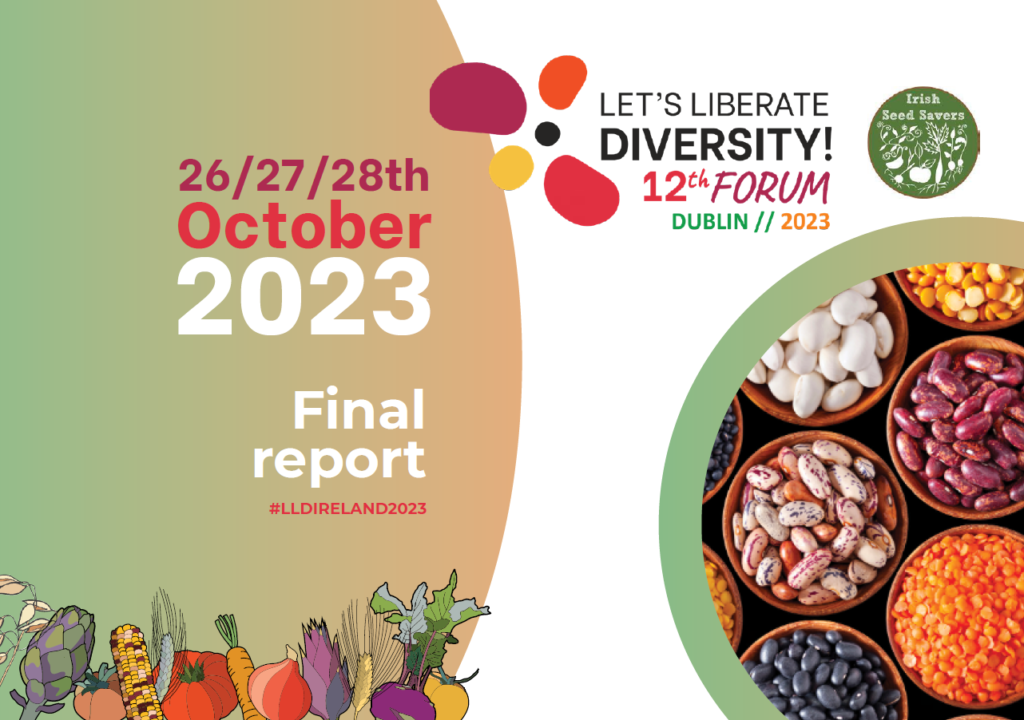
Report of the 12th Let’s Liberate Diversity! Forum in Dublin and a glimpse into the Future LLD! Forum in France
We are thrilled to share the highlights and accomplishments of the 12th edition of the Let’s Liberate Diversity Forum (LLD Forum), which took place at Trinity College in Dublin, Ireland, from October 26th to 28th, 2023.
Organized by the European Coordination Let’s Liberate Diversity! (EC-LLD), this event marked a significant milestone in the ongoing efforts to promote the dynamic management of agricultural biodiversity. The EC-LLD draws its roots from the annual Let’s Liberate Diversity Forum, which commenced in 2005 in Poitiers, France. Over the past 18 years, these forums have evolved into pivotal gatherings, advocating for the dynamic management of plant genetic resources to diversify our food systems and value chains.
The LLD! Forum in Dublin
The 12th edition of the forum, hosted at Trinity College in collaboration with the Irish Seed Savers Association (ISSA), witnessed a remarkable convergence of knowledge, experience, and expertise. With over 100 participants from 59 organizations across 29 different countries, the Forum brought together a diverse group of farmers, breeders, scientists, civil society organizations, and citizens who shared a common vision of a resilient and diverse food system.
Let’s Liberate Diversity! Forum Program Highlights
The program was rich and diverse, featuring 15 workshops and plenary sessions covering key issues such as policy and legislations, New Breeding Techniques (NBTs), Seed Marketing Reform, Farmers’ Rights, Culinary Breeding, and Seed Quality. The collaborative spirit of the forum fostered an ideal setting for individuals and organizations to unite, exchange knowledge, and take actions towards a future where diversity isn’t only celebrated but also managed and utilized sustainably.
Beyond intellectual exchanges and workshops, the forum provided ample opportunities for networking, collaboration, and relationship building. Attendees connected during social dinners and explored firsthand the practical applications of dynamic seed management through field visits and seed exchanges.

The Next Chapter: the 13th Edition of the LLD! Forum in France
Looking ahead, we are excited to announce that the next edition of the Let’s Liberate Diversity Forum is scheduled to take place in France in October 2024. As we reflect on the success of the Dublin Forum, we are energized and committed to continuing the mission of promoting diversity in our food systems.
Bringing Diversity Back into our Food System:
As expressed in the slogan of the 12th edition, “Let’s bring Diversity back into our Food System,” we firmly believe that the dynamic management of agrobiodiversity is not just a response to crises but a foundation for a flourishing and sustainable agrifood system. Diversity, both ecological and cultural, is the catalyst for transformative solutions, fostering social cohesion and cultural enrichment.
Stay tuned for updates on the upcoming edition in France and continue to be part of the movement to bring diversity back into our food system.

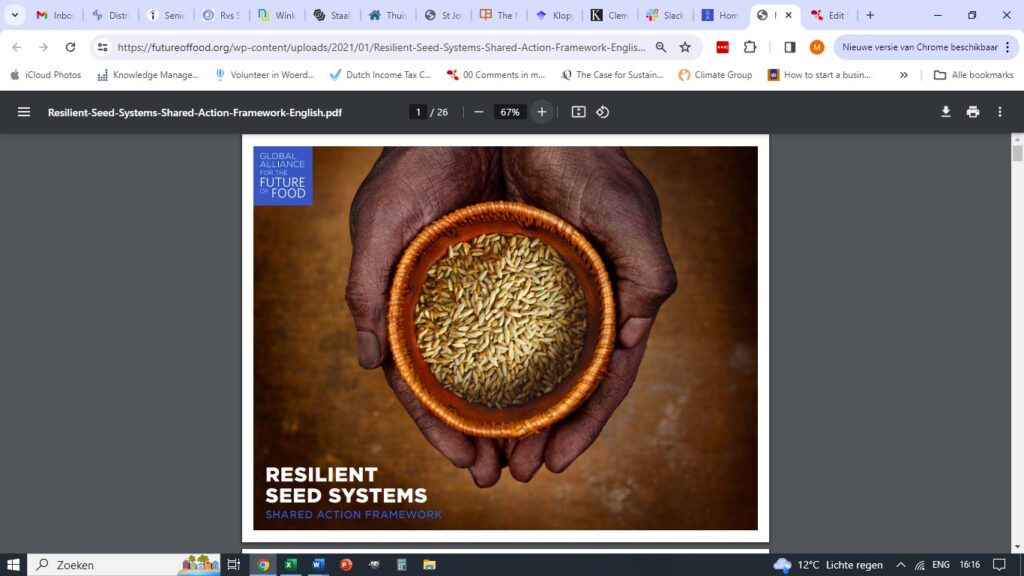
Resilient Seed Systems: Shared Action Framework
The Global Alliance for the Future of Food summarised the output of a stakeholders workshop in Mexico and subsequent inputs into a framework for shared action on resilient seed systems.
The framework attempts a definition of resilient seed systems around the following principles:
- Diverse
- Complex and dynamic
- Equitable and right-based
- Renewable
- Healthy
- Interdependent
- Intergenerational
and provides a brainstorming tool for strategic action at the local, national and global levels along the following dimensions:
- Policy and advocacy
- Research and education
- Platform and alliances
- Communcation
- Financing
Opinion: patents and GMOs in organic production
In their December 2023 newsletter, Agrologica (Danish organic cereal breeder) published an opinion piece on the topic of patents and GMOs in organic production.
The article is interesting with reference to the current EU regulation debates, as it goes in some details about the difference between plant variety protection and patents and how suchdifferent regulations have shaped different markets, as well as describing a range of genetic breeding techniques, including those that are grouped under the name CRISPR-CAS and, how they may or may not fit in with organic breeding.
Read the newsletter.