The Seed Knowledge Hub was built to keep the answers in one place. It is an open online repository hosted on the EC-LLD website, developed within Seeds ofGrowth, an Erasmus+ small-scale partnership in adult education (KA210), coordinated bySemínkovna (Czech Republic) with EC-LLD and SEED Luxembourg as partners.
The Hub brings together guides, technical manuals, case studies and policy materials on seed saving and cultivated diversity. What was included into it was decided on the basis of a capacity gap analysis that reached 868 people across Europe and collected 140 responses from seed savers, community seed bank managers and seed librarians.
The collection now holds over 80 resources and its growing thanks to the contributions of EC-LLD Members and the broader community. In the Seed Knowledge Hub you can also find the material from the LLD forums. The Hub grows with what the community puts into it. If your organisation has produced a guide, a manual, a template, a study or a policy briefing that others could use, write to info@liberatediversity.org and we will add it. Material in any European language is welcome.

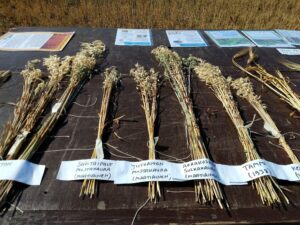
Today’s food production is dependent on a small number of crops. By bringing old varieties back to the fields, the diversity of crops can be increased on farms. A Finnish projects shows that the special raw materials that are old seed varieties can bring economic value as food and associated services.

The final Report and seventeen Resolutions of the 9th Session of the Governing Body of the ITPGRFA are now published in all official languages.
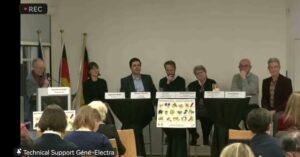
MEPs Martin Häusling and Sarah Wiener MEP, in collaboration with diversity advocates Arche Noah, organised a presentation for the political study ‘Which seeds for a just transition to agroecological and sustainable food systems?’ in connection with the ongoing EU reform of seeds marketing rules. Members of ECLLD sat on the panel to discuss the future of seed diversity.
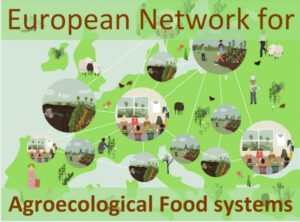
The European Network for Agroecological Food Systems (ENAF) is the outcome of Horizon 2020 project Agroecology for Europe (AE4EU). It was launched at the end of January 2023 with the objective to connect and complement the work of existing networks in Europe. ENAF is actively looking for co-founders, participants and friends.
The Secretariat is looking for a young and motivated person to join its team and follow the organisation’s activities. Women are encouraged to apply. Mainly the candidate will have to follow the activities of the Horizon Europe project LIVESEEDING and share main desk activities.
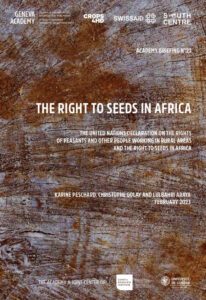
The Geneva Academy, together with policy research think thank The South Center, Swissaid and CROPS4HD, released a new report on UPOV and UNDROP by the title: The Right To Seeds In Africa.

The EU project Liveseeding is looking for input from current and prospective organic seed producers and traders in order to identify which obstacles are in the way of the horizontal proliferation (scale-out) and scale-up of organic seed and cultivar testing in the EU.
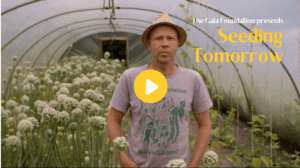
The Gaia Foundation Seed Sovereignty Programme published a video looking at Irish growers who, amongst the chaos of Brexit and climate change, are chasing security and hope for the future by returning to growing and saving seed. Seeds and people have shaped each other throughout human history up and until the last few decades, when […]
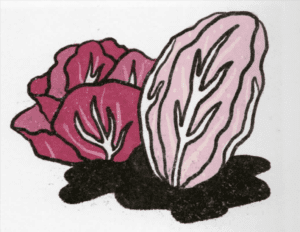
The Culinary Breeding Network organizes activities to inspire connection and collaboration throughout the food system, in order to improve plant breeding for organic farming. Among these activities was a trip to Italy, visiting the places where radicchio – the most famous form of plant Chicorium intybus – originates from.

In view of the upcoming EU proposal of updated rules on plants produced with New Genomic Techniques (NGTs, NBTs), Test Biotech released in 2020 report: “Genetic engeneering endangers the protection of species”.
Cultivated diversity advocates write joint letter to the European Commission ahead of the EU Seed Marketing Legislation reform proposal
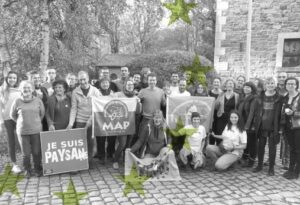
Six peasant agroecology organisations share lessons learned on their outreach activities

DG AGRI published a FAQ on Organic Rules with a section devoted to plant propagation material

Following the presentation by the European Commission of the two seed dossiers, here is the press release from Arche Noah. EU proposals fuel monopolisation at the expense of farmers and consumers

ECLLD at the Session on Genetic Resources for Food and Agriculture at FAO
Showing 91-105 of 290 results
The Seed Knowledge Hub has been developed within the context of the Erasmus+ project Seeds of Growth: Strengthening Community Seed Banks and Sustainable Seed-Saving Practices in Europe (Project ID: KA210-ADU-1727BE52)

Funded by the European Union. Views and opinions expressed are those of the author(s) only and do not necessarily reflect those of the European Union or the Dům zahraniční spolupráce (DZS). Neither the European Union nor the granting authority can be held responsible for them.