Let’s Liberate Diversity! News

Cover ECVC UNDROP policy brief

How to implement UNDROP across Europe

ECVC published (with EU co-funding) a new set of policy recommendations for international and regional organisations, European policy-makers, and national and local authorities, in order to push for the implementation of UN Declaration of the Rights of Peasants and Other People Working in Rural Areas (UNDROP) and promote peasants’ rights.

Agrobiodiversity does of course feature in the policy brief as the right to seeds (Article 19) and the right to biological diversity (Article 20) are among the human rights specific to peasants introduced by UNDROP.

Read the press release.

The policy brief is available for downloading.


Sowing social innovations for transformative change

Research paper Native seed collector networks in Brazil: Sowing social innovations for transformative change is available as Open Access early view online. ABSTRACT To investigate whether and how Social Innovation (SI) can contribute to transformative change, we...

DiverSeedPath – A New Perspective on Network and Exchange: The Traditional Seed and Ecological Gardening Festival in Volos, Greece

Introduction:

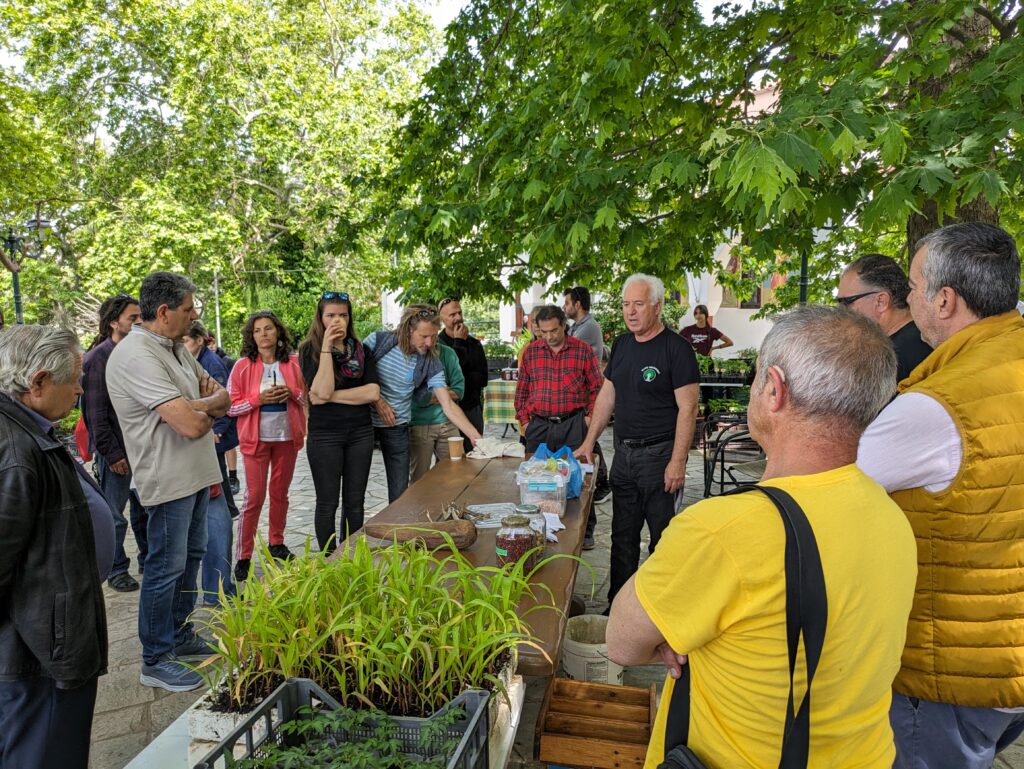
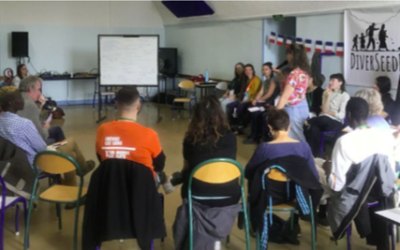
The Traditional Seed and Ecological Gardening Festival, held in Stagiates Village, Volos, Greece, on May 18th and 19th, was a remarkable event dedicated to exploring people, seeds, and ideas. This festival provided a platform for fostering connections, exchanging knowledge, and inspiring action. As a partner of the EU Erasmus+ project DiverSeedPaths, ECLLD participated with the aim of strengthening networks and promoting exchange among diverse communities.

Sharing Stories of Seeds and Migration:

On the first day of the festival, an engaging storytelling workshop took place. This workshop created an opportunity for individuals to share their personal stories about migration, seeds, and human solidarity. It was a key moment to hear how immigrants carry not only their physical seeds but also their “cultural seeds,” which encompass memories, knowledge, ideas, and personal narratives. By sharing these stories within a supportive community setting, participants learned from each other about the connections between seeds and migrants, from the epistemic (the word for exile in Turkish also means seedling) to practical approaches of people bringing seeds and cultivating new varieties which are now part of a culture co-developed across communities.

This connection between migrants and seed savers has opened up new perspectives regarding cultivated diversity and locally adapted crops. Furthermore, it has offered interesting insights on how to create stronger networks across different movements, with seeds becoming a symbol of solidarity.

Seed Saving Practices:

On the second day of the festival, seed savers from Greece (AEGILOPS & SITO) joined forces with European organizations such as ECLLD and RSP to exchange experiences related to seed saving practices, resilience and the deeper driver of migrations with migrants, farmers, gardeners, and local citizens or visitors. The highlight of this day included valuable discussions on “The Anthropogeography of Peoples, Seeds, and Ideas” These discussions enabled migrant-refugee organizations and diverse community movements dedicated to common goods such as water quality and dynamic growth to interact, broaden perspectives, and strengthen resilient, inclusive societies. These interactions help investigating the root drivers of migrations and recognizing the experience, knowledge and potential for innovation that these communities bring with them as cultural seeds.

Plants & Local Products:

In addition to fostering connections between different communities and enlarging perspectives, the event also provided practical benefits. Participants had access to nursery plants featuring traditional vegetable varieties. Local growers offered organic products derived from traditional varieties. Additionally, vibrant local cuisine delighted visitors who sampled diverse quality foods during their time at the festival. Special thanks are extended to Apo.Drasis (a local village group located in Pelion) and Stagiates Village’s citizens for extending hospitality throughout this memorable occasion. The involvement and contributions made by organizations like Volos Immigrants’ Center, the French organization EKO (Project Positive Actions for Humans & Nature), and other political, economic, and environmental immigrant entities greatly enriched this gathering by sharing unique stories and experiences.

Conclusion:

Overall, the Traditional Seed and Ecological Gardening Festival held in Volos, Greece, served as a catalyst for building bridges, reinforcing contacts, and promoting collaboration among individuals from various backgrounds. Its focus on migration, social movements, solidarity, and inspiration opened up new perspectives regarding humanity’s relationship with both the environment and each other. Communities emerged stronger, enlightened, and inspired, moving forward together toward inclusive societies that effectively tackle the root causes leading people away from home. Furthermore, this event showcased practical solutions through seed saving practices, nursery plants, and local products that promote sustainability. This celebration will undoubtedly leave its mark, paving the way for future initiatives that foster sharing, knowledge transfer, and collective actions aimed at shaping our world into one rooted in resilience, hope, and unity.

Looking Ahead

Inspired by the success of this inaugural event, the DiverSeedPaths project is enthusiastic about organizing a new workshop in Thessaloniki on June 7th. This upcoming workshop aims to continue building networks, exchanging ideas, and fostering actions around seeds and migration. If you are interested in participating or learning more, please contact us at info@liberatediversity.org.

Seed Forum

Seed diversity in the EU: what is it all about?

Swedish agrobiodiversity activist Sivert Stiernebro has been conducting an educational campaign on the significance of seed diversity for farming and the impact of EU legislation on the availability of diverse seed.

Sivert is keen to take his message to a wider audience at this important junction in EU lawmaking, so he is looking for local activists to help him share it far and wide.

——

A Bomb in the Vegetable Garden by S. Stiernebro – translated by Jules Baw


New Seed Laws on the Horizon

Brussels, July 2023. Outside the EU Parliament, climate activists and farmers with tractors are demonstrating on their separate streets. Inside the building, the parliament is voting on the Nature Restoration Law, which aims to reserve land for wild nature and biodiversity. Simultaneously, another draft law is being published regarding what should grow within the fields. Should there be biodiversity? Or only varieties sponsored by big industry be permitted?

EU’s List of Approved Seed Varieties

Stop for a moment between the store shelves. Who manufactured the products? Who packed them and affixed the labels? No one you’ve looked in the eye, so there are rules. A product should meet expectations. What is inside a seed packet should match what’s written on the outside.

When the internal market took shape, a common catalogue of varieties sold in the EU was established. You should be sure of what seed you’re buying. A variety must be distinct, uniform, and stable enough to be recognizable. All plants should be the same. There’s a seed variety owner who manages the original and gets paid for their work with the variety.

The year was 1972, and faith in industrial systems and global trade was at its peak. A variety registry fitted like a glove in this context, however in many countries authorities encountered a reality that didn’t quite align with their ideas. There are, amazingly, people who have their own gardens and grow for themselves or their community. These varieties are valued and in demand, despite the fact (or perhaps precisely because) they have adapted to local conditions— climate, soil, cultivation techniques, and taste preferences — to the extent that they can no longer be linked to a specific original. Perhaps there never was one. Traditional plant varieties are nobody’s property just like wild plants and animals (including us humans, despite historical attempts to divide us into races).

How have the regulations turned out? Sometimes, seeds outside the norm have been weeded out. Some have been forgotten, others rediscovered—just on time or too late. More and more people are growing grey peas again, while cauliflower resistant to certain types of mold is gone forever. Sometimes the law has been interpreted leniently or simply ignored. In Sweden, where I live and work, campaigns for the right to access and grow alternative varieties have contributed to facilitating their continued production. Different degrees of disobedience to the EU have occurred in several member states. Even state officials understand the absurdity of seeds that have been sold and sown for over a hundred years being banned for ‘administrative reasons’. Most recently, British varieties were erased from the EU’s list after Brexit.

Over time, criticisms have increasingly surfaced about the internal market not functioning properly because, in practice, different rules apply from country to country. The Commission has long endeavoured to address this issue through various efforts aimed at creating a standardization of rules, but has failed to gain support from the Parliament. Now, they have made a huge effort to gather feedback and reconcile widely differing interests through surveys and consultations, in which I have participated.

In the Halls of Power

Rosenbad (Swedish government offices) September 5, 2023. After mingling in the foyer, we take our seats in the conference room. Ingrid Karlsson from the Swedish Board of Agriculture explains what the new law would mean compared to the current one. I have studied it carefully but am still surprised. There are plans for more controls, funded by fees. The opportunities to sell seeds that are missing from the official variety list are far from obvious. It’s stated that exceptions should exist, but the protracted conflict over the fine print has been resolved by the Commission granting itself sovereign powers to interpret and enforce the laws. Who will they listen to then?

In the second hour of the meeting, each participant gets to speak. We are about 25 people, and the balance of power is akin to the lobbyists in Brussels; all but three come from universities and industry organizations with perspectives not quite like mine. One man complains that farmers would have to share their seed harvest with their neighbours. “I thought that belonged to the Middle Ages!” He fears an alternative seed trading system with less control and lost income for plant breeders. “The consequence will be poorer varieties!”

My turn. I swallow and realize the gravity of the moment. No one else will say what I feel must be said. Ever since the Middle Ages, the authorities have ruled with farmers and growers. After thirty years at Runåbergs Fröer (a small-scale organic seed company) I have experience of how the law perceives traditional varieties and methods as problematic or even illegal. It’s beautiful that society is beginning to recognize the value of cultivated diversity, that amateur gardeners and cultural heritage are mentioned, but for it to be more than just beautiful words, a different mindset is needed. I will endeavour to explain:

Small and Many – We are Necessary!

Living organisms are not like other goods. Screws and nails have specific measurements. Living things are in flux, as an adult is not like an infant, the plant does not resemble the seed. Through these gradual changes from one generation to the next, all the world’s different life forms have come into being. Through trial and error, they have gradually adapted to different circumstances. Agriculture and trade rely on these evolutionary techniques when selecting and using certain plants.

“Poorer varieties!” it was said; Poorer? Better? Who has the mandate to decide? This depends entirely on who is asked, where, and when. If some form of crisis arises—say, a pest suddenly becomes widespread—”the best” are no longer the best. What do we do then if the alternatives have become limited or forbidden? This is about survival, not just for individual vegetable varieties or individual seed companies but for the generations to come. The ability to feed ourselves in the future depends on how well we can preserve the biodiversity of the plants we cultivate. A handful of multinational companies guarding their interests is not enough. Nor are a handful of gene banks. Diversity diminishes due to inbreeding and genetic drift, just like in wild animals in isolated reserves. Sustainable living conditions are lacking. During the 20th century, 75% of the genetic variation of cultivated plants was lost. There’s a term for this insidious process: “functional extinction.”

Therefore, it’s vital that traditional plant-breeding gets enough space. A space where plants are adapted to the environment they will live in. They keep pace with the development of pests, climate, and other environmental factors. They become varied. This means that not everyone can always be the best, but perhaps you’ll discover your favourites among the multitude.

The UN has long recognized the threats to plant resources and people’s ability to produce food. The Declaration on Farmers’ Human Rights (2022) includes the right to manage our inherited seed diversity. But rather than the UN, it’s the EU’s rules and trade requirements that set the standard for the whole world. Are the new seed laws a step in the right direction, or the opposite?

It’s apparent that the legislation proposal has been carefully thought through to cover all types of plant reproductive materials and uses. A variety that doesn’t qualify for the official list can be registered as a “conservation variety”; but even if it falls outside the framework, there exists category after category of ‘special rules’. However all seeds must enter the system—a kind of population registry for plants. It could provide an opportunity for more varieties to become legal. But it could also become hopelessly expensive and cumbersome to handle unusual seed varieties. Registration and control fees could be a more effective barrier than explicit bans, which would arouse every gardener’s spirit of protest!

It is debated that the control should be risk-based. Larger operations that handle larger quantities and could therefore cause problems on a larger scale require greater control. Does the opposite then apply? Do smaller operations require less control? No, both seed legislation and plant protection regulations are designed entirely for large-scale food production. Control serves an important function there, which is sometimes vital when considering invasive organisms and genetic manipulation techniques. But one might think that it should be kept within its context. The current directive is interpreted differently in Denmark; seed trade aimed at hobbyist gardeners is not affected.

One might think that it should operate on a scale relative to the size of operation. There is a difference between many hectares and a few tens of meters, plants and seeds are inspected by the grower’s own eyes, at harvest and when washed by hand. Small scale and small quantities pose neither great risks nor great incomes. But they contribute significantly to diversity for the simple reason that we are, or could be; many.

That’s about as much as I managed to say in five minutes in front of the top officials at the Swedish government offices.

The struggle continues, the conversation continues

The law is planned to be passed in 2024 and to enter into force three years later. Will we be able to cultivate our gardens in peace then? I doubt it. The battle over the terms of seed trade will continue as long as there are conflicting interests. That’s how it is in a democracy. If we remain silent, industry will lead the way, but the open atmosphere of dialogue that the EU and the Swedish Board of Agriculture have developed in recent times bodes well.

What can you and I do? Buy from small producers. Feel free to use your own seeds and share them. Organize a local seed swap in your community. All such actions support variation and forges resilience. If there’s some kind of crisis, or just curiosity about creating something new, the chance is greatly increased that there are plant resources that can meet the need.

Last but not least, raise the issue, spread knowledge about it! This article is free to distribute, publish and translate.

—–

Read on Sivert’s website

EU agrobiodiversity conservation at risk

The administrative burden that would kill small producers of biodiverse seed

The Umbrella Organisation for Cultivated Plant and Livestock Breed Diversity in German
Speaking Countries (Dachverband Kulturpflanzen- und Nutztiervielfalt e. V.) issued a press release calling for Member States’ representatives to advocate against those resolutions of the EU Parliament which, if approved, would have a huge impact on producers of biodiverse seed.

Under current legislation, the sale of biodiverse seed varieties for non-commercial use is expressly permitted in limited quantities in some Member States, while in most other countries it is not considered an ofference and therefore allowed. However, under pressure from the seed industry, the reformed legislation would require standardisation, imposing the same administrative burdens on those selling even the smallest quantities of seed as the large and multinational companies.

While the EU Parliament speaks highly of agrobiodiversity conservation, their resolutions would in practice destroy the structures that are in place to support it most effectively. In fact, biodiverse seed is often sold by professionals who produce the seed themselves, concentrating on a limited number of species and varieties, grown , harvested, cleaned, stored, packaged and labelled with artisanal methods. Seeds are then sold direct on their websites or at events and seed festivals, which builds professional networks and favours the exchange of experiences, both integral parts of preserving diversity.

Beside failing to protect cultivated plant diversity in the fields and gardens of the EU, the EU Parliament’s decision would not fulfil the requirements of the FAO International Treaty on Plant Genetic Resources for Food and Agriculture (ITPGRFA) which the EU is a party of, or those of Article 19 (‘Right to Seed’) of the UN Declaration on the Rights of Peasants and Other People Working in Rural Areas (UNDROP).

The opportunity is still there to stop such detrimental legislation from coming into force, by calling for the exemption of agrobiodiversity conservation as a whole, including specialised micro-enterprises, from the new EU seed regulation. This must be done during the trialogue negotiations between the Commission, Parliament and Council of Ministers.

Read the press release in English and in German.

Liveseeding backroung image

Hot Water Treatments to Sanitize Vegetable Seeds

Liveseeding hosted a 3h webinar entitled “Hot Water Treatments to Sanitize Vegetable Seeds” on Tuesday, March 26th, co-organised by Bingenheimer Saatgut AG (DE), the French Organic Food and Farming Institute (ITAB, FR) and the European Coordination...

Report of the 12th Let’s Liberate Diversity! Forum in Dublin and a glimpse into the Future LLD! Forum in France

We are thrilled to share the highlights and accomplishments of the 12th edition of the Let’s Liberate Diversity Forum (LLD Forum), which took place at Trinity College in Dublin, Ireland, from October 26th to 28th, 2023.

Organized by the European Coordination Let’s Liberate Diversity! (EC-LLD), this event marked a significant milestone in the ongoing efforts to promote the dynamic management of agricultural biodiversity. The EC-LLD draws its roots from the annual Let’s Liberate Diversity Forum, which commenced in 2005 in Poitiers, France. Over the past 18 years, these forums have evolved into pivotal gatherings, advocating for the dynamic management of plant genetic resources to diversify our food systems and value chains.

The LLD! Forum in Dublin

The 12th edition of the forum, hosted at Trinity College in collaboration with the Irish Seed Savers Association (ISSA), witnessed a remarkable convergence of knowledge, experience, and expertise. With over 100 participants from 59 organizations across 29 different countries, the Forum brought together a diverse group of farmers, breeders, scientists, civil society organizations, and citizens who shared a common vision of a resilient and diverse food system.

Let’s Liberate Diversity! Forum Program Highlights

The program was rich and diverse, featuring 15 workshops and plenary sessions covering key issues such as policy and legislations, New Breeding Techniques (NBTs), Seed Marketing Reform, Farmers’ Rights, Culinary Breeding, and Seed Quality. The collaborative spirit of the forum fostered an ideal setting for individuals and organizations to unite, exchange knowledge, and take actions towards a future where diversity isn’t only celebrated but also managed and utilized sustainably.

Beyond intellectual exchanges and workshops, the forum provided ample opportunities for networking, collaboration, and relationship building. Attendees connected during social dinners and explored firsthand the practical applications of dynamic seed management through field visits and seed exchanges.

Registration to the LLD! Forum in Dublin

The Next Chapter: the 13th Edition of the LLD! Forum in France

Looking ahead, we are excited to announce that the next edition of the Let’s Liberate Diversity Forum is scheduled to take place in France in October 2024. As we reflect on the success of the Dublin Forum, we are energized and committed to continuing the mission of promoting diversity in our food systems.

Bringing Diversity Back into our Food System:

As expressed in the slogan of the 12th edition, “Let’s bring Diversity back into our Food System,” we firmly believe that the dynamic management of agrobiodiversity is not just a response to crises but a foundation for a flourishing and sustainable agrifood system. Diversity, both ecological and cultural, is the catalyst for transformative solutions, fostering social cohesion and cultural enrichment.

Stay tuned for updates on the upcoming edition in France and continue to be part of the movement to bring diversity back into our food system.

GAFF - framework cover

Resilient Seed Systems: Shared Action Framework

The Global Alliance for the Future of Food summarised the output of a stakeholders workshop in Mexico and subsequent inputs into a framework for shared action on resilient seed systems.

The framework attempts a definition of resilient seed systems around the following principles:

  • Diverse
  • Complex and dynamic
  • Equitable and right-based
  • Renewable
  • Healthy
  • Interdependent
  • Intergenerational

and provides a brainstorming tool for strategic action at the local, national and global levels along the following dimensions:

  • Policy and advocacy
  • Research and education
  • Platform and alliances
  • Communcation
  • Financing

Read the Shared Action Framework.

May 2026
No event found!
Load More

Video