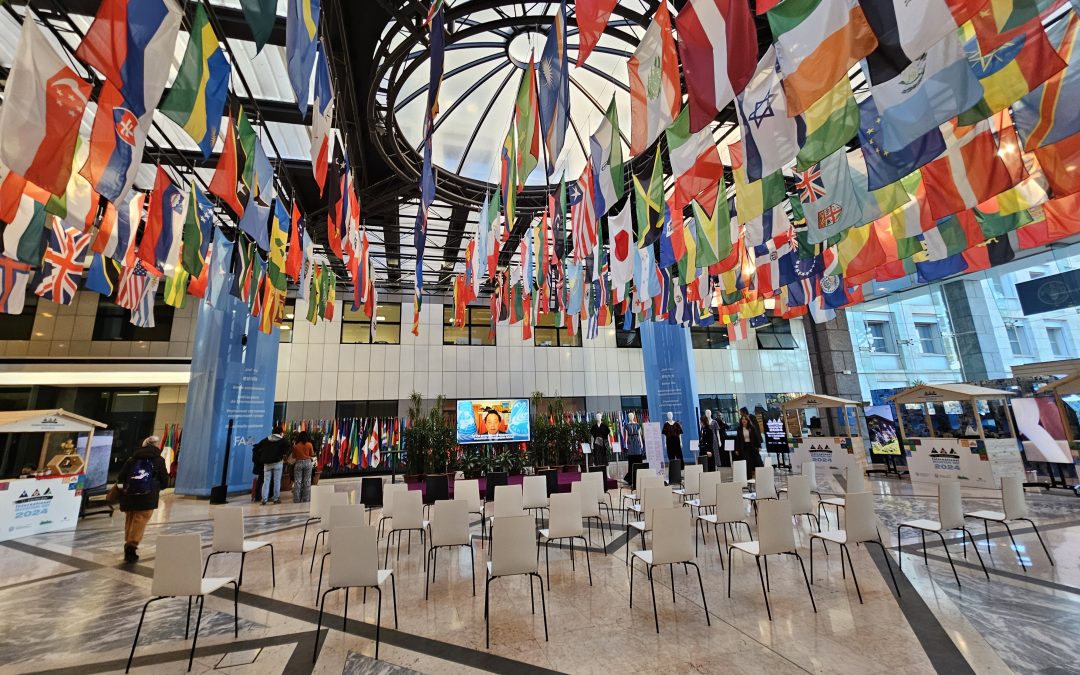
From 8 to 10 July, EC-LLD is at the headquarters of the Food and Agriculture Organization (FAO) in Rome, taking part in the Intergovernametal Technical Working Group on Plant Gentic Resources to contribute to the revision of the Global Plan of Action for Plant Genetic Resources for Food and Agriculture.
Behind that long title is something that matters to every seed saver, farmer and community seed bank in our network. Here is a short guide to what it is, what is happening, and why we are there.
What is the Global Plan of Action?
The Global Plan of Action (GPA) is the main international framework for conserving and sustainably using the diversity of our cultivated plants – the seeds and varieties that feed us. Agreed under the FAO Commission on Genetic Resources for Food and Agriculture, it guides how countries design their national seed and biodiversity policies. It is revised less than once a decade: the first Plan dates back to 1996, the second to 2011. It is not legally binding, but it is a shared reference point that civil society, farmers’ organisations and governments can all point to.
What is happening now?
The second Plan is being updated, informed by a series of consultation (where EC-LLD participated) and the FAO’s Third Report on the State of the World’s Plant Genetic Resources. The intergovernmental technical working group will convene in Rome to review the draft revised text and gives its comments. A revised version is then expected to go to the FAO Commission for adoption next year. The decisions taken now will shape the seed policy framework for years to come.
What we have done – and what has changed
Over the past two years, EC-LLD has followed this process step by step: the European consultation, the working group session in December 2024, and the FAO Commission in March 2025. At each stage we brought the voices and the experience of seed savers, seed networks and community seed banks into a space where they are rarely heard.
Some openings in the current draft reflect this collective advocacy by the wider seed movement and its allies. Community seed banks are now named throughout the text – they were absent from the 2011 version. The term “farmers’ varieties and landraces” is used consistently. On-farm management is more visible, and there is greater emphasis on the collaboration between gene banks and community seed banks, and on the role of crop diversity for the resilience of our food systems.
Why our engagement still matters
Being named in a text is a step forward, but it is not the same as real change. For these openings to make a difference on the ground, the language needs to be stronger and more concrete – including on the resources that community seed banks and on-farm conservation actually need to do their work. We are also asking for a clear and inclusive definition of community seed banks, and for practical guidance to help countries put the Plan into action, with real examples of what good collaboration between gene banks and community seed banks can achieve. Community seed banks are, in many ways, the missing link between conservation collections and farmers’ fields – and that is the role we are defending in Rome.
Stay tuned
Gabriele Maneo and François Meienberg are representing the network at the session this week. We will report back on how it went and on what it means for our members and for the movement.