The Seed Knowledge Hub was built to keep the answers in one place. It is an open online repository hosted on the EC-LLD website, developed within Seeds ofGrowth, an Erasmus+ small-scale partnership in adult education (KA210), coordinated bySemínkovna (Czech Republic) with EC-LLD and SEED Luxembourg as partners.
The Hub brings together guides, technical manuals, case studies and policy materials on seed saving and cultivated diversity. What was included into it was decided on the basis of a capacity gap analysis that reached 868 people across Europe and collected 140 responses from seed savers, community seed bank managers and seed librarians.
The collection now holds over 80 resources and its growing thanks to the contributions of EC-LLD Members and the broader community. In the Seed Knowledge Hub you can also find the material from the LLD forums. The Hub grows with what the community puts into it. If your organisation has produced a guide, a manual, a template, a study or a policy briefing that others could use, write to info@liberatediversity.org and we will add it. Material in any European language is welcome.

The June 2025 issue of the Agrecology FAO Agroecology Knowledge Hub’s journal has been published. This month’s issue explores, among other topics, the urgent need to transition food systems away from fossil fuels.
The European Citizens’ Initiative on the Right to Food has been officially accepted by the EU Commission. Here we share Good Food For All’s next steps for the campaign and how you can support them.
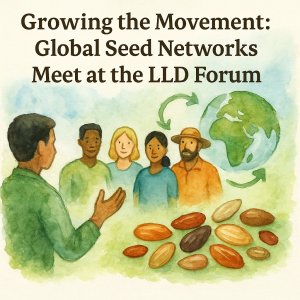
The LLD Forum 2025 will witness a global convergence of farmers’ seed initiatives and networks working to build shared infrastructure, strengthen coordination, and support farmers’ seed systems and cultivated diversity worldwide.
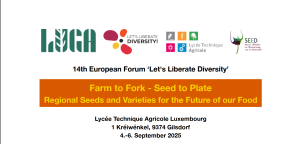
CALL FOR SEEDS! If you are joining us at the 14th European Forum ‘Let’s Liberate Diversity’ this coming September, please bring your seeds from bean, pumpkin, and corn varieties. We will use them to illustrate our political message for the liberation of cultivated biodiversity. As we only have one size of display boxes, please bring […]

Download the ” Politica de semillas de la UE”
We share a summary of the outcomes from the 20th Regular Session of the FAO’s Commission on Genetic Resources for Food and Agriculture.
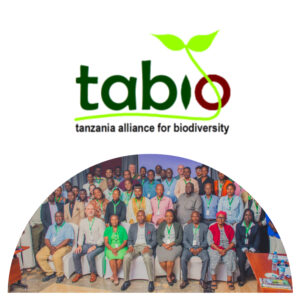
The report and policy brief from the workshop “Creating Space for Farmers’ Seeds in Seed Regulations – Capitalizing International Learnings and Identifying Options for Tanzania” are now available. We share them here.
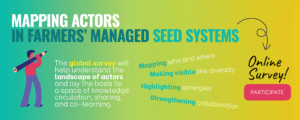
We are launching a survey to map organizations, networks, and communities working on farmers’ managed seed systems and cultivated biodiversity across the world. Complete the survey and share it widely

No Patents on Seeds! has recently published a report with a proposal to amend the law to breeders’ access to biological material. We share the report here.
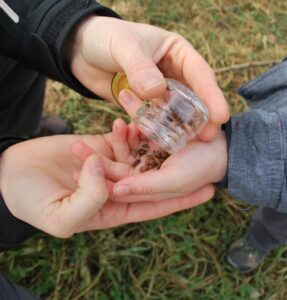
We share with you an study on Open Source Seed models – how they navigate the current policy environment, and how they succeed.

LiveSeeding recently published their second policy brief, this time focusing on the different definitions of plant breeding in the organic sector.

Important news from ARCHE NOAH regarding the Raise Our Forks petition and what to do.

ARCHE NOAH will organise an online workshop in late January. Please save the dates to attend.

Our colleagues at IG Saatgut have shared with us a summary of their latest position paper on NGTs. You can find the summary paper in this post.
ARCHE NOAH warns: Council position hands more power to seed industry! An effective ban on the work of small cereal breeders, prohibitions on farmer seed exchange, and a bureaucratic nightmare for local seed producers. Today’s General Approach on the proposed new EU Seed Law adopted by the Council of Agriculture Ministers threatens agrobiodiversity and plays into the hands of the agrochemical lobby.
Showing 166-180 of 290 results
The Seed Knowledge Hub has been developed within the context of the Erasmus+ project Seeds of Growth: Strengthening Community Seed Banks and Sustainable Seed-Saving Practices in Europe (Project ID: KA210-ADU-1727BE52)

Funded by the European Union. Views and opinions expressed are those of the author(s) only and do not necessarily reflect those of the European Union or the Dům zahraniční spolupráce (DZS). Neither the European Union nor the granting authority can be held responsible for them.