The Seed Knowledge Hub was built to keep the answers in one place. It is an open online repository hosted on the EC-LLD website, developed within Seeds ofGrowth, an Erasmus+ small-scale partnership in adult education (KA210), coordinated bySemínkovna (Czech Republic) with EC-LLD and SEED Luxembourg as partners.
The Hub brings together guides, technical manuals, case studies and policy materials on seed saving and cultivated diversity. What was included into it was decided on the basis of a capacity gap analysis that reached 868 people across Europe and collected 140 responses from seed savers, community seed bank managers and seed librarians.
The collection now holds over 80 resources and its growing thanks to the contributions of EC-LLD Members and the broader community. In the Seed Knowledge Hub you can also find the material from the LLD forums. The Hub grows with what the community puts into it. If your organisation has produced a guide, a manual, a template, a study or a policy briefing that others could use, write to info@liberatediversity.org and we will add it. Material in any European language is welcome.

This set of three manuals provide comprehensive guidance on establishing, managing, and navigating the legal aspects of Community Seed Banks (CSBs). These resources are designed to help you preserve agricultural biodiversity, enhance access to locally adapted seeds, and contribute to sustainable agriculture.
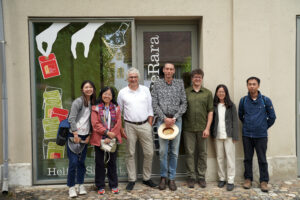
EC-LLD recently participated in an online event hosted by Pro Specie Rara, one of our members, to welcome a Chinese delegation at their headquarters in Switzerland. This was a significant step in our ongoing efforts to strengthen international collaboration and exchange knowledge on biodiversity and sustainable agriculture.

From May 29-31, 2024, the second European Citizens’ Initiative Forum for the Right to Food was held in Geneva, Switzerland. The event brought together over 70 participants who engaged in various working groups over the three days, initiating a collaborative process to advocate for the right to food. Soon the petition will be launched!
Within the RADIANT EU project, the organisers of this survey exercise aim to support European policies and strategies that release the full value of neglected or forgotten crops and plant species within the food value chain. While in fact the current socio-economic system undervalues neglected and forgotten plant species, it could instead contribute to increasing […]

A new initiative was launched in the spring 2024 as part of the EU Farm to Fork Strategy and aligned to its target of achieving 25% organic farmland by 2030. The project aims to address the urgent need for skilled advisors in organic farming by creating and nurturing a network of organic advisors in the […]
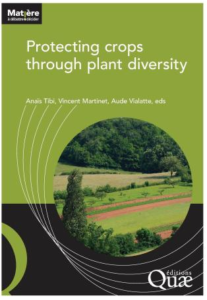
The INRAE has recently published a free-to-download eBook by the title ‘Protecting crops through plant diversity‘ in the context of project Ecophyto 2+ meant to reduce the use of synthetic pesticides to protect public health. This book is intended for research and teaching purposes, as well as agricultural, environmentaland citizen stakeholders.
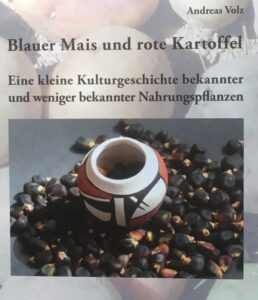
The content of this article is taken from the book: Blauer Mais und rote Kartoffel. Ein kleine Kulturgeschichte bekannten und weniger bekannter Kulturpflanzen. Published by Natur und Text, Rangsdorf, 2019. ISBN 978-3-942062-34-3. The main part of the book presents 42 food plants (from amaranth to sugar ear) and a further 25 lesser-known food plants (from achira to yam bean). The individual plant portraits are organized as follows: Domestication and distribution, botany, cultural history, art, cultivation, consumption, medicine and recipes. Examples of the use and importance of food plants in indigenous societies are illustrated in the plant portraits. Maps, illustrations and directories complete the text.
This month marked the end of the Strategic Dialogue on the future of EU agriculture, an initiative first announced by President of the EU Commission Von der Leyen at her State of the Union address last year and that saw stakeholders in Europe engaged in discussions for several months. Both the executive summary and the […]

A new academic paper was published in journal Organic Farming and is available as Open Access online: Trends in use of crop cultivars from organic and conventional seed multiplication: Moving toward 100% organic seed use in German organic agriculture. ABSTRACT In compliance with European Regulation (EC) 2018/848, organic farming practices necessitate the use of organically […]
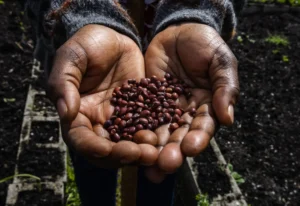
Research paper Native seed collector networks in Brazil: Sowing social innovations for transformative change is available as Open Access early view online. ABSTRACT To investigate whether and how Social Innovation (SI) can contribute to transformative change, we explored nine Native Seed Collectors Networks (NSCNs) in Brazil. Employing Social Network Analysis, we delved into the organisational […]
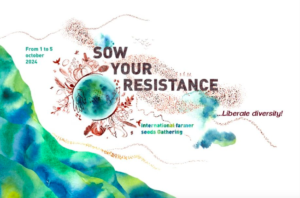
From October 3rd to 5th, Antibes was home to the Let’s Liberate Diversity Forum, which took place during the International Gathering ‘Sow Your Resistance’. With 500 participants from all over the world, this landmark event brought together diverse stakeholders dedicated to agrobiodiversity and seed systems, creating an invaluable space for knowledge sharing, network building, and […]
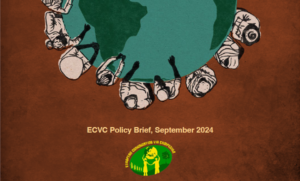
ECVC policy brief “How to implement the United Nations Declaration on the Rights of Peasants and Other People Working in Rural Areas (UNDROP) at the European and national level to promote peasants’ rights”
From October 3rd to 5th, Antibes hosted the latest edition of the Let’s Liberate Diversity (LLD) Forum, integrated into the International Gathering ‘Sow Your Resistance’. With 500 participants from across the globe, the event brought together farmers, researchers, policymakers, and advocates to discuss the critical role of cultivated diversity and its interactions with the key topic of human migration. The […]
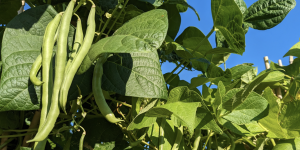
The London Freedom Seed Bank is open for donation of collected seeds by the Network Growers and any new Growers that register and submit a seed donation form first.
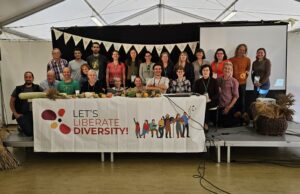
We’re excited to announce that Foundation Alica from Bosnia and Herzegovina and Semínkovna from the Czech Republic have joined the European Coordination Let’s Liberate Diversity! With expertise in seed diversity, community engagement, and agroecology, these organizations will enrich our efforts to promote biodiversity and sustainable seed practices across Europe.
Showing 136-150 of 290 results
The Seed Knowledge Hub has been developed within the context of the Erasmus+ project Seeds of Growth: Strengthening Community Seed Banks and Sustainable Seed-Saving Practices in Europe (Project ID: KA210-ADU-1727BE52)

Funded by the European Union. Views and opinions expressed are those of the author(s) only and do not necessarily reflect those of the European Union or the Dům zahraniční spolupráce (DZS). Neither the European Union nor the granting authority can be held responsible for them.