Speakers
-
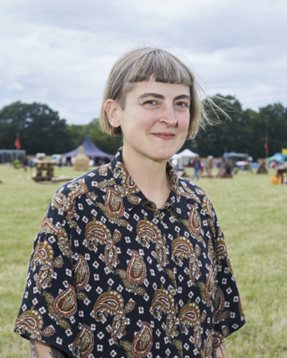 Holly SilvesterThe Gaia Foundation Seed Sovereignty programme
Holly Silvester is a commercial vegetable and seed grower, based at East Neuk Market Garden in Fife, Scotland. She also works part time for the Gaia Foundation Seed Sovereignty Programme in UK & Ireland, as Future Resilience Seed Coordinator, facilitating the programme’s Crowd Breeding Project and inspiring others to explore the radical possibilities of seed. In 2024 Holly travelled the Pacific Northwest of the US & Canada on a Churchill Fellowship, exploring collaborative & dynamic approaches to seed production that build resilience and diversity. Before embarking on her journey into agroecological farming, Holly trained in formal horticulture, and has a background in urban community growing
Before embarking on her journey into agroecological farming, Holly trained in formal horticulture, and has a background in community growing, working for grassroots organisations helping people from local communities grow food and create gardens in urban spaces.
She is an aspiring seed grower and self-confessed soil biology nerd, particularly interested in bringing genetic diversity back to our food system through growing modern landraces. -
Jérémy BertrandPEPs Collective
Jérémy Bertrand is a seed producer, a father, backyard engineer and life autonomy enthusiast. He’s a board member of the french PEPs collective, his local seed house “Graine des Montagnes” and his local water authority. Jeremy lives in a small village of the southern French Alps, and grows evolutionary populations (EPs) between the lines of an abandoned orchard, with a strong focus on providing them the best living soil and environment. His life path led him to understand and experience the underlying principles and conditions needed to facilitate the structuration and durability of human collectives. Before diving into seed farming and collective stuff, Jeremy worked as a hydro engineer, community café manager, and perinatal/fatherhood consultant. He is currently involved in setting up his farm, facilitating the structuration of the French EP movement, and the emergence of a 2.0 subsistence agriculture in his area.
-
Maxime SchmittMaison des Semences Paysannes Maralpines (MSPM)
Maxime Schmitt is an olive grower based in Liguria, Italy, with a strong commitment to sustainable and autonomous farming. A former electrical engineer, he now teaches vegetable seed production and works closely with farmers to preserve seed sovereignty. He is co-president and coordinator of the Maison des Semences Paysannes Maralpines (MSPM) and its Italian counterpart, supporting cross-border collaboration in the conservation and use of traditional seeds. As part of his role with the SOL association, Maxime accompanies participatory plant breeding programs that focus both on safeguarding local varieties and developing evolutionary populations adapted to diverse and changing environments. Through theatre and public speaking, he also advocates for a return of real flavor to our plates and greater autonomy in our agricultural practices.
-
Nate KleinmanThe Experimental Farm Network (US)
Nate Kleinman is co-founder/co-director of The Experimental Farm Network Cooperative (EFN), a Philadelphia-based NGO founded in 2013, and a founding member of Ujamaa Cooperative Farming Alliance (UCFA). He also serves on the board of the Philadelphia Orchard Project (POP), is a technical service provider with the Northeast Organic Farming Association of New Jersey (NOFA-NJ), and a special advisor to the Palestine Heirloom Seed Library. He lives and farms on traditional Lenape lands in southern New Jersey. Through EFN’s participatory plant breeding work with perennial staple crops and new perennial crop domestication, he aims to help shift farming from being a major driver of climate change to being a weapon against it
-
Sofía CorreaPEPs
Sofía Correa is a researcher in Agroecology with a strong focus on agrobiodiversity management and participatory approaches. In December 2023, she completed her PhD on the participatory assessment of neglected wheat species. She is currently involved in developing a value chain for peasant vegetable seeds and leading a participatory plant breeding program in Wallonia, Belgium. Sofía also has hands-on experience and formal training in seed production, which she envisions integrating into her own practice. Originally from Ecuador, holding Belgian nationality, and currently living in the south of France, she brings a rich intercultural perspective to her work.
We support Small-scale Commercial Growers, Community Groups and Home Gardeners & Allotmenteers with useful networks, resources and information to help protect and restore seed diversity across the UK & Ireland.

WS 15 – Evolutionary populations: a paradigm shift in seed systems within a climate change context
Main objective of the workshop
This workshop explores the concept of evolutionary populations (EP) and their implications in agriculture, particularly in the context of climate change. We will examine how EPs challenge traditional notions of plant varieties, their role in increasing resilience and discuss the socio-economic considerations surrounding their adoption.
Short description of the workshop
This workshop will explore the paradigm shift that could be needed to bring true resilience to our food system in our rapidly changing climate. We will take you on a journey from homogenous varieties to evolutionary populations, reflecting on current ‘fixed’ varieties, and how, in contrast, the EP approach fosters genetic diversity, with plants being selected dynamically in the field based on key traits – bringing deeper resilience. We will discuss the concept of robustness as a fundamental model to face future uncertainties, and how growing evolutionary populations aligns with new perspectives on plant health, and contributes to farmer empowerment and food sovereignty. We will bring case studies from projects in the UK and the USA, where farmers and breeders are working collaboratively around an open-source, EP-based approach to seed stewardship. We will consider the practicalities of growing different species as EPs, taking into account collaborative working and group dynamics. In the last part of the workshop, we will consider the economic implementation of EPs, exploring funding options for this kind of experimental and collaborative work, and examine financial and regulatory challenges to support farmers.
This workshop aims to foster a deeper understanding of evolutionary populations as a necessary alternative to conventional seed systems in a changing climate context. By engaging experts and practitioners, we hope to outline pathways for practical implementation, economic sustainability, and policy evolution to support these dynamic seed systems.